
Tuesday, April 11, 2017
Monday, April 10, 2017
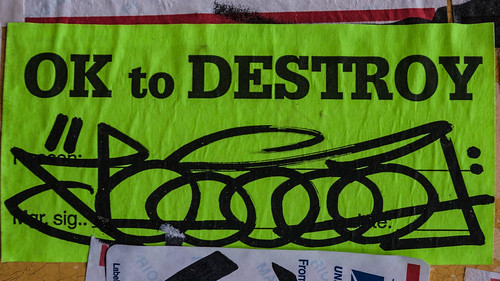


5Pointz Writers Sue Building Owner
It was a crushing blow to nearly two dozen established graffiti artists when in 2013 the owner of the Queens building complex known as 5Pointz ordered a surprise nighttime whitewashing of their colorful murals, leaving them with little chance to document or save the spray-painted artwork that had attracted worldwide attention.
But now they will have their chance at payback in a place that many graffiti artists try to avoid: a courtroom.
This is no vandalism case in a criminal courthouse, but rather a federal lawsuit filed in 2013 by the 23 artists who painted regularly at 5Pointz, against its owner, Jerry Wolkoff, who ordered the artwork destroyed.
The artists scored an incremental legal victory on March 31 when Judge Frederic Block of Federal District Court in Brooklyn ruled that their case could have a jury trial.
Ephemeral or not?
The judge’s ruling offers the artists a chance to confront Mr. Wolkoff in court and to seek redress for painting over their work, said Jonathan Cohen, an artist who had curated the murals and helped organize the artists at 5Pointz since 2002.
Mr. Cohen said he was hopeful that the suit might become a landmark case to establish street art as legitimate contributions worthy of protection.
Mr. Cohen, known by his artist name Meres1, said he had hoped to photograph the art on the building’s walls and to remove much of it, because many of the murals were painted on siding panels or otherwise removable and “could have filled a museum somewhere.”
In an interview, Mr. Wolkoff called the judge’s decision “mind boggling” because the art was never intended for anything but short-term display.
The 5Pointz artists followed a street graffiti tradition of creating murals knowing full well that they would soon be painted over by other artists, he added.
A legal angle:
In the suit, Mr. Baum contends that the art, created by recognized artists who had secured permission from the building owner, falls under the Visual Artists Rights Act of 1990, which has been used to protect established artists who have created public art that is of “recognized stature” on someone else’s property.
“We will make the jury aware,” he said, “that this was not graffiti, not vandalism, but rather work done with the permission of the owner, by artists of recognized stature, and protected by law.”
Sunday, April 9, 2017

Saturday, April 8, 2017
Sleep in Review
The Fashion and Style section of the NYTimes, of all places, has an article on sleep, "Sleep Is the New Status Symbol", by Penelope Green. It opens:
At M.I.T.’s Media Lab, the digital futurist playground, David Rose is investigating swaddling, bedtime stories and hammocks, as well as lavender oil and cocoons. Mr. Rose, a researcher, an inventor-entrepreneur and the author of “Enchanted Objects: Design, Human Desire and the Internet of Things,” and his colleagues have been road-testing weighted blankets to induce a swaddling sensation and listening to recordings of Icelandic fairy tales — all research into an ideal sleep environment that may culminate in a nap pod, or, as he said, “some new furniture form.”
And goes on from there, sleep research at UCal Berkeley, a sleep appliance start-up in Paris, a body-clock reset device in Australia, to:
The federal Centers for Disease Control and Prevention calls sleeplessness a public health concern. Good sleep helps brain plasticity, studies in mice have shown; poor sleep will make you fat and sad, and then will kill you. It is also expensive: Last year, the RAND Corporation published a study that calculated the business loss of poor sleep in the United States at $411 billion — a gross domestic product loss of 2.28 percent.
Companies now fight “presenteeism,” a neologism that describes the lackluster performance of foggy-brained, sleep-deprived employees, with sleep programs like Sleepio, an online sleep coach, and sleep fairs, like the one hosted last month in Manhattan by Nancy H. Rothstein, director of Circadian Corporate Sleep Programs and otherwise known as the Sleep Ambassador, for LinkedIn.
The "sleep space" was a $32B market in 2012.
“I can see sleep being another weapon in competitive parenting and career-building,” Ms. Salzman said. “If you want your child to succeed, do you have to buy them these sleep devices? Sleep is personal, it’s class, not mass, and now the sleep industry is based on technical services, customized for me. It’s a bizarre marriage of high tech and low tech. Chamomile tea is going to have a resurgence, as the antithesis to the whole pharma thing.”
And so it goes.
WTF!
Think of sleep as something done by/for the mind. All this interest in sleep testifies to the difficulty and importance of learning to regulate your mind. It's in the same ballpark as meditation, mindfulness, and the many forms of psychotherapy.
Friday, April 7, 2017
Author, author, who's an author?
Gabrielle Bellot, How Many Shakespeares Were There? On Authorship, Erasure, and the Myth of the Great Solitary Writer, a The Literary Hub. The article opens by noting that that The New Oxford Shakespeare gives Shakespeare eight coauthors distributed over 14 plays. Further on:
H/t 3QD.In many ways, perhaps particularly in the West, there is a desire to put the idea of simple authorship on a pedestal. The author is sacred, singular, reified. There is something monotheistic about this idea of the single author-creator; there is something of the primacy of the individual one may see in Caspar David Friedrich’s paintings. We write our own work, of course, but writing, and art more broadly, is often collaborative at some level: our all-too-often-unacknowledged editors, our readers who make substantial suggestions, the writers we channel or even borrow from. (It’s fitting that in film, deft editing—meaning editing we do not notice—is called “the invisible art.”) Sometimes, our languages all blur—what I wrote, what I read, what she suggested I write, old diaphanous words from sepia memories. Sometimes, who wrote what, even in a writer’s mind, becomes unclear and dusky because we are always a part of so many conversations as readers, listeners, rememberers, forgetters. Authorship can be obvious, when we don’t have Shakespearean doubts about the identity of a writer, yet it is also often murky, dream-dim, near-far as the words we speak in memories.It’s no revelation that this model of absolutely sole authorship is an oversimplification, if not a fiction, yet we frequently want to believe in it, all the same. Shakespeare seems lesser if he becomes a co-author. Attributing the Iliad and Odyssey to Homer is problematic; yet we often do, anyway, as it seems to make things simpler and, perhaps subconsciously, more correct: Homer should have composed it, the argument implies, whether or not he did. T.S. Eliot wrote The Waste Land—but so did Eliot’s wife, Vivienne, and Ezra Pound, whose edits were substantial. Ghostwriters truly become ghosts: Tony Schwartz, not Donald Trump, wrote The Art of the Deal—indeed, Trump’s near-illiteracy almost precludes his writing it—and even has a byline on the cover, yet many people who know it was ghostwritten subconsciously brush aside this fact and assume, with no sign of cognitive dissonance, that Trump is, indeed, still the writer. (Trump himself, as Schwartz has noted, ironically does this himself.) The popular YouTuber Zoella recently became the target of condemnation due to the popularity of her novels, with commentators arguing that the simplicity of her books was causing a “decline in children’s reading age”—yet Zoella’s (whose haul videos I unashamedly watch) novels are ghostwritten, so who, technically, is really being condemned? Many people—and I have been guilty of this—are reluctant to accept the possibility that Shakespeare’s so-called “bad” quartos—simpler, and I would say inferior, versions of certain plays, like Hamlet—may be indications of the Bard having written a bad draft. Instead, we are often more likely to claim the quartos were copied poorly or desirous to believe that “better” versions, like William Henry Ireland’s famous forgery of a trove of manuscripts “by” Shakespeare, are the “real” versions.Historically, women who substantially edited or even wrote large portions of men’s texts tended to be left out of authorship discussions altogether, while, in the Americas, it was not uncommon for white racialists to argue that black writers could not even be authors at all, simply due to race.
Wednesday, April 5, 2017

Dancing is good for the brain
A new study that compared the neurological effects of country dancing with those of walking and other activities suggests that there may be something unique about learning a social dance. The demands it places on the mind and body could make it unusually potent at slowing some of the changes inside our skulls that seem otherwise inevitable with aging.Neuroscientists and those in middle age or beyond know that brains alter and slow as we grow older. Processing speed, which is a measure of how rapidly our brains can absorb, assess and respond to new information, seems to be particularly hard hit. Most people who are older than about 40 perform worse on tests of processing speed than those who are younger, with the effects accelerating as the decades pass.
* * * * *
Agnieszka Z. Burzynska, et al., White Matter Integrity Declined Over 6-Months, but Dance Intervention Improved Integrity of the Fornix of Older Adults, Front. Aging Neurosci., 16 March 2017 | https://doi.org/10.3389/fnagi.2017.00059
Degeneration of cerebral white matter (WM), or structural disconnection, is one of the major neural mechanisms driving age-related decline in cognitive functions, such as processing speed. Past cross-sectional studies have demonstrated beneficial effects of greater cardiorespiratory fitness, physical activity, cognitive training, social engagement, and nutrition on cognitive functioning and brain health in aging. Here, we collected diffusion magnetic resonance (MRI) imaging data from 174 older (age 60–79) adults to study the effects of 6-months lifestyle interventions on WM integrity. Healthy but low-active participants were randomized into Dance, Walking, Walking + Nutrition, and Active Control (stretching and toning) intervention groups (NCT01472744 on ClinicalTrials.gov). Only in the fornix there was a time × intervention group interaction of change in WM integrity: integrity declined over 6 months in all groups but increased in the Dance group. Integrity in the fornix at baseline was associated with better processing speed, however, change in fornix integrity did not correlate with change in processing speed. Next, we observed a decline in WM integrity across the majority of brain regions in all participants, regardless of the intervention group. This suggests that the aging of the brain is detectable on the scale of 6-months, which highlights the urgency of finding effective interventions to slow down this process. Magnitude of WM decline increased with age and decline in prefrontal WM was of lesser magnitude in older adults spending less time sedentary and more engaging in moderate-to-vigorous physical activity. In addition, our findings support the anterior-to-posterior gradient of greater-to-lesser decline, but only in the in the corpus callosum. Together, our findings suggest that combining physical, cognitive, and social engagement (dance) may help maintain or improve WM health and more physically active lifestyle is associated with slower WM decline. This study emphasizes the importance of a physically active and socially engaging lifestyle among aging adults.
GOOD: Global Organization of Democracies
Here’s a triple, a trifecta, a trinity, from Charlie Keil. It’s about a Global Organization of Democracies (GOOD). Let him explain it.
An Open Letter to Citizens of the World
Dear Citizen:
I think we need a common GOOD, a Global Organization Of Democracies, one nation one vote, (so that a confederation of indigenous peoples up the Amazon can have the same voting power as the USA, Okinawa the same vote power as Japan, etc.) [big so-called democracies may not want to be members at first], to be meeting year round to suggest ways of: stopping "ethnic cleansing" and "administrative massacres," terrorism, and wars; sharing air, water and resources fairly; raising global carbon taxes for local carbon sequestration (planting trees, fostering permacultures) going strong everywhere; planning and fostering a global literacy campaign focused on young women, etc., etc.
For every real problem you can think of, the world needs to hear these discussions, suggestions, planning sessions year round so that hopes can realistically be raised about stopping climate destruction, reducing global storming, etc. Can you give these "self-determination of peoples" and "conserving the speciation" ideas 8 minutes a day? 12 minutes a day on Saturday and Sunday?
Peace is the Way! (to ecological balance)Charlie Keil
For the common GOOD
To stop the ecocatastrophe and build world peace processes a Global Organization of Democracies (GOOD) supporting the International Criminal Court (ICC) could coordinate efficient regional police forces to help prevent "administrative massacres" and terrorism, thereby enhancing the security of all peoples and encouraging states to redirect a growing portion of their military budgets to economically sustainable problem-solving over time.
The existence of a Global Organization Of Democracies whose representatives meet regularly to instruct a reform caucus at the UN and to mobilize regional police in pursuit of justice as defined by the arrest warrants and subpoenas of the new International Criminal Court, might make possible five important processes:
1) a continuing effort to intervene diplomatically, economically, politically, and to make arrests, if necessary, whenever the International Criminal Court determines that the "cleansings" or "administrative massacres" which lead to genocide are in the planning and/or early execution stages;2) the pursuit and arrest of individuals and small groups of terrorists, as identified and located by international intelligence, for the International Criminal Court;3) a continuing effort to halt the invention and proliferation of weapons of mass destruction, so many of which are ever more easily delivered by a single person;4) a rapid disarmament process in all the nations of the world that would release billions of dollars, euros, yuan, yen, rubles, francs, pounds, kroner, pesos, etc; for5) solving the world’s most pressing problems - climate change, ozone layer depletion, top soil erosion, AIDS, illiteracy, overpopulation, famine, landmines, etc. - that currently are the root causes of civil unrest, wars, more terrorism, insecurity, etc.
Without small, professional but unarmed police teams in each region of the world that are capable of making arrests, giving safe haven to witnesses, backing up the diplomacy of democratic nations supporting the international courts, there is no reasonable alternative to unjust and unwinable wars that destroy people, resources, Nature and the speciation we depend upon for our very survival.
A Race to the Top: the Common G.O.O.D as a Race to Achieve Ecological Balance
With the US corpstate escalating drone warfare to the level of mass-murder (when 100s of innocent victims become thousands) and hardly anyone protesting these ongoing "administrative massacres," with China and Russia blocking UN resolutions month after month, year in year out, that might bring aid to the people attempting to overthrow the murderous Assad dictatorship in Syria, it is hard to imagine a friendly competition in which nations all over the world compete to see who has:
- the highest carbon taxes,
- the largest percentage of land devoted to true (no humans) wilderness,
- the greatest number of trees planted per year per capita,
- the smallest standing army,
- the best approach to peace,
- the fewest number of citizens incarcerated per 100,000,
- the fewest youth murders and youth suicides per year,
- the highest percentage of vegetarians,
- the best health system at lowest cost per capita,
- the best quality-of-life expectancies,
- the lowest infant mortality rate,
- the lowest birth rate,
- the fewest number of citizens "under surveillance,"
- the best child care centers as measured by 8 very different sets of creativity criteria,
- the smallest annual income gaps between CEOs and average workers,
- and so on and so forth.
Which country on Earth is doing the best to nurture Nature rather than destroy Her? Who is second, and trying hardest to slow the extinction of species and maximize the diversity of cultures within it's borders? What are those 8 or a dozen language-neutral sets of creativity criteria that can be applied to child care centers around the world? What are the criteria for best ecological practices and most imaginative approaches to world peace?
A Global Organization Of Democracies (G.O.O.D.) meeting five days a week 50 weeks a year --one nation, one official delegate, one vote -- might quickly find itself giving Quality of Life awards each year in 50 different categories to its member states for meritorious service to a state's citizen constituents and another list of awards to small democracies that have given notable services and contributions to states that are struggling to become democracies capable of joining the common GOOD. This seems quite possible to me: A "race to ecological balance" with many dimensions, each dimension a component of achieving a world where limited resources are fairly distributed, quality of life is measured and growing, people can count on good behavior winning praise and prestige as well as making world peace and a broad but limited prosperity possible.
We reached a point somewhere in the previous century where huge human populations leveraged by an exploding technological destruction of the planet started to reduce the Earth's carrying capacity for life forms very dramatically. Now our weather is changing for the worse, and an estimated 200 species go extinct each day. The Holocene extinction that began 50 thousand years ago with man's wiping out most of the megafauna on all continents over a 40,000 year period, is now accelerating! It takes about 10 million years for the speciation to fully recover after a 50 to 90% extinction of species like the one our best scientists are saying is upon us. Once upon a time the planet probably lost just a few species each year. Now we lose at least one or two each hour.
To survive, we have to stop burning fossil fuels. We have to stop using cars and planes. Is anyone traveling by solar powered blimp yet? We need a total transformation to "appropriate" and "sustainable" technology ASAP. Big money prizes for Nature-friendly scientific and technological breakthroughs in the direction of 'less is more.' A moratorium on genetically modified organisms. I feel a very long list coming on. . . . . . But what's the point if there is no Global Organization Of Democracies meeting daily to discuss these issues, plan accordingly, make suggestions, reach agreements, set realistic goals?
Monday, April 3, 2017

Gaming the codes to increase medical profiteering
The American medical system is built on codes, codes to classify illness and procedures. And these codes can be gamed to increase profits; one can even take courses in how to do this. Writing in the NYTimes Magazine, Elisabeth Rosenthal says:
What’s less understood is the extent to which our current medical-billing system itself is responsible for the high prices patients are charged. There are, of course, many factors that have led to the United States’ record-breaking $3 trillion health care bill: runaway drug prices, excessive testing and sky-high charges for even the most basic medical interventions. But all of those individual price increases have been enabled — indeed, aided and abetted — by the complex system of billing and coding that underlies bills like those sent to Wickizer. That system, with its lines of alphanumeric codes and arcane medical abbreviations, has given birth to a gigantic new industry of consultants, armies of back-room experts whom medical providers and insurance companies deploy against each other in an endless war over which medical procedures were undertaken and how much to pay for them. Caught in the crossfire are Americans like Wanda Wickizer, left with huge bills and indecipherable explanations in languages they cannot possibly understand.
Thus:
Seemingly subtle choices about which code to use can have large financial consequences. If after reviewing a hospital chart of, say, a patient who has just had a problem with his heart, a hospital coder indicates the diagnosis code for “heart failure” (ICD-9-CM Code 428) instead of the one for “acute systolic heart failure” (Code 428.21), the difference could mean thousands of dollars. “In order to code for the more lucrative code, you have to know how it is defined and make sure the care described in the chart meets the criterion, the definition, for that higher number,” says one experienced coder in Florida, who helped with Wickizer’s case and declined to be identified because she works for another major hospital. In order to code for “acute systolic heart failure,” the patient’s chart ought to include supporting documentation, for example, that the heart was pumping out less than 25 percent of its blood with each beat and that he was given an echocardiogram and a diuretic to lower blood pressure. Submitting a bill using the higher code without meeting criteria could constitute fraud.Each billing decision, then, can be seen as a battle of coder versus coder. The coders who work for hospitals and doctors strive to bring in as much revenue as possible from each service, while coders employed by insurers try to deny claims as overreaching. Coders who audit Medicare charts look for abuse to reclaim money or fraud that needs to be punished with fines. Hospital coders teach doctors — and doctors pay to take courses — to learn how they can “upcode” their charts to a more lucrative level with minimal effort. In a doctor’s office, a Level 3 visit (paid, say, at $175) might be legally transformed into a Level 4 (say, $225) by performing one extra maneuver, like weighing the patient or listening to the lungs, whether the patient’s illness required that or not.
When Medicare for All is finally passed, there will still be a place for medical coding, redirected toward its original purpose, to deliver health care. (HR676, at least provides for retraining.) And I can’t help but think that when the medical coders don’t have to screw people over for profit any more, they’ll feel much like the cleansed soul described in The Screwtape Letters:Just think … what he felt at that moment; as if a scab had fallen from an old sore, as if he were emerging from a hideous, shell-like tetter, as if he shuffled off for good and all a defiled, wet, clinging garment.But as for the phishers of people who invented “strategic coding,” and did the training, and awarded the credentials, the people who ran the for-profit schools and the professional organizations, and cashed the fat checks, and built the system that tried to take the money Wanda Wickizer had saved for her kids to go to college, what of them? The corruption of this “creative class” is surely of a different order from the coding foot-soldiers; this creative class is not only corrupt, but enables corruption in others (“aid and abet”). If I were to wish that everything that happened to the West Virginia coal-miners happened to them, starting with the loss of their jobs and the savage destruction of their communities, would that make me a bad person? Probably. So instead, I’ll wish that they find continuing useful employment in the medical field: Emptying bedpans, for example.
Rogue's Gallery Revisited
Back in 2009 Michael Gross published a history of New York's Metropolitan Museum of Art. The title tells it all, Rogues’ Gallery: The Secret History of the Moguls and the Money That Made the Metropolitan Museum – see my review. The current president of the Met, Thomas P. Campell, has resigned, effective this June, and the New York Times has a story about the palace intrigue involved. It seems that Campbell had a relationship with someone in the digital media department and that made it difficult for a newly hired directer of digital media, Erin Coburn, to function effectively, forcing her to resign. The relationship between that matter the the Met's budget problems is unclear; rather, that seems to be offered simply as an example of mismanagement at the executive and board levels:
Despite its vaunted collection, prodigious $332 million budget and a board stocked with some of the country’s most powerful donors, the Met is largely run by a dozen or so executives and trustees, interviews show, with little transparency or accountability.The recent discovery of a looming $40 million deficit that forced the institution to cut staff, trim its exhibition schedule and postpone a heralded $600 million expansion are signs that the system is showing cracks. Now, details about how dysfunction in the digital media department was allowed to continue are revealing additional consequences of the Met’s turning a blind eye to problems.Ms. Coburn filed a formal complaint in 2012. Met executives investigated her claims but concluded they didn’t warrant action. The board’s chairman, Daniel Brodsky, and several museum executives negotiated Ms. Coburn’s departure and settlement while Mr. Campbell stayed on.Yet, for many then at the Met, the results of Mr. Campbell’s relationship with a member of Ms. Coburn’s staff were plain. The employee had a direct line to Mr. Campbell and amassed power well beyond her rank, they say, sidelining certain colleagues as well as commanding resources and hiring outside staff members for her projects, which added costs and created infrastructure complications.
And so it goes.
As for the Board of Directors:
As boards go, the Met’s is high end and old school. An international jewel of the art world, the museum sits atop the hierarchy of major New York cultural institutions and a spot on its board has long been considered the pinnacle of prestige.At 101 members, the board is also unusually large, which means decisions tend to be made in committees, the most important of which are the executive and finance committees. Expectations for most everyone else are relatively simple: deep pockets, attendance at five meetings a year and a willingness to let the Met’s top executives handle the details.“If you’re not on the executive committee, you don’t know anything,” said a trustee, who insisted on anonymity because board members have been warned against speaking publicly. “You’re expected to work and give, but not to question what goes on.”Another trustee said, “Few people have spoken up in a meeting for about 40 years.”
In other words, the Met seems to be run by a small in-group mostly for their own mutual grooming and glory and incidentally for the public good.
Sunday, April 2, 2017


Numbers as Cultural Tools, Part 2
FiveThirtyEight interviews Caleb Everett, author of Numbers and the Making of Us: Counting and the Course of Human Cultures.
Numbers may feel instinctual. They may seem simple and precise. But Everett synthesizes the latest research from archaeology, anthropology, psychology and linguistics to argue that our counting systems are not just vital to human culture but also were invented by that culture. “Numbers are not concepts that come to people naturally and natively,” he writes. “Numbers are a creation of the human mind.”
I spoke to Everett by phone about the book.
Craig Fehrman: Are human beings hardwired to think numerically?
Caleb Everett: We seem to have some kind of innate predisposition to numbers, but it’s smaller than you’d think. At an early age, we have the ability to tell the difference between bigger groups — between, say, eight things and 16 things. We can also tell one thing from two things or two things from three things. But other primates like chimps can do that. And once you get to four things, it starts to get tricky.
CF: That’s where numbers come in, right? In your book, you suggest that our five-fingered hands — and the fact that we walk on our legs and keep those hands free — may have played a big role here.
CE: My suspicion is that there were many, many times in history when people realized in an ephemeral way that this quantity is the same as that quantity — that this five, in terms of their fingers, is the same as that five, in terms of goats or sheep. It’s no coincidence that many unrelated languages have a numerical structure built around 10 or that the word for five is often the same as the word for hand. Once someone else heard you referring to something as a “hand” of things, it became a cognitive tool that could be passed around and preserved within a particular culture.
FWIW, it's not at all clear to me why the interviewer, Craig Fehrman, should remark that numbers may feel instinctual. After all we spent hours upon hours as children learning to count and then to do arithmatic, and this training goes on for half a dozen years.
Thursday, March 30, 2017



Subscribe to:
Posts (Atom)