I posted this six years ago, a few days after my 70th birthday. It’s still a reasonable overview of things I’ve accomplished, though the future looks a bit different. GPT-3 and then ChatGPT came along unexpectedly. I’ve devoted a great deal of time on ChatGPT over the last year, over 100 blog posts and 11 working papers. I’d hoped to finish a 12th paper by today, but other things intervened so I’ve still got a day’s or so worth of work on it. Then I’ve got to look over that work, arrive at some conclusions, and set directions for future work. That’ll take several more days.
One of those working papers, Xanadu, GPT, and Beyond: An adventure of the mind, outlines the connections between this strand of current work and my earlier work going back to “Kubla Khan” and even a bit before. Back in 2022 I posted Relational Nets Over Attractors, A Primer: Part 1, Design for a Mind, which knits together the work I did with David Hays, first on cognitive networks in the 1970s, and then our two papers on the brain in 1988, Principles and Development of Natural Intelligence and Metaphor, Recognition, and Neural Process. That was unexpected.
It also appears that I’ve undertaken yet another overview of literary criticism, GOAT Literary Critics. I’ve posted two pieces already and have tentative plans for five more. I don’t know just when I’ll do them as the ChatGPT wrap-up has higher priority.
Finally, back in 2017 I wrote about how I made Jersey City my home: through photographs. Now Hoboken has become my home and, once more, it’s been through photographs. I post photos to a Facebook group for Hoboken photos and am planning a small exhibit of some of my photos. I’m working with one of my Jersey City friends, Greg Edgell, on that (& Greg’s gotten married and moved to the house near Morristown where he grew up).
Things are moving along. Like my friend Al used to say, “These are the good old days. The best days are yet to come.”
* * * * *
In destinies sad or merry, true men can but try.– Sir Gawain and the Green Knight
In scientific prognostication we have a condition analogous to a fact of archery—the farther back you draw your longbow, the farther ahead you can shoot.– Buckminster Fuller
|
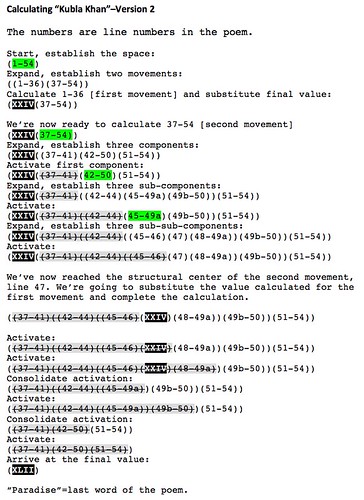
| Teaser: Calculating meaning in “Kubla Khan”, 2017 |
This image likely makes little sense. Don’t worry about it. There are two more images that won’t make much sense. Don’t worry about them either. Just look at them as you would displays in a museum or gallery and move on.
In Xanadu did Kubla Khan
A stately pleasure-dome decree:
Where Alph, the sacred river, ran
Through caverns measureless to man
Down to a sunless sea.

Most of my dialogs with ChatGPT have been about relatively abstract and general things, justice and charity, trumpets and trumpeters, some movies, tutoring, etc. I decided to test it on something specific and local, the Bergen Arches. Since, as it turns out, ChaGPT does know about them, I won’t tell you much here. They’re local to Jersey City, NJ, but most residents of the city have never seen them, and many have never even heard of them. You’ll find a Wikipedia entry about them, and there are newspaper stories here and there. But not much. Given the scope of the corpus on which ChatGPT was trained, it’s likely they’re in there somewhere. But it’s possible that they’re all but lost.

My guess was that the Chatster would have something to say:
What can you tell me about the Bergen Arches in Jersey City?
The Bergen Arches are a set of abandoned railroad tracks and tunnels located in Jersey City, New Jersey. They were originally built in the late 19th century as part of the Pennsylvania Railroad's main line, which ran from New York City to Philadelphia. The tracks and tunnels were later abandoned and fell into disuse in the mid-20th century.
The Bergen Arches have a storied history and have been the subject of much speculation and urban legend. Some people believe that the tunnels were used to transport illegal goods, while others have claimed that they were used as hideouts for gangsters or as shelters during World War II. Despite these rumors, there is no evidence to support these claims.
Today, the Bergen Arches are a popular destination for urban explorers and photographers, who are drawn to their unique and mysterious atmosphere. However, it is important to note that the Bergen Arches are private property and trespassing is illegal. Additionally, the tunnels and tracks are in a state of disrepair and can be dangerous to enter, so it is not recommended to explore them without proper training and equipment.
Do you know of any plans to turn the arches into a park?
There have been a number of proposals and plans to redevelop the Bergen Arches over the years, with the goal of turning them into a public park or green space. One proposal, called the Bergen Arches Greenway, envisions transforming the area into a linear park that would provide a safe and accessible recreation space for the community.
The Bergen Arches Greenway would feature walking and biking trails, as well as public art installations, seating areas, and other amenities. It is intended to be a dynamic and vibrant space that would serve as a hub for community events and activities.
At this time, it is unclear what the future holds for the Bergen Arches and whether any of these proposals will come to fruition. It is possible that the arches will eventually be transformed into a public park, but it will likely depend on the availability of funding and the support of local officials and community members.
Have you heard about the Bergen Arches Preservation Coalition?
The Bergen Arches Preservation Coalition is a group that advocates for the preservation and reuse of the Bergen Arches, a set of abandoned railroad tracks and tunnels located in Jersey City, New Jersey. The group is dedicated to finding a creative and sustainable solution for the arches that would benefit the community and the environment.
The Bergen Arches Preservation Coalition works to raise awareness about the arches and their history, and to promote their potential as a public asset. The group also engages with local officials and community members to advocate for the preservation and redevelopment of the arches, and to support efforts to turn them into a public park or green space.
It is not clear how active the Bergen Arches Preservation Coalition is at this time, or what specific initiatives they may be involved in. However, it is clear that the group is committed to the preservation and revitalization of the Bergen Arches, and is working to advocate for their reuse in a way that benefits the community.
The Bergen Arches Preservation Coalition is even more obscure than the Bergen Arches. We’re a very small group (I’m cofounder) and don’t get a lot of press. I was surprised that Chat found us and characterized us fairly accurately.

I decided to have ChatGPT speculate about the future. I asked it to tell three stories. I gave it specific instructions for the first but left the third open.
Imagine that the Bergen Arches has been made into a public park, green space. Tell me a story about two people going into the park, one from the East, and the other from the West. The meet in the middle and fall in love. Then what?
As the sun began to set on a warm summer evening, two people made their way towards the newly-renovated Bergen Arches park. On the east side of the tunnel, a young woman named Sophia was walking through the winding streets of Jersey City, her mind filled with the stress of her job as a social media manager. She had heard about the park from a colleague and decided to take a break from her hectic schedule to explore it.
On the west side of the tunnel, a man named Ben was strolling through the park, enjoying the peaceful atmosphere and the cool breeze that flowed through the tunnel. He had grown up in the area and had fond memories of playing in the park as a child. As he walked, he couldn't help but feel a sense of nostalgia wash over him.
As Sophia and Ben both made their way towards the center of the tunnel, they couldn't help but feel drawn to each other. They stopped and struck up a conversation, bonding over their shared love of the park and its rich history. As they talked, they both realized that they had a deep connection and, before they knew it, they had fallen in love.
After that magical evening, Sophia and Ben continued to visit the park on a regular basis, enjoying long walks and picnics under the towering arches. As they explored the park together, they found new wonders at every turn and their love for each other only grew stronger. They knew that their meeting in the Bergen Arches was truly meant to be, and they were grateful to have found each other in such a special place.
Very good. Could you tell me another story about the new Bergen Arches Park. In this story a young girl loses her puppy and is very sad. A couple days later she's in the park with her friends and her lost puppy comes to her out of the bushes.
It was a sunny Saturday afternoon when nine-year-old Emily's worst nightmare came true - her beloved puppy, Max, had gone missing. She had been playing with him in the backyard when he had suddenly darted off, disappearing into the bushes. Emily had searched everywhere for him, but he was nowhere to be found. She was devastated, and spent the next few days in tears, praying that he would come back to her.
On Monday, Emily's parents took her to the newly-opened Bergen Arches park to try and lift her spirits. As they walked through the tunnel, Emily couldn't help but feel a sense of sadness wash over her. She missed Max terribly and couldn't imagine life without him.
As they reached the center of the tunnel, Emily's friends urged her to come and play with them. Reluctantly, she followed them over to a nearby picnic table, where they started a game of tag. As Emily chased after her friends, she suddenly heard a faint whine coming from the bushes. She stopped in her tracks, listening intently. It was Max!
Overjoyed, Emily rushed towards the bushes and was greeted by the sight of her fluffy white puppy wagging his tail happily. She scooped him up in her arms, tears of joy streaming down her face. Max had been found!
From that day on, Emily and Max were inseparable. They spent every day together, exploring the park and playing in the sunshine. Emily was eternally grateful to the Bergen Arches park for reuniting her with her beloved puppy, and she knew that she would always have a special place in her heart for the tunnel that had brought them back together.
Great! Tell me another story about the Arches, any story you want.
One evening, a group of young artists gathered in the Bergen Arches park to create an impromptu art exhibit. The tunnel, with its towering arches and unique architecture, had always been a source of inspiration for the artists, and they had been looking for an opportunity to showcase their work in a public space.
As the sun began to set, the artists set up their easels and began to paint. The park was filled with the sound of brushes against canvas and the excited chatter of the artists as they worked. Among them was a talented young painter named Ava, who was creating a stunning landscape of the park at sunset.
As the evening wore on, more and more people started to gather around the artists, drawn in by the vibrant colors and creative energy of the group. Some stopped to watch the artists work, while others chatted with them about their techniques and inspiration.
As the night fell, the artists turned on strings of fairy lights that they had brought with them, illuminating their paintings and adding an ethereal glow to the tunnel. The park was alive with the sights and sounds of creativity, and it was clear that the Bergen Arches had become a hub for the city's artistic community.
As the exhibit came to a close, the artists packed up their things and said goodbye to the crowd that had gathered around them. They knew that they had created something special in the park that night, and they couldn't wait to come back and do it all again. The Bergen Arches had become a place where creativity and community came together, and it was a place that would always hold a special place in their hearts.
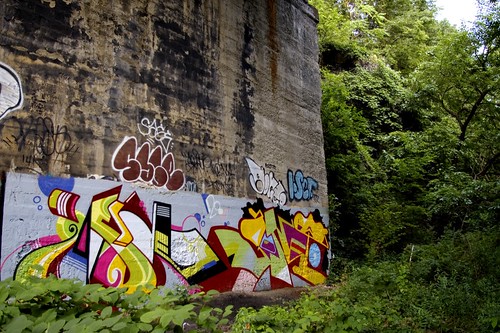
That last story is a reasonable evocation of what I had in mind when I first began thinking about the arches and issued a report: Jersey City: SK8 Park to the World. That report’s been on the web for over a decade in one form or another, but you have to download it. I have no idea whether or not it made it into ChatGPT’s training corpus. I’ve blogged about those ideas quite a bit, so perhaps it found out there. Who knows.

Old rail lines throughout the U.S. make for ideal bike trails—breezy, bucolic and punctuated with diverting pit stops. Here are some of the most rewarding routes, from California to New Hampshire. https://t.co/Kpb1tqj4xz
— The Wall Street Journal (@WSJ) June 13, 2021
Here’s a press conference announcing that a branch of the Centre Pompidou will be established in Journal Square in Jersey City:
Some years ago I wrote a report: Jersey City: From a Skate Park to the World. It laid out a vision for Jersey City as a cultural center and tourist destination. Here’s the abstract:
Jersey City has an unparalleled opportunity for developing park space and cultural amenities in a two-mile corridor running from the Powerhouse Arts District in the East, along the Sixth Street Embankment to the Palisades, then up the River Line to the Bergen Tunnel, and west through the Erie Cut-Bergen Arches to JFK Boulevard. What is unique about this strategy is that is builds on both abandoned railroad properties and on Jersey City’s status as a center for graffiti art of the highest caliber. By capitalizing on its graffiti heritage, Jersey City can attract tourists from around the world and establish itself as an international center of cutting-edge art.
You can read the report here (if your eyes can take it) or download it from the link below:
Jersey City: From a Skate P... by Bill Benzon
The report has three basic components: 1) a skate park, 2) graffiti, and 3) the Sixth Street Embankment and the Bergen Arches. The skate park opened last year and Jersey City now has a thriving graffiti and mural program. Now is the time to deliver on the Embankment and The Bergen Arches.
Over the years I’ve written a number of posts on the theme, Jersey City Rising.
Today, World's Fairs have been rebranded as "International Expositions" that occur every 5 years, and are a hollow shell of their former glory. They no longer showcase the promise of the future or celebrate achievement. Instead, they serve as national branding exercises, infrastructure development projects masquerading as innovation, architecture competitions, and an opportunity to promote tourism. If anything, they're the perfect representation of our current vision for the future: unfocused and uninspiring.
But it doesn't have to be this way; we can't afford for it to be this way.
The world has changed dramatically since 1984. We now live in the most incredible time in human history. The internet has brought billions of people together and tech companies have given us supercomputers in our pockets. We're starting to build hyperloops and supersonic jets. We're on the cusp of incredible breakthroughs in genetics, biology, medicine, food science, energy, transportation, manufacturing, computing, and robotics. We're finally going back to the moon and then on to Mars. We've once again seen the power of a collective vision with the record-breaking development of the COVID-19 vaccine.
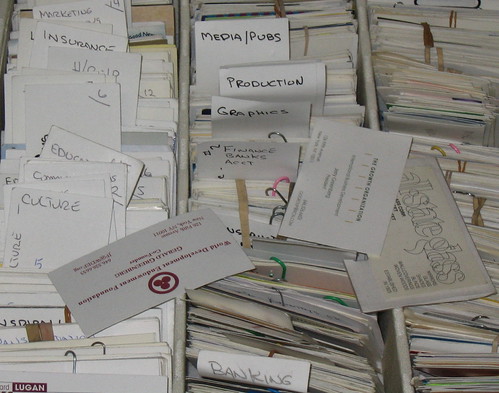 |
| Zeal's database system |
Jersey City has an unparalleled opportunity for developing park space and cultural amenities in a two-mile corridor running from the Powerhouse Arts District in the East, along the Sixth Street Embankment to the Palisades, then up the River Line to the Bergen Tunnel, and west through the Erie Cut-Bergen Arches to JFK Boulevard. What is unique about this strategy is that is builds on both abandoned railroad properties and on Jersey City’s status as a center for graffiti art of the highest caliber. By capitalizing on its graffiti heritage, Jersey City can attract tourists from around the world and establish itself as an international center of cutting-edge art.This development strategy includes three park-garden areas: 1) Sixth Street Embankment, 2) River Line Walk, and 3) Erie Cut. A skate park is already being planned for the River Line Walk area. At full development the Erie Cut would have a series of small gardens in various national styles – Indian, Chinese, Spanish, etc. – and a conservatory linking the bottom of the cut to the street-level surface(Route 139). There would also be two modest museum complexes: 1) a graffiti museum at 12th and Monmouth, and 2) a railroad museum nearby at the Bergen Tunnel. These complexes would include restaurants and shops.A thumbnail calculation indicates that these developments could bring new tourist revenue to the city in the amount $36 to $90 million (or more) annually. Other benefits include increased property values along the corridor and new businesses.