Showing posts with label PB Graff Jam. Show all posts
Monday, April 10, 2017
Thursday, October 22, 2015
Friday, August 21, 2015
Thursday, July 30, 2015
Monday, July 13, 2015
#GVM004: The Demolition Chronicles
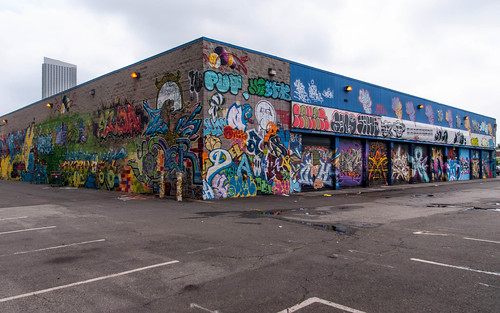
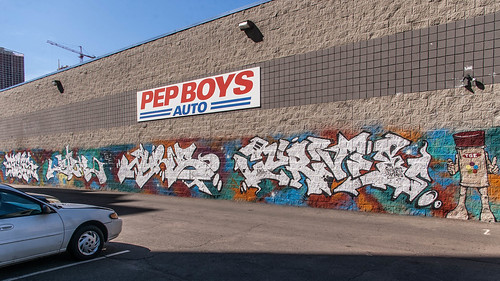
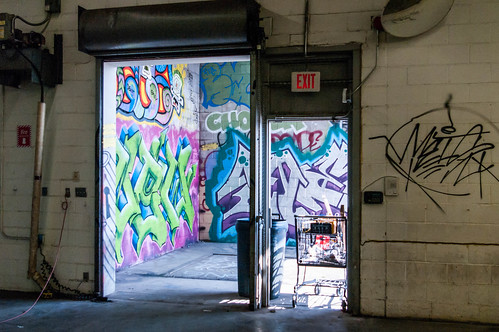
Here's another working paper, a major statement about contemporary graffiti and its (potential) role in transforming our cities. It's a collection of posts about Green Villian's Demolotion Exhibition at the now empty and about to be demolished Pep Boys store in the Newport are of Jersey City, NJ. URL's, abstract, contents, and introduction below:
- Academia.edu: https://www.academia.edu/13981255/_GVM004_The_Demolition_Chronicles
- Soscial Science Research Notes: http://ssrn.com/abstract=2630053
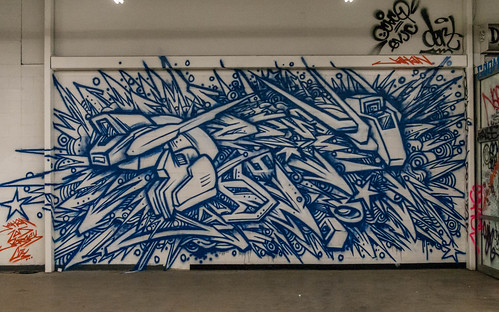
Abstract: This document describes a major graffiti exhibition involving 100 artists producing 28,000 square feet of graffiti on the interior and exterior walls of a Pep Boys store in Jersey City. The building has been sold to developers, who will demolish it in mid-summer 2015. Topics include: history of the project, stylistic and thematic analysis of the art, and social context of the exhibition.
C O N T E N T S
Introduction: GVM004 Rises, Falls, Resonates – 2
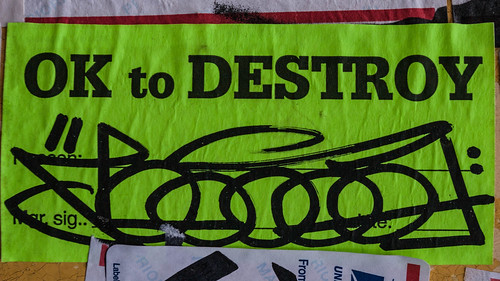
OK to Destroy: Jersey City’s Graffiti Jam of April 2015 – 13
SP One, What’s he thinking?– 24
Graffiti: From Art Crimes to Family Day – 26
Green Villain Karma: Urban Buddhism in Jersey City – 29
Good Grief! War Boys in the Promised Land – 31
Study in Pink and Silver: Why Not Call It an Installation? – 35
Demolition Exhibition @ #GVM004: Graffiti at the Transition from Industrial to Informatic Culture – 38
Some Styles at the Demolition Exhibition – 40
Sacred Animal Beyond Category: Super-Dope in Layers – 46
Even Heather Mac Donald’s Welcome to Tag-Up at the Demolition Exhibition – 48
Appendix 1: Time Line – 60
Appendix 2: Is it Art? – 60
Appendix 3: Graffing the Future: Is the next phase of human cultural evolution being inscribed on walls by graffiti writers and street artists? – 62
Appendix 4: Sharks in Formaldehyde: New York’s Met and the People Who Made It – 65
Introduction: GVM004 Rises, Falls, Resonates
Let’s begin at the beginning. I am a thinker, writer, musician, and photographer. For the past few years I’ve been functioning as senior advisor to Green Villain, LLC. I have no business card with such a title on it and likely never will. Nor, for that matter, does Green Villain have an org chart, official or unofficial. Not yet. Green Villain is the business of Greg Edgell and assorted associates, as the project requires. Greg is an event producer, DJ, has a record label, and wrangles graffiti writers and street artists on projects large and small.
The Demolition Exhibition has been our largest project so far. This paper is preliminary and partial documentation of it. The bulk of it consists of blog posts that I wrote while the project was unfolding. This introduction is new.
First I run through the history of the project. Then list media coverage, Green Villain’s online documentation, say a word about each of the posts in the rest of the document, list the artists involved, and conclude with a note about the title.
How It Happened
The demolition exhibition just happened. No, it didn’t grow up out of the ground all by itself, but it didn’t arise through the execution of a specific plan of action – at least no plan more specific than “use graffiti for the public good”. Rather, each step of the way we just took advantage of opportunities that appeared before us, with Greg (aka Green Villain) doing the heavy lifting and me providing advice and encouragement at every step.
On the public good, several years ago I’d written a report, Jersey City: From a Skatepark to the World, and shown it to a number of people, including Greg. More immediately, last Spring (2014) Greg decided to install murals wherever he could wrangle walls in Jersey City, New York City, and elsewhere. He’d drive around looking for likely walls and, when he spotted one, he’d find out who owned the property. Then he’d cut deals. The Pep Boys in the Newport area of Jersey City was the 4th deal he landed, hence the designation “GVM004”–Green Villain Mural number 4.
That store’s rear wall, which faces the Hudson-Bergen Light Rail, has three layers of graffiti on it.. Starting in mid-August, Jurne, Curve, Twigs, and Esteam of the TGE crew laid down the first layer:
At the beginning of October Loser, Distort, Acro and Ntel of the AIDS – Alone in Deep Space – crew went to work on the second layer:
Saturday, July 11, 2015
Some points of interpretation: young girls, crowns, graffiti [#GVM004]
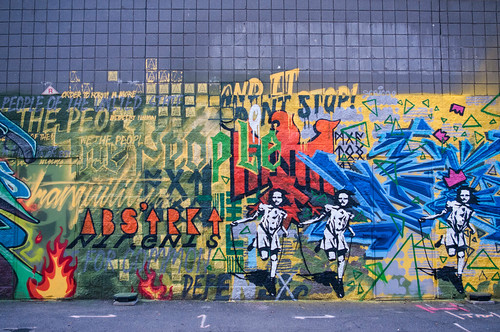
This is from the second layer (of three) of graffiti at the northern end of the rear facade of the now abandoned (and soon to be demolished) Pep Boys in the Newport area of Jersey City.
It is by NTEL, of the AIDS crew. If you look closely you’ll see wording from the Preamble of the Constitution of the United States: “We the People…” You'll also see (left of center) "ABSTRACT" in orange with shadows cast below. Those shadows hint at "intelligence" or "NTELigence".
I’m not sure what’s going on with the three identical little girls jumping rope in a dress out of the 1950s. They’re rendered in the style of stencil work and may reference Banksy, the best-known stencilist in the world. Banksy frequently uses images of young girls.
Notice the magenta crown over the heard of the right-most girl and the small crowns above it, as though they were blown from the heads of the other two girls. Crowns do not get on graffiti pieces by arbitrary artistic choice. They have a special meaning in graffiti culture. Crowns are used to mark a so-called King of graffiti. You’re a King if you’ve mastered the three basic disciplines – tags, throw-ups, and pieces – and have executed a large body of work over several years that is visible in many places. Why, then, are these girls being marked as kings, if that’s what’s being done?
Once Again: Graffiti, Is it Art?
As often as not that question is asked in a context where the implied answer is, “no, it’s vandalism”. While that IS and important issue, and one that DOES interest me, that’s not what I’m thinking about now.
I’m thinking more about a version of the question that implies that ART has some essence, so identifiable mark, that proclaims it to be art. In that version, one proceeds by explaining what that essence is and how you identify it. This is a difficult question and, in fact, some aestheticians and critics have simply given up on it. There seem to be so many very different things that people call (legitimately) art that it’s too difficult specify what it is.
I’m sympathetic to that problem, so sympathetic that I’m not going to attempt to identify an essence and then pin it, or not, on graffiti.
I’ve got something else in mind: variety. Variety in style, variety in quality.
One post I did in connection with Green Villain’s recent Pep Boys project, Some Styles in the Demolition Exhibition, identified four different styles. Describing the differences is tricky, but seeing them is not. How many distinctly different styles were on display in that project, as I made no attempt at a complete survey in that post? Ten, twenty, but certainly not 50 – there were only about 100 artists involved. And of course we didn’t even come close to sampling the whole space of graffiti.
If you examined that whole space, how many different styles would you find? I might well be able to find 100 in the work I’ve photographed in Jersey City, and that’s just one relatively small region. World-wide would it be 1000, less, more? I don’t know. Are those significant numbers? What’s the comparison? I don’t know.
My point is simply that there is significant stylistic variety. We’re not dealing with a hodge-podge of more or less opportunistic and unschooled variety. There’s systematic variety, driven in part by the competitive need to differentiate yourself from others and, in part, by a desire for visual exploration.
Monday, July 6, 2015
Even Heather Mac Donald’s Welcome to Tag-Up at the Demolition Exhibition [#GVM004]
A defense of graffiti’s egalitarian values in an age of oligarchic excess, financial gamesmanship, and ecotastrophe
Who the Eff, you ask, is Heather Mac Donald? And just why are you addressing her?
Heather Mac Donald is a well-known commentator and is the Thomas W. Smith Fellow at the Manhattan Institute for Policy Research. As the name indicates, it’s a Manhattan-based think-tank that, in its own words, “has been an important force in shaping American political culture and developing ideas that foster economic choice and individual responsibility.” Four years ago Mac Donald wrote two critiques of graffiti for City Journal, a quarterly published by the Manhattan Institute. The pieces were occasioned by Art in the Streets, an exhibition at the Los Angeles Museum of Contemporary Art, which billed it as “the first major U.S. museum survey of graffiti and street art.” And that, so far as I know, is true. It’s by no means the first time graffiti’s made it into a museum, but it was the first major retrospective.
One piece, Radical Graffiti Chic, is about graffiti and graffiti culture generally while the other, Crime in the Museums, is a review of the exhibition. Needless to say, she was not impressed. But she WAS angry and disgusted. Graffiti after all, is vandalism, as we all know. Moreover Mac Donald asserted that it’s not particularly accomplished or interesting as art, it does nothing to better the lives of poor communities, and, in the museum world it’s just something for rich oligarchs to play with while they’re safe in their urban aeries. I rather agree with the last, but have severe doubts about her other objections. But I don’t want to go into that here, as I’ve already responded to some of her remarks in two pieces:
Rather, I want to look at a stunt she pulled when she went to see the show. As she tells it in Crime in the Streets:
Once allowed inside the show, I went to Martha Cooper’s influential photos of bombed subway cars and made ready to write my tag on the wall next to them, eyeing a guard conspiratorially. “Oh, no, please!” intervened the watchman apologetically. “You can’t do that.” I tried again next to the timeline entry celebrating the start of Fairey’s stickering campaign in 1989. “You can’t write on the wall,” another guard told me.
Hypocritical to the end, MOCA is selling graffiti spray paint in its bookstore along with its $55 Art in the Streets catalogues.
Of course she knew very well that she wouldn’t be able to write on the walls.
As to whether or not she should have tried that stunt, that’s an interesting question. If she’d consulted Socrates, who drank hemlock for his work among Athenian youth, he might well have advised her: “If you’re willing to pay the fine and do the time, sure, go ahead.” [I’m thinking, of course, of the Crito.] But obviously she wasn’t. She was indulging in a bit of theater so she could use it in her review. It was a cheap no-risk trick.
But she does have a point. There is some hypocrisy there. Anyone who’s involved with graffiti knows of the criminal risk involved and we all think about it. Just what we think, that obviously varies from one person to another. But some of us do think we’re living in a world that calls for trespass and some of us just want to get over. As I’ve said, I don’t want to argue the point here and now. I want to switch the game a bit.
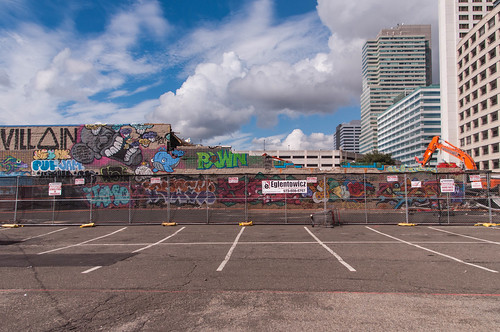
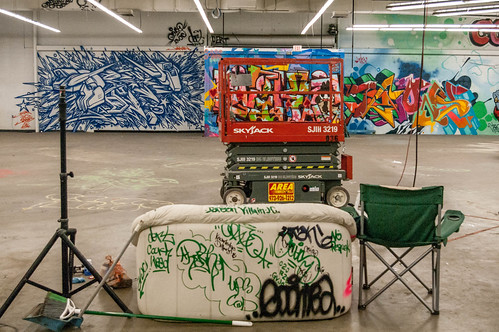
I want to look at Green Villain’s Demolition Exhibition. As you may know, it’s a graffiti show that recently concluded it’s one-week run in a now-abandoned Pep Boys store in the Newport area of Jersey City. Why only one week? Because the building’s slated for, you guessed it, demolition. Green Villain, a small production company, made a deal with Pep Boys to do, first the rear wall (facing a commuter railway line), and then when the building was sold and slated for demolition, the entire exterior. GV then made another deal with the developer, Forest City, to do the interior and open the building to the public for a week. That’s what’s just concluded: one week (June 27 to July 5) and 100 hundred artists, free.
Friday, July 3, 2015
Thursday, July 2, 2015
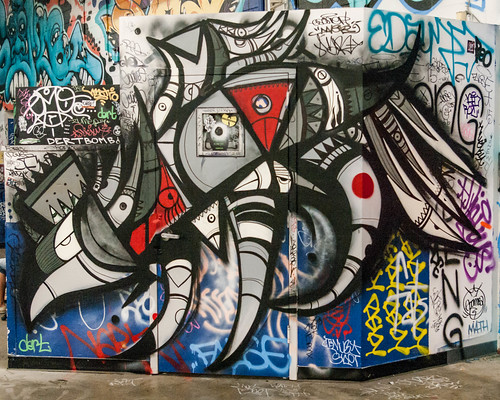
Sacred Animal Beyond Category: Super-Dope in Layers [#GVM004]
Three layers: 1) The Animal is the top layer and is outlined in black (the artist, Fathima [& Instagram], is from Dubai). It's painted on 2) the wall of a small semi-enclosed office (look at the way the wall meets the floor). The surface of that wall is the middle layer. Everything else is the 3) bottom layer: the floor and the wall behind the office wall.
I took that photo today: July 3, 2015. Here's how that wall looked on June 5, 2015:
May 27, 2015:
Monday, June 29, 2015
Friday, June 26, 2015
Friday Fotos: Some Styles at the Demolition Exhibition [#GVM004]
![]() |
| AIDS crew |
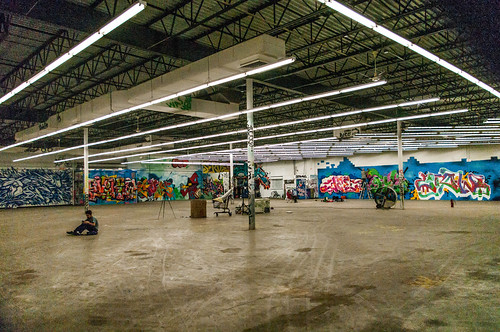
Tomorrow (Saturday, June 28, 2015) marks the official opening of Green Villain’s Demolition Exhibition, a show of graffti installed (good Art Word, that) on 30,000 sq. feet of walls in the Newport area of Jersey City. Of course artists and others have been in and out of the building for the last two months, so the boundary between official opening hours and the rest of time and space is somewhat porous. But that will all come to an end sometime in July, when the building is demolished and returned to dust.
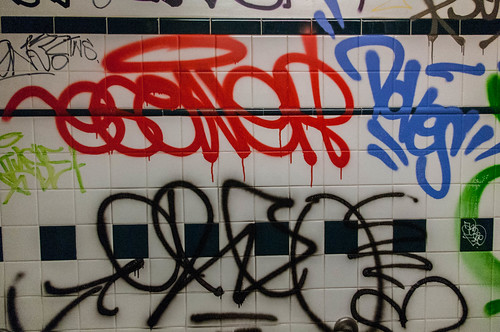
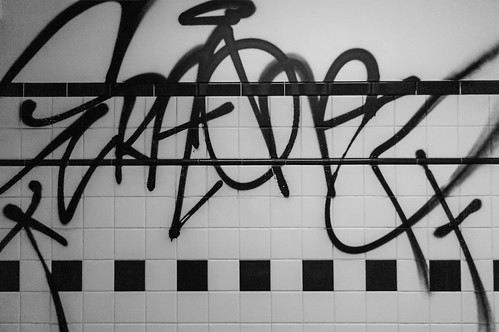
With all that in mind, I thought I’d offer a few comments on some of the styles in view. As far as I know graffiti styles have not been subject to classification and analysis beyond the standard distinction between wild style, in which the letters and cut up, confused, and disguised, and all the rest. So there is no official nomenclature. Nor do I intend to introduce any here.
But I do think it’s useful/helpful to note that it’s not all alike, especially if you’re not familiar with graffiti.
* * * * *
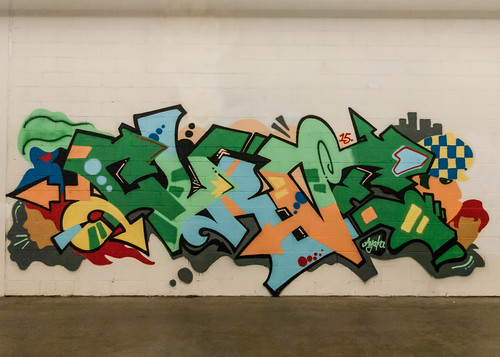
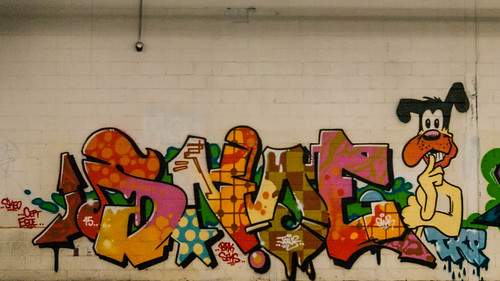
These pieces exhibit a ‘flat’ style, which may be the most common style in the show. There may be some 3D cues here and there, but they’re minimal. There’s no attempt to imply and overall 3D space. Notice the way patterns are deployed across the surfaces of the letters:
![]() |
| Revenge |
![]() |
| CURVE |
![]() |
| SNOE |
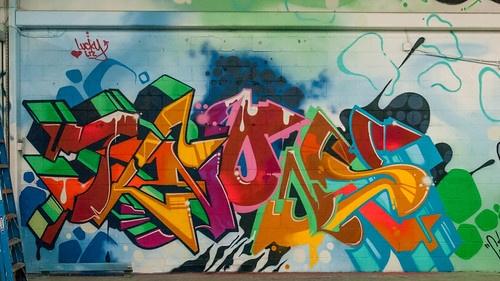
This, in some ways, is flat. But the 3D cues (drop shadows) are very strong, though there is no overall 3D space:
![]() |
| Knows |
Monday, June 22, 2015
Demolition Exhibition @ #GVM004: Graffiti at the Transition from Industrial to Informatic Culture
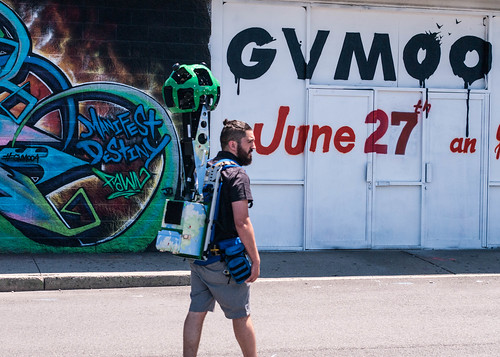
While the human act of marking walls goes back 10s of thousands of years, aerosol graffiti is quite recent and, in its current form, is often propagated around the world through digital images residing on the web. With that in mind, consider the following photo, taken at the site of Green Villain’s Demolition Exhibition in the Newport area of Jersey City:
The man is Omar, and he works for Google Street View. The contraption on his back is a Trekker camera, which Google developed for photographing streets. While the camera was originally development for deployment on top of an automobile which drives the streets and photographs the scene, this version allows access to off-street areas. In this case Omar is walking around a building that is covered with graffiti. Omar’s compatriot, whose name I forget, went inside the building with a slightly different version of the camera, one mounted on a frame you can push along the floor.
The building used to be a Pep Boys store. Pep Boys, as you know, services automobiles and sells parts, accessories, and supplies. Pep Boys is thus about the automobile, a technology which dominated American life in the second half of the 20th century, though it originated in the 19th century.
Street View is also about the automobile, but it’s 21st century technology based on computers. Google itself arose in the last decade of the 20th century as a search engine for the web; and that is still the center of its business. At some point, though I forget just when, it also started serving up street maps, and it created Street View to augment that business.
Street View images live online. They don’t come bundled up with paper maps you buy at a gas station or from AAA. The camera is itself 19th century technology, with antecedents going back a century or three before that, but the Trekker system combines lasers and GPS and digital computing, all late 20th century tech.
Graffiti of the sort on and inside this building originated in the late 1960s and early 1970s. It is based mostly, though not entirely, on paint delivered by aerosol cans. The aerosol can originated in the mid-20th century. During the 1970s and 1980s the subway system of New York City was the most important site of graffiti development. Subways are, of course, train technology, which dates back to the early 19th century, with electrification coming at the end of the century.
So, graffiti originated with the application of paint using 20th century technology to trains based in 19th century technology. When the web bootstrapped onto the Internet in the mid-1990s graffiti followed almost immediately. It will be six months or more before the images Omar took will go live on the web. But when that happens, we will be taking another step into a new era in graffiti culture.
Wednesday, June 17, 2015
Wednesday, June 10, 2015
Sunday, June 7, 2015
Study in Pink and Silver: Why Not Call It an Installation? [#GVM004]
What, pray tell, is this?
It’s two bottles on a shelf or something.
Well, yeah, that’s obvious. But what kind of bottles...
look like beer bottles, maybe
but beer bottles aren’t silver
neither are they. that’s paint
not applied very carefully either, looks like it was sprayed
and the spray caught the wall too.
Saturday, June 6, 2015
Good Grief! War Boys in the Promised Land [#GVM004]
One could, of course, dismiss it because it’s comic strip imagery, and therefore Not Serious. One could also dismiss it as graffiti, and therefore Not Serious.
But I can’t do that, not while I’m being a Martian Anthropologist. In that role I have no choice but to take what the natives do as being quite serious. That is, serious in the sense that it indicates what’s going on in their society.
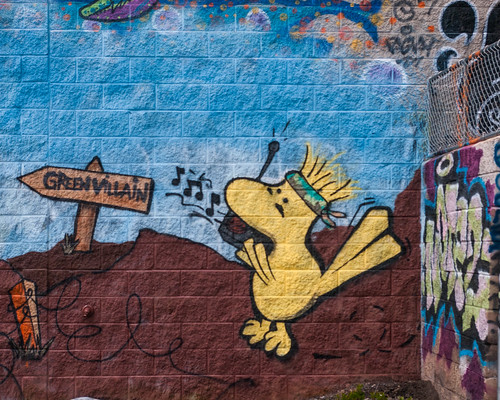
Here’s Woodstock, a character from the comic strip, Peanuts, which is surely smack dab in the center of post-war (WWII) American culture and which has shown up in graffiti culture since the mid-1970s–that is to say, from the beginning:
The headband establishes Woodstock’s hippie cred and the music-blaring transistor radio dates him.
The “Greenvillain” sign is a shout-out to Greg Edgell, who runs Green Villain, the production company that’s organizing the graffiti on the soon-to-be-demolished Pep Boys building in the Newport area of Jersey City. This is painted on the southwest corner of the building.
But why the brown? Is it supposed to represent bare dirt? What about the black loops? Since I’ve seen the whole mural I’ll tell you what it is, it’s barbed wire. Woodstock is strolling around on a battlefield. Vietnam perhaps? After all, the war there was going hot and heavy when the flower children gathered in the mud at Woodstock, New York, and listened to Jimi Hendrix transform “The Star-Spangled Banner” into a war protest anthem.
Thursday, June 4, 2015
Monday, June 1, 2015
Subscribe to:
Posts (Atom)