Another working paper on a classic Walter Lantz cartoon from the 1940s. Download from:
Abstract and Introduction below:
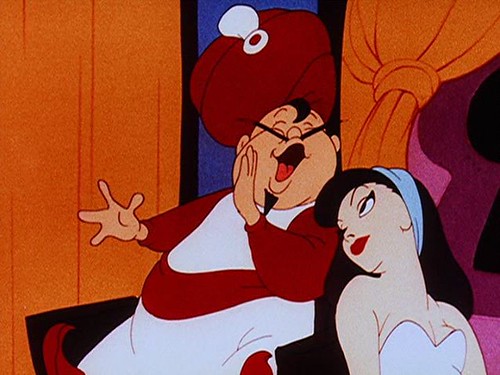
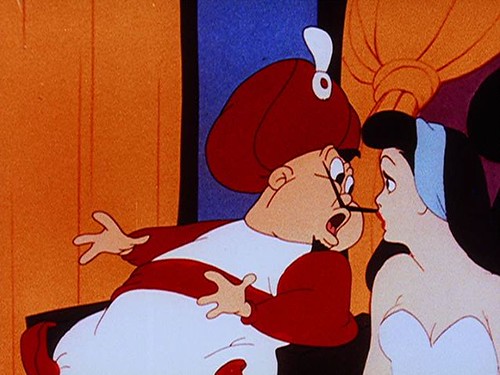
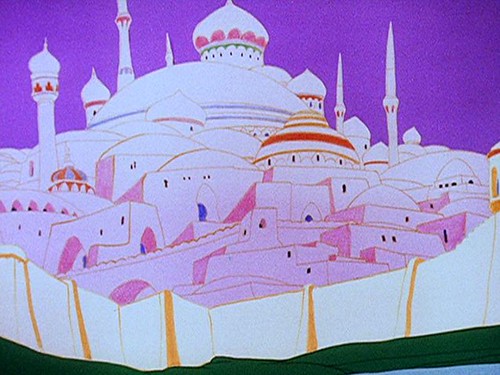
Abstract: The Greatest Man in Siam is a Walter Lantz cartoon from 1943. It has a pseudo-Oriental setting and depicts a contest to win the hand of a young princess. The losers present themselves as intelligent, rich, and athletic, respectively, while the winner is a good musician and dancer. He’s also the only one who plays attention to the princess and doesn’t insult the king. The cartoon ends with everyone dancing, thus affirming communal values over individual accomplishment. Just before the end there is a virtuoso dance sequence between the couple; it was superbly animated by Pat Matthews.Contents:Introduction: What Fun! Learning to See 1The Hottest Man in Siam 4The Greatest Social Contract in Siam 18Why Siam? The Contest Motif 32The Phallus in the Palace 34Eyes, Electricity, and a Contest 38In Praise of Cartoons: Lantz Does Conceptual Integration 45The Siam Paradox 54Shamus Culhane of the Avant-Garde 55
Introduction: What Fun! Learning to See
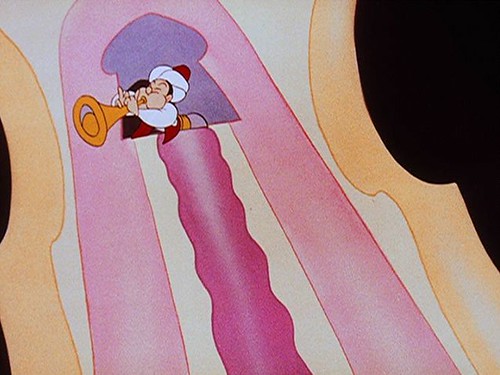
This cartoon gave me a great deal of pleasure. Above all, there is the dance sequence, which is flat-out joyous wonderful. Then there is the anonymous solo trumpeter on the sound track, who just kills it! I’ve rarely heard such heart-felt and enthusiastic playing on the sound track of any film. As I’m a trumpet player myself, I suppose I get more of a kick out of the trumpeting that most would, but the player’s passion is evident.
Then there is the chase, the intellectual chase. I didn’t start out to write a series of posts on The Greatest Man in Siam. At this point I don’t really remember just what I set out to do – though now that I’ve looked, I notice I’ve got some remarks about that in my initial post. About all I can remember is that, when I first decided to blog about it, I didn’t intend to write so very much about that dance sequence. But once I actually started planning the post, that was when I figured that I really needed to devote a whole post to nothing more than the dance sequence. I figured I could take care of the rest of the cartoon in another post.
It didn’t quite work out that way. Once I started digging I had to dig for more. It took me awhile to figure out what was going on in this cartoon. And then, when I was pretty much done The New York Times published an article about the cartoon’s director, Shamus Cullhane, pointing out that he consciously and deliberately slathered this cartoon in phallic symbolism.
What fun!