Showing posts with label abundance. Show all posts

Friday, August 21, 2026

A third transition in science and the evolving cosmos

Kauffman SA, Roli A. (2023) A third transition in science? Interface Focus 13: 20220063. https://doi.org/10.1098/rsfs.2022.0063

Abstract: Since Newton, classical and quantum physics depend upon the‘Newtonian paradigm’. The relevant variables of the system are identified. For example, we identify the position and momentum of classical particles. Laws of motion in differential form connecting the variables are formulated. An example is Newton’s three laws of motion. The boundary conditions creating the phase space of all possible values of the variables are defined. Then, given any initial condition, the differential equations of motion are integrated to yield an entailed trajectory in the prestated phase space. It is fundamental to the Newtonian paradigm that the set of possibilities that constitute the phase space is always definable and fixed ahead of time. This fails for the diachronic evolution of ever-new adaptations in any biosphere. Living cells achieve constraint closure and construct themselves. Thus, living cells, evolving via heritable variation and natural selection, adaptively construct new-in-the-universe possibilities. We can neither define nor deduce the evolving phase space: we can use no mathematics based on set theory to do so. We cannot write or solve differential equations for the diachronic evolution of ever-new adaptations in a biosphere. Evolving biospheres are outside the Newtonian paradigm. There can be no theory of everything that entails all that comes to exist. We face a third major transition in science beyond the Pythagorean dream that‘all is number’ echoed by Newtonian physics. However, we begin to understand the emergent creativity of an evolving biosphere: emergence is not engineering.

* * * * *

Eli Stark-Elster, Earth’s Organisms Developed Via Evolution. Some Theorists Wonder: What if the Entire Cosmos Did, Too? Smithsonian Magazine, August 18, 2026.

Historically, scientists have viewed the cosmos as akin to a rock—complex, perhaps even beautiful, but formed through arbitrary events. Evolutionary cosmologists instead argue that universes, like living organisms, grow and reproduce, spinning off new universes with small variations from their progenitors. In doing so, these cosmic offspring are refined across generations into forms that maximize the number of universes yet to be born. Since the Big Bang, our universe, like any developing child, has been unfurling into an optimal shape.

Under this view, the universe is not a rock. It is an egg.

This analogy comes from Julian Gough, an Irish poet, novelist and musician best known for writing the short story that plays at the end of the video game “Minecraft.” He has recently become a public advocate for and scholar of cosmological evolution. Gough writes a Substack blog, The Egg and the Rock, where he publishes essays, personal updates and predictions about new data from the James Webb Space Telescope.

Over a decade ago, Gough began wrestling with the question of why the complexity of our universe has increased over time. “It goes from … a ball of hot gas to building out structures like stars and galaxies,” he says. From there come planets and, on at least one of them, biological life. “That’s a very strange thing for hot gas to do.”

Maybe, he wondered, the universe evolved into its current form. “It seemed to me an evolutionary explanation was the natural one,” he says. “In every sphere, when we discover a self-ordering, self-complexifying system, it turns out it’s had a previous evolutionary history. And why would that not apply to the universe itself?” [...]

Smolin published his ideas in a 1992 paper titled “Did the Universe Evolve?” as well as a 1997 popular-science book called The Life of the Cosmos. Gough found both and read them excitedly. And yet, it seemed as though virtually nothing had come of Smolin’s ideas since. “Obviously,” says Gough, “[I thought] it must be wrong, because it had been 25 years and nobody seemed to be putting it forward as one of the possible mainstream explanations. Then I dug into the literature and realized—oh, my God—it hasn’t been falsified. It just hasn’t been engaged with properly at all.”

Smolin’s theory had not completely vanished. Some futurist philosophers had extended the idea to explain the emergence of complex life from hot gas and stars. Humans exploit increasingly powerful energy sources, a progression they argued could culminate in artificial black holes. If those black holes spawned new universes, then a cosmos capable of producing technologically advanced life might produce more offspring. The progression from hot gas to stars, life and technology could, they proposed, be a product of cosmic natural selection. [...]

On July 8, 2022, four days before Webb released its first data, Gough published his predictions on Substack. Already aware that his amateur background might make him sound unreliable, he feared being publicly wrong. “I was really terrified,” he says. “This could be fantastically humiliating.”

Fortunately for Gough, the results were the opposite. Webb found galaxies forming earlier, faster and in a more orderly manner than standard physics models had anticipated. In November 2022, NASA reported evidence that some galaxies had begun assembling only about 100 million years after the Big Bang, while follow-up observations of a galaxy just 470 million years after the event found an unusually massive black hole—nearly as massive as all the stars surrounding it.

In a 2025 paper published in the Astrophysical Journal, scientists described these discoveries as a “conundrum [that is] part of the larger challenge to understand the stunning prevalence of massive structures and galaxies in the first few 100 million years after the Big Bang.”

There's more at the link. [H/t Tyler Cowen]

Cf. my article, Welcome to the Fourth Arena – The World is Gifted, 3 Quarks Daily, June 20, 2022.
Wednesday, March 19, 2025

Dan Davies: cybernetic abundance and its limits

cybernetic abundance and its limits by Dan Davies

the age of half-diminished expectations

Read on Substack

From then end of the article:

The problem of abundanceism, restated in this form, is simply that the liberal regulatory state isn’t adequate to the task.

Specifically, the problem is that, for the reasons noted above, as things grow and become more complex, a greater proportion of their energy and resources have to be devoted to purely internal and administrative matters. The regulatory model needs, ideally, to grow alongside the system that it’s modelling, so that it’s still capable of representing the complexity of the system.

If it doesn’t, then the people who still have the job of stopping things getting in the way of each other will reorganise, in order to try to continue to do their job with an inadequate model. One of the most effective organisational techniques to do this is to replace, as much as possible, “how and why” questions with “yes or no” questions. The “planning system” gradually stops being one in which the word “planning” has something close to its ordinary meaning, and moves toward becoming a “permissioning authority”.

As the resource imbalance gets bigger, another organisational/cognitive technique which helps reduce the load even more is to adopt something like the Hippocratic principle. It’s much easier to turn a “no” into a “yes” than vice versa, and part of the cost of building something is that it constrains what can be built in the future. So, the greater your uncertainty about the future (perhaps because you don’t have the capacity to think about it any more), the more likely you are to be worried about closing off options.

Where I think I end up with this is in a view that the battle between “builders” and “blockers” is mischaracterised. These are two wrong answers to a problem which is fundamentally caused by the imbalance between the complexity of the system and the capacity to manage it. Neither builders, nor blockers, but planners.

This suggests that AI systems than can really do planning, as opposed to the pseudo-planning of LLMs and their extensions, will be enormously valuable. Thus it’s almost tragic that Silicon Valley is unlikely to produce such systems. Why? Because they appear to have bought the sunk-costs fallacy hook, line, and sinker and so are committed to the current repertoire of techniques.

Sunday, March 9, 2025

We need a politics of abundance

Ezra Klein, There Is a Liberal Answer to the Trump-Musk Wrecking Ball, NYTimes, March 9, 2025.

Look at the places Democrats govern — liberal strongholds like New York, Illinois and California. In 2023, California saw a net loss of 268,000 residents; in Illinois, the net loss was 93,000; in New York, 179,000. Why are they leaving? In surveys, the dominant reason is simply this: The cost of living is too high. [...] And so they’re going to places where all of that is cheaper: Texas, Florida, Arizona.

For Democrats, this is a political crisis. In the American system, to lose people is to lose power. If these trends hold, the 2030 census will shift the Electoral College sharply to the right. [...]

But it is also a spiritual crisis: You cannot be the party of working families when the places you govern are places working families cannot afford to live. You are not the party of working families when the places you govern are places working families can no longer afford to live.

This is the policy failure haunting blue states. It has become too hard to build, and too expensive to live, in the places where Democrats govern. It is too hard to build homes. It is too hard to build clean energy. It is too hard to build mass transit. The problem isn’t technical: We know how to build apartment complexes and solar panel arrays and train lines. The problem is the rules and the laws and political cultures that govern construction in many blue states.

As an illustration of the expense and difficulty of getting things done in America, Klein recounts the debacle of high-speed rail in California. Construction begann in 2008: less than three hours between LA and San Francisco, costing less than $40 billion, and ready by 2020. It's now 2025. Lots of money's been spent, lots of track laid. But it doesn't come anywhere near to connecting those cities. Current estimate: $110 billion.

What has taken so long on high-speed rail is not hammering nails or pouring concrete. It’s negotiating. Negotiating with courts, with funders, with business owners, with homeowners, with farm owners. Those negotiations cost time, which costs money.

Those negotiations lead to changes in the route or the design or the construction, which costs money and time. Those negotiations are the product of decades of liberal policies meant to protect against government abuses. They may do that. But they also prevent government from building quickly or affordably.

We need a politics of abundance:

The populist right is powered by scarcity. When there is not enough to go around, we look with suspicion on anyone who might take what we have. That suspicion is the fuel of Trump’s politics. Scarcity — or at least the perception of it — is the precondition to his success.

The answer to a politics of scarcity is a politics of abundance; a politics that asks what it is that people really need and then organizes government to make sure there is enough of it. [...]

Abundance reorients politics around a fresh provocation: Can we solve our problems with supply? Valuable questions bloom from this deceptively simple prompt. If there are not enough homes, can we make more? If not, why not? If there is not enough clean energy, can we make more? If not, why not? If the government is repeatedly failing to complete major projects on time and on budget, then what is going wrong and how do we fix it? If we need new technologies to solve our important problems, how do we pull these inventions from the future and distribute them in the present?

But if Democrats are to become the part of abundance, they have to confront their own role in creating scarcity. In the last few decades, Democrats took a wrong turn. They became the party that believes in government, that defends government, not the party that makes government work.

Liberals spent a generation working, at every level of government and society, to make it harder to build recklessly. They got used to putting together coalitions and legislation that gave everyone a bit of what they wanted, even if it meant the final product was astonishingly expensive, or decades late, or perhaps never found its way to completion at all. They explained away government’s failures rather than fixing them. They excused their own selfishness, putting yard signs out saying no human being is illegal, kindness is everything, even as they fought affordable housing nearby and pushed the working class out of their cities.

There's more at the link.

FWIW, I've sketched out a metaphysics of abundance, a word I borrowed from Paul Feyerabend. Metaphysical abundance is not quite the same as Klein's economic abundance, but I strongly suspect that economic abundance presupposes metaphysical abundance.

Note to self: Remember that as you work on Kisangani 2150.

Saturday, March 23, 2024

Fecundity and Implementation in a Complex Universe

I'm bumping this post from October 2011 to the top of the queue for two reasons: 1) in its discussion of abundance it contains seeds to the idea of arena, which I have made one of my fundamental philosophical concepts, and 2) it employs chess as a metaphor.
 
* * * * *
 
Or, Compositionism in the Pluriverse

As I’ve indicated several times before, one of the reasons I’m finding object-oriented ontology (OOO) and Latour so congenial is that I’ve had similar ideas, often in conjunction with the late David Hays. But we arrived at those ideas, not through immersion in continental philosophy and thought, but through the cognitive and neurosciences. In that we have been a bit like Latour in that we’ve mostly been trying to figure out how things work out there in the world, not trying to do philosophy. But we did some, if not philosophy, philosophy-like thinking.

Thus we came to believe that reality is inherently complex and that, consequently, the way to empirical truth was not through dispersing phenomenal complexity in favor of a deeper underlying simplicity. We came to talk of a universe that not only has spawned multiple Realms of Being, but that might well spawn more of them. Had we known William James’ term pluriverse I’m sure we would have adopted it.

We didn’t and so we couldn’t. Instead we talked of the universe as being fecund (Hays proposed the term), with later Realms of Being implemented in ones that had evolved earlier. Our notion of implementation, which derives from computer science, seems kin to Latour’s notion of composition. Objects of one kind can be said to be implemented in, composed of, objects of some other kind. But the implemented/composed objects cannot be reduced to the objects of which they are composed/implemented.

We never attempted a systematic exposition of this notion, but I did outline it briefly in a review of John Horgan’s The End of Science. You can download a PDF of the complete review from my Academia page, here. I have reprinted the discussion of fecundity and implementation below.

Note that it is not at all clear that where Hays and I talk of Realms of Being that we are talking of Being in the sense of object-oriented ontology. Most likely we’re not. But this is a matter of mere terminology, not fundamental conceptualization.

* * * * *

A New World: The Fecund Universe

One of the people Horgan talked to is Paul Feyerabend, the well-known philosopher of science. At the time Feyerabend was working on his autobiography (Killing Time) and on another philosophy book, one he was unable to complete before he died.
Tentatively titled The Conquest of Abundance, it addressed the human passion for reductionism. “All human enterprises,” Feyerabend explained, seek to reduce the natural diversity, or “abundance,” inherent in reality. “First of all the perceptual system cuts down this abundance or you wouldn't survive.” Religion, science, politics, and philosophy represent our attempts to compress reality still further. Of course, these attempts to conquer abundance simply create new abundances, new complexities.
This has the feel of the emerging world view, especially the line asserting that “these attempts to conquer abundance simply create new abundances.” That abundance is what the new view is about. It is a topic the late David Hays and I discussed under the rubric of fecundity—Hays suggested the term—and that is the word I shall use. I have no particular reason to believe that our discussions paralleled Feyerabend's ideas in any detailed way, but “abundance” and “fecundity” share a thematic similarity.

Let us start with an analogy. Consider the game of chess. It has a finite number of pieces and is played on a board which is finite in size; the rules governing play are finite in number and restrict each move to a finite number of steps; and all games must end in a finite number of steps, though it is possible for a game to end in a draw. Thus described chess is an inherently simple game. And yet it is rich enough to tax the abilities of very intelligent and creative people who devote their lives to playing it. A substantial community of people devotes a great deal of time and effort, not only to playing chess, but to studying it and teaching it, writing books and articles and, in the last half-century, programming computers to play the game.

The devotees of the simple world are like those who think that, when you know the rules of chess, you know all there is to know about the game. All the rest is either mere appearance, mere contingency, or mere engineering; whatever it is, it is only merely so. To the devotees of fecundity the rules are only the starting point and all the rest, that is what we must understand. And, more to the point, that is what we can understand, if not just yet, and not necessarily exhaustively and finally.

Of course we need to look beneath the surface of things. But there is no reason to think that what we will find will be simple. On the contrary, I believe that complexity inheres in the basic fabric of nature (Benzon and Hays 1990a). That complexity is necessary and not contingent. It is that inherent complexity which makes the universe so fecund, so full of abundances.

Fecundity is about the capacity of one Realm of Being to give rise to another Realm. In a fairly standard version—see Horgan's account of the views of physicist Philip Anderson, one of the founders of the Santa Fe Institute (pp. 209-210)—the inorganic gives rise to the realm of life; life gives rise to mind; and mind perhaps gives rise to culture. Culture may well give rise to something else, and that something else will in turn give rise to something yet all-together new, and so forth. The laws of a higher realm must be consistent with those of the lower realms, but they are not derived from those laws. Each realm has its own laws, and there is no inherent limit to the number of realms. Hence there is no reason to believe that the universe is inadequate to our cognitive needs. [In The End of Science Horgan argued for a mismatch between the universe and our minds such that the latter could not, in principle, fully know the former.]

The relationship between a higher realm and the one(s) which gave rise to it can be said to be one of implementation. The term is from computing and designates a phenomenon which is ubiquitous there. A computer is, of course, a physical device, a complex bit of engineering. The nature of these devices has changed considerably in computing's short history, from mechanical relays and vacuum tubes in the 1940s and 1950s to transistors and integrated circuits in the 1960s and 1970s to ever denser microchips starting in the late 1970s and continuing to this day and on into the future, though not very far into the future--just what technologies will supplant microchips is not at all certain, but many things are in the works. In order for these circuits to compute anything they must implement certain logical functions. The nature of those functions is quite independent of the medium in which they are implemented. Nor can one in any meaningful way reduce the logical function of a circuit to the physical laws of the device implementing the circuit. Those physical laws tell you what will happen at a certain point Q when the voltage goes above a certain value, but they tell you nothing about why Q is connected to O and P and R and S in a certain way. That pattern of connections is dictated by logic, not physics.

The implementation of logical functions in physical circuits is only one side of implementation, the hardware side. Most implementation is on the software side. High-level languages are implemented in assembly language and end-user programs are implemented in high-level languages. Currently one of the most popular languages is one called C, with a sibling called C++. It requires one implementation to run on a “Wintel” machine, one for the Macintosh, another for a Sun Sparcstation, and so forth. The C language is the same in each case; it has the same nouns and verbs. But the assembly language which implements those nouns and verbs is specific to the machine it runs on. Further, the assembly language for a given machine can implement the nouns and verbs of other high-level languages, such as Basic, Pascal, Fortran, or Cobol. The fact that one language is used to implement another is not the same as asserting that the high-level language is reducible to the lower level language. Each language establishes its own domain, its own realm; implementation is the relationship between one realm and another.

Of course, it is one thing to explore implementation in the world of computing. It is rather different to assert that the relationship between biology on the one hand and physics and chemistry, on the other, is one of implementation. That requires an argument which I am not prepared to make, though some practitioners of artificial intelligence and artificial life seem to take it as a matter of faith. Given the work that Hays and I did on natural intelligence (Benzon and Hays 1988) I feel a little more confidence about the relationship between psychology and neurobiology; for that article proposed five principles governing the implementation of mind in brain. The most ambitious research program under the aegis of AI is about the implementation of mind in computer. However doubtful I am about what AI has so far achieved—Horgan quotes Marvin Minsky as asserting that consciousness is a trivial matter he resolved long ago (p. 184)—that goal doesn't seem to be inherently problematic. However mind operates, it is a realm unto itself. Its laws are not reducible to those of biology or those of computing, though it may well be possible that they can be implemented in either. Beyond mind, David Hays and I have speculated in personal conversation that the phenomena of social role (Linton 1935) and double-contingency social interaction (Parsons 1951) are the seeds of a new realm which we might as well call culture. We could then say that culture is implemented in mind, though explicating that is another matter entirely.

If this is how the universe operates then the closest one could come to what Horgan calls The Answer would be to understand how one realm could give rise to another. That is perhaps where Ilya Prigogine’s work comes into play (Horgan, pp. 216-221; Benzon and Hays, 1990a, pp. 36-37). However, while Horgan's Answer is complete unto itself, the Answer implied by Prigogine’s work assures us only that the universe generates yet further fundamental questions.

Monday, March 6, 2023

Abundance all around: Substrate, object, undecidable, inexhaustible

Jochen Szangolies, Gödel’s Proof and Einstein’s Dice: Undecidability in Mathematics and Physics – Part II, 3 Quarks Daily, March 6, 2023.

ONE:

Thus, undecidability seems to emerge whenever a theory’s substrate—the axioms of number theory, Turing’s A- and O-Machines—becomes the theory’s own object. The analogy to physics is immediate. Many theories are such that they apply to a limited set of phenomena. Maxwell’s theory of electromagnetism describes phenomena concerning the behavior of charges in electric and magnetic fields—a comprehensive, but clearly delineated subset of the (physical) universe. These can be studied ‘from the outside’: the theory has a limited scope.

TWO

The connection is made by means of the results of Argentine-American mathematician Gregory Chaitin, one of the main architects of the field of algorithmic information theory. The central object of this theory is the eponymous algorithmic information—also known as Kolmogorov complexity, after Russian mathematician and founder of modern-day probability theory Andrey Kolmogorov. Loosely speaking, the amount of algorithmic information contained in an object is the shortest possible description needed for a computer to reproduce it. So, for something highly regular, like a sequence containing only the number 1 ten billion times, a short description (like ‘the number 1 ten billion times’) is sufficient, while a sequence with ten billion random digits will typically have to be written out in full—signaling a much higher algorithmic information content.

This already hints at an important result: random sequences have maximal algorithmic information content. In fact, this is so fundamental as to be a useful definition of randomness: a sequence is (algorithmically) random if it cannot be compressed—if we can find no significantly shortened description causing a computer to reproduce the sequence.

Moreover, it establishes a direct line from mathematical undecidability to randomness. Indeed, for infinite random sequences, it turns out that only the values of finitely many digits can be decided—thus making each further digit an undecidable proposition! Translated into the physical realm, this finally yields the principle of finiteness.

Returning to the arc traced by TWA 702 between New York and London, at any given instant, only a finite amount of information is available to describe its state—its precise location and speed must thus be subject to an irreducible uncertainty, and its future course ever so slightly indeterminate. If sufficiently amplified, this uncertainty then might make questions about its future state—whether it is rocked by a patch of turbulence, say—just as undecidable as the state of the cat in the box.

THREE:

Likewise, the limitations placed upon our theories by results of a Gödelian nature provide an ‘epistemic horizon’, a horizon of our knowledge, regarding any physical system. This horizon is captured in the principle of finiteness above: there is a boundary to the information available regarding any physical system. That the system is not exhausted by this knowledge yields the principle of inexhaustibility.

Friday, August 12, 2022

Sabine Hossenfelder on reductionism [computers (& implementation)]

Robert Lawrence Kuhn is hosting Sabine Hossenfelder is a discussion of her new book, Existential Physics: A Scientist’s Guide to Life’s Biggest Questions. Some 20 minutes in or so Kuhn and Hossenfelder are talking about reductionism, the idea that we seem to be able to explain the properties and actions of things at some scale by invoking objects and actions at a smaller scale. Hossenfelder has expressed the idea that perhaps there are limits to this process and that, at this point, our problems aren't at the smallest scale, but rather (c. 22:44)

maybe what our problems are trying to tell us is that this ontological reductionism has reached its limits, so maybe we should not try to figure out if elementary particles are made of strings. Maybe our problem is describing how big objects come about.

Kuhn brings up the question of whether or not (c. 23:21) "there are ontologically fundamental laws that exist in large constituents that are not reduced ... to the actions of small particles." This leads him to a distinction between strong emergence (macro can't be explained in terms of the micro) and weak emergence. She rejects strong emergence (we don't have any cases) but doesn't think we need strong emergence to "have fundamental laws at large distances." She then refers to her interview with David Deutsch which eventually leads to (c. 27:23):

So, you have your microscopic description and now imagine you're able to do your derivation of the macro level, so this is weak emergence. But now you have a theory which is completely useless; it's just too difficult. And so you reformulate it in other assumptions, and those assumptions use ingredients from the macroscopic level and the no longer rely on the underlying microscopic structures. So there's no disagreement.

I think the other example that David Deutsch used is the existence of a universal computer. And that's not something which you can express in laws of the microscopic constituents, elementary particles or something. It's a property that comes out at the macro level. And it doesn't disagree with the existence of laws on the microscopic scale. And if you were really really good maybe you could start with something like string theory and then prove it would give rise to a universal computer, but it doesn't really make a lot of practical sense to try to use this kind of calculation. So you would use a theory on the macroscopic level that postulates well, universal computers exist and that's something that you can work with.

That's something I've discussed in terms of implementation, e.g. in Fecundity and Implementation in a Complex Universe, Is software a kind of mathematics?, and Physical constraints on computing, process and memory, Part 1 [LeCun].

Wednesday, June 22, 2022

Latour's Modes of Existence [the return of LSD to discourse]

I'm bouncing this from 30 May 2012 to the top of the queue because the subject came up today in the Twitterverse, more or less.  

FWIW I've recounted my own adventure in Touchstones • Strange Encounters • Strange Poems • the beginning of an intellectual life.

* * * * * 
 
Ornstein's Tart's State-Specific Sciences, and a Note on Work, Love, Play, and Adventure

Graham Harman has just posted a link to a Latour draft: Biography of an Investigation: On a Book about Modes of Existence (PDF).

An Ethnographer from Mars

Here's one passage, about his days in Africa:
In the Abidjan of 1973-75, I discovered all at once the most predatory forms of capitalism, the methods of ethnography, and the puzzles of anthropology. And one puzzling question in particular that has never left me: why do we use the ideas of modernity, the modernizing frontier, the contrast between modern and premodern, before we even apply to those who call themselves civilizers the same methods of investigation that we apply to the “others” – those whom we claim, if not to civilize entirely, then at least to modernize a little? ...

There was a flagrant asymmetry here: the Whites anthropologized the Blacks, yes, quite well, but they avoided anthropologizing themselves. Or else they did so in a falsely distant, “exotic” fashion, by focusing on the most archaic aspects of their own society – communal festivals, belief in astrology, first communion meals – and not on what I was seeing with my own eyes (eyes educated, it is true, by a collective reading of L’Anti-Oedipe): industrial technologies, economization, “development,” scientific reasoning, and so on: in other words, everything that makes up the structural heart of the expanding empires.

Whence the idea of applying the methods of the social sciences, ethnography in particular, to the most modern practices.
Indeed, why not? Why not, in effect, take up the role of the mythical Martian ethnographer and use it as a vehicle to study the Modern World at the very heart of Modernity and height of its Powers?
 
Of his mid-70s work in the neurological laboratory of Roger Guillemin at the Salk Institute:
How could one explain that, here too, the appeal to an abusive transcendence had been able to dissimulate the layer of texts, of documents, that had to be continuously rewoven in order to produce a truth that could not be based, try as one might, on a firmer foundation? Was it possible that scientific veridiction was as far away from Double-Click information as the latter is from religious truth – in which case we would find ourselves faced with three types of veridiction, each entirely distinct from the others and true in its own genre and its own fashion?
Peak Experiences and Alternate Realities

At roughly the same time a rather different group of investigators was attempting to make sense of the experiences afforded by psychedelic drugs and by meditation. One of them, a psychologist named Robert Ornstein Charles Tart, talked of "state-specific sciences"–alas, the book in which he used the term is no longer on my shelf and I cannot remember its name, much less a page number. The idea was this: When you take a psychedelic drug you (may well) have a (so-called) peak experience in which deep truths are revealed to you. Those truths often seem like trite nonsense to those who've not experienced a psychedelic peak. Let's posit that those deep truths are, in fact, specific to one's biochemical neural state and can ONLY be judged and appreciated from within that state. Those who've not taken the drug, and had the trip, are in no position to pass judgment on the truths revealed in the trip. They don't know what they're talking about.

Work, Love, Play, Adventure

I don't remember when I read Ornstein Tart, but it was probably in the early 1970s. While I didn't take his notion of state-specific science at face value, I did feel it pointed at a truth that needed to be worked out. And I've been working at it off and on ever since. David Hays and I often talked of Work, Love, Play, and Adventure as specific and more or less independent modes of human action, each in effect having its own modes of veridiction, to use Latour's word. We never saw our way to writing these thoughts out in a systematic exposition, though bits and pieces managed to show up here and there. My various posts on behavioral mode contribute to this line of thinking, in particular, see Q. Where’s Reality? A. Which One?

* * * * *

It does seem to me that Latour is following the same scent, though perhaps though a different territory. We shall see. At this point I'm only on page 6 of a 20 page article, and there's his book to come: An Inquiry Into Modes of Existence. We shall see.

More later.

ADDENDUM: A link to a summary of Latour's modes-of-existence project. Website for the digital version of the project, with short characterizations of the fifteen modes.

Wednesday, June 1, 2022

Living with Abundance in a Pluralist Cosmos: Some Metaphysical Sketches

Bumping to the top to mark the profusion of creativity pouring out of machine learning and deep learning. We're heading into the 4th Arena!
 
* * * * *
 
You can download a PDF of the main exposition of my pluralist metaphysics from my online  repositories:
The PDF, of course, includes the introduction which I published here a few days ago: From Literary Criticism to Pluralist Metaphysics, an Introduction. You can also download PDF's of secondary documents. I've listed the currently available ones after the eight propositions in the main document.

Eight Propositions in a Pluralist Metaphysics

This main exposition sketchs a pluralist metaphysical system variously inspired by the ideas of Bruno Latour, Paul Feyerabend, Graham Harman, J. J. Gibson and William James.

1. Objects: Individual entities of many different scales are the ultimate stuff of the cosmos.

2. Abundance: These entities enter into relations with other entities but are never exhausted by any of their relations or even by the sum of all possible relations.

3. Realms of Being: In the large objects exist in patterns of relatively stable interactions among multiple objects. These are relations of indirect or vicarious causality. Analytically, we need to separate the roles from the entities that assume them. This is the core of what will become a distinction between culture and society.

4. Unity of Being: Humans desire the ability to access and reflect on memories of events in one’s life. The extent that that is achieved is called Unity of Being.

5. Life Way: A Latourian collective, with human and non-human members, is considered to participate in all the Realms in which any member of the collective plays a role. The ‘envelope’ of those Realms is called a Life Way.

6. Latourian Negotiation: Collectives having different Life Ways have been interacting through a process of negotiation in which differences among Life Ways are resolved and commonalities created or not depending on the desire to extend the boundaries of the larger more inclusive collective. The outcome cannot be predicted or foreseen.

7. Realms of Abundance: Realms of Being are organized into Realms of Abundance, of which three have appeared to far: Matter, Life, and Culture.

8. The Fourth Arena: The current global Latourian negotiation brings us to the edge of a fourth Arena of Abundance. If it goes well, that’s where our successors will dwell.

Pluralism Papers


Abstract: At the most abstract philosophical level the cosmos is best conceptualized as containing various Realms of Being interacting with one another. Each Realm contains a broad class of objects sharing the same general body of processes and laws. In such a conception the human world consists of many different Realms of Being, with more emerging as human cultures become more sophisticated and internally differentiated. Common Sense knowledge forms one Realm while Literary experience is another. Being immersed in a literary work is not at all the same as going about one's daily life. Formal Literary Criticism is yet another Realm, distinct from both Common Sense and Literary Experience. Literary Criticism is in the process of differentiating into two different Realms, that of Ethical Criticism, concerned with matters of value, and that of Naturalist Criticism, concerned with the objective study of psychological, social, and historical processes. Note: Most, but not all, of the pieces in this document are in the main pluralist exposition. There is a introduction specific to this set of documents and a four-part 'program' for literary studies.


Abstract: By substituting Paul Feyerabend’s rhetoric of abundance for Graham Harman’s rhetoric of withdrawal one can establish the basis for pluralist ontology organized around Realms of Being. This paper traces the steps by which I made that substitution. The crucial step involved J.J. Gibson’s account of how one can determine whether or not one is perceiving real objects: Real objects yield more information upon further scrutiny; imaginary objects do not.


Abstract: Notes on Bruno Latour, Reassembling: An Introduction to Actor-Network Theory, with some consideration of compositionism. These ideas are developed with ideas and concepts from cognitive science, literary studies, music, and extensive examples from the world of contemporary graffiti.


Ontological cognition is about the cognitive apparatus we use to organize the world into different kinds of things according to their powers and capacities: animal, vegetable, mineral; living, non-living; human, non-human; etc. As such it differs from the philosophical discipline of ontology, which is about the world itself, not our thoughts about the world. As ontological cognition snakes through many disciplines these reflections run from Wittgenstein through literature and the Great Chain of Being to computation and knowledge representation (KR).


Abstract: Graham Harman has proposed a counter-factual literary criticism based on his object-oriented ontology. I argue: 1) that this proposed practical criticism collapses into the existing process of literary culture and is therefore empty, 2) that it implies a Platonic conception of the literary text, 3) that it follows from a rejection of Lévi-Strauss’s empirical work on myth that dates back to the mid-1970s and 4) that that rejection defended an intentionalist conception of the text, rather than a mechanistic one. As a counter-proposal I examine Pandosto and The Winter’s Tale using a method inspired by Lévi-Strauss, arguing that the differences between the plots of these two texts can be attributed to different cultural constructions of the family.


Abstract: The contemporary conception of mere matter that we have from quantum mechanics is so very different from that available to Descartes and so many others that the distinction between living and non-living that they in part founded on the distinction must be re-thought. The purpose of such a rethinking is not to assert that difference between a rock and an acorn, for example, is not so great as it once was. In this new dispensation they are still very different kinds of things, but the whole conceptual world in which that difference is inscribed and traced is itself a new and by no means complete one.

I plan to issue three more sets of supporting documents, one on the explicit construction of spirits (directed at Jane Bennett), a miscellaneous set of posts, and one collecting some of my criticisms of Levi Bryant.

Thursday, September 2, 2021

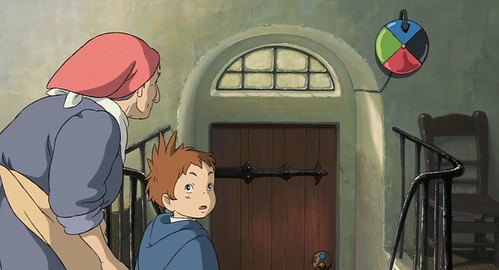
Q. Where’s Reality? A. Which One? [Howl's Moving Castle]

Back in the early days of the blog I had a lot of posts about Hayao Miyazaka. I'm boosting this one to the top on general principle. It's from August 21, 2010.

* * * * *

If a man could pass through Paradise in a dream, and have a flower presented to him as a pledge that his soul had really been there, and if he found that flower in his hand when he awoke—Aye! and what then?
— Samuel T. Coleridge


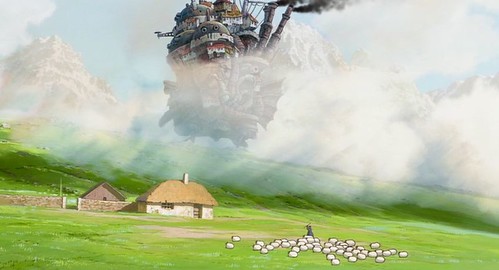
The castle in Miyazaki’s film, Howl’s Moving Castle, is a marvelous creation. I’m talking not so much about it’s steampunk funkiness, but the fact that its main door can open to any one of four different places. The castle’s master, Howl, determines what those places are, and one chooses by setting a dial above the door. Thus, one can exit the door and, for example, be in a bustling port or a mountain meadow.

I’ve more or less concluded that reality’s like that, only stranger. Howl’s castle, after all, opens to four different places in the physical world. One can, if one so wishes, journey from one of those places to another without going through the castle. That is, of course, how most people do it, because they don’t have castle privileges.

Reality, I believe, is multiple. That is, it affords each one of us multiple experiential realms. We can ‘live’ in those different realms, one by one, but experiences in one realm cannot be substituted for experience in another realm. Our minds, somehow, open into those different realms, as Howl’s castle opens into different physical spaces. What is even odder is that our minds can do this collectively as well as individually.


So, what do I mean by this vague nonsense?

Consider, for example, science. Let’s not be too fussy about what science is. Naiveté on that point is OK for my present purposes. The physicist, the chemist, the astronomer, the geologist, the biologist, and the others, they all want to ascertain objective truths about one of these realities. They’ve got procedures for doing so, and those procedures change and proliferate from time to time. They publish their ideas, go to meetings, belong to professional societies — all to keep one another sane as they search for the objective truths of this reality. Let’s call it Epsilon.

I’m trained as a literary critic, but I’ve also spent a great deal of time moonlighting and spelunking in the newer psychologies. I’m interested in understanding how literature works and I want to cloak or couch that understanding in terms that are commensurate with those used in characterizing Epsilon. I’m hardly alone in this, though we, literary scholars as a profession, are somewhat befuddled as to what Epsilon is like and how to get there. And some of us, of course, have no interest in it, at least not professionally.

At the same time I’m an ordinary human being and I like to read books and poems and plays and to watch movies and TV and so forth. Let’s say that that those experiences happen in reality Gamma. So, we’re in the movie theatre watching, say, Peter Jackson’s King Kong — I use this as an example because the theatre was packed when I saw it. We can hear one another rustle in the seats, we hear murmurs, breath intake, sighs, and so forth. We’re all in reality Gamma, watching this same movie. But the same is true for all of us who have read and still do read Coleridge’s “Kubla Khan,” though we’re not together at the same time in the same place. Still, we communicate with one another in ones and threes and so on about the poem. All of us, loosely strungout, in reality Gamma.

All literary scholars, of course, spend time in Gamma. And many of us spend a great deal of time agonizing about the relationship between Gamma and Epsilon. Such agonizing is so institutionalized that it may well be an aspect of another reality. Call it Pi. Lots of literary critics love their Pi.

So, we’ve got three realities so far: Gamma, Epsilon, and Pi.

A couple of days ago I wrote on sex and metaphysics, arguing that, for us humans, sex takes on a metaphysical character. The physiologist can study sex in Epsilon. Any of us can read erotic literature and see erotic plays and films in Gamma. And literary, film, and cultural critics can write about those Gamma-based experiences in Pi.


But my argument in that post was the sex establishes its own reality, its own metaphysic. That reality is manifest in transcendent experiences associated with orgasm, but perhaps, as my friend Tim Perper* has argued, in flirtation as well:
For Simmel, it is thus possible to flirt at each of the Ovidian stages, most intensely, perhaps, during naked sexual involvement itself. Then each orgasm hints flirtatiously that another exists in potentia, and it is the possibility that is alluring. Thus, Simmel empowers his lovers, making them not philosophically objective observers of disembodied Beauty nor Ovidian fauns and nymphs in a world of crystalline Eros. Instead, they are human beings who can invite, enter, retreat, and enter again.
So let’s say that this is yet another reality, requiring another character from the Greek alphabet. Let’s go with Mu.

Now we’ve got realities Epsilon, Gamma, Pi, and Mu. How many more? Darned if I know. But let’s throw in Alpha for ordinary everyday phenomenological reality. We might even go further and say that Alpha is like the interior of Howl’s castle. It’s home base. We depart from Alpha to take excursions to Epsilon, Gamma, Pi or Mu, or, as the case may be, Beta, Delta, Zeta, Eta, Theta and so forth. And when we’re through with our current business in one of those other worlds, we return to Alpha.

But isn’t there really just one world? You know, the REAL one?

Well . . . I suppose we can talk that way. Heck, we do talk that way. Such talk is a really big deal in Epsilon and Gamma. But I’m not so much concerned about how we talk as about how we live. And as far as I can tell, we live in multiple worlds. We do so with great virtuosity and vigor, though we often get confused. Living in those various worlds entails talk, more so in some worlds than others. In some worlds we don’t talk at all. And some talk in some worlds is about what we see and did and smelled in other worlds. So their all intermingled. I figure it’s like a marble in eleventy different colors in, say, umpteen dimensional space. Very frothy.

Um, err, this isn’t very rigorous?

I know.

Doesn’t that bother you?

Yes and no.

Yes and no?

Sure, I’d like rigor. So YES. But at the moment I’m more concerned about just saying it, whatever it is, in any freakin’ form I can get it out there. So NO.

Oh.

Well, if it’s any consolation, I sometimes imagine that, when in Epsilon, we can construct a model of the human mind-in-brain that’s so comprehensive and powerful that we could account for how the mind constructs each one of these realities, Alpha, Beta, Gamma, Delta, Zeta, Eta, Theta Pi, and so forth, and of course Epsilon. Since we’re constructing this model from within Epsilon, the model must itself be recursive, metalingual.

Why sneaky son of a snitch! You lying bastard! You put me through all this just so you can go recursive on me! %$ @#&!!!

Sorry. As I was saying, I sometimes imagine that. But imaging's one thing. Actually doing it. Ah that’s different.

And, even if one day we can do that, we can’t actually live our lives in that construction, moving about between those many and various realities. The model is but an object of contemplation. No less valuable for that. But only a model. In Epsilon.


ADDENDUM: This post is akin the modal matters I've been discussing recently, see especially this post, on basic modes, and then especially this one on specifically human modes.

* * * * *

* Timothy Perper, Will She or Won’t She: The Dynamics of Flirtation in Western Philosophy, Sexuality & Culture, Volume 14, Number 1, 33-43, DOI: 10.1007/s12119-009-9060-3.

Monday, June 14, 2021

Sampling the Space: Disney’s Fantasia [is it time for a 21st century re-realization, one that evokes the current space?]

Bumping this to the top of the queue because, well, because it's about time. The world's changing. We need a new realization of the Fantasia idea. This realization should sample the world's musics rather than remaining confined to Western Classical music. What should the visual subjects be? Perhaps choose the same general topics as the original Fantasia, from 1941, but realized in different ways.

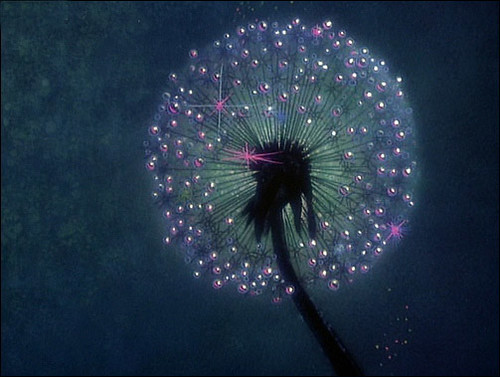
dandilion

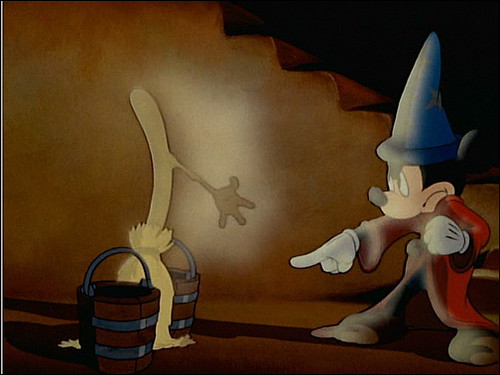
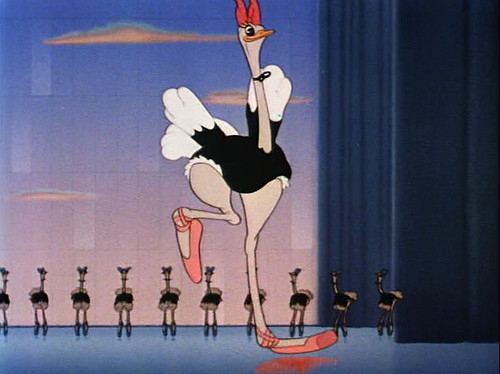
The following notes are an addendum to my original conjecture that Fantasia is encyclopedic in scope. That is, that it spans our knowledge of the cosmos, not by exhaustive listing, but by strategic indication. Each of the eight episodes, plus the interlude, depicts a different aspect of the cosmos – think, e.g. Rite of Spring for the cosmos large and small, Pastoral Symphony for domesticity, and so forth. If you then ask yourself, what’s the most compact subject area that embraces all of Fantasia, you’re left with nothing smaller than the cosmos as a whole.

How’d Disney do it? It was a group effort. Sure, good old Uncle Walt had the final say. But tens and hundreds of people were involved in coming up with ideas. Each searched their individual minds and offered ideas into the complex evolving system that was the production of Fantasia.

For those in digital humanities, note that I employ a mathematical metaphor, that of a space. But I don’t think of it as a mere metaphor. Done properly, it’s a model.

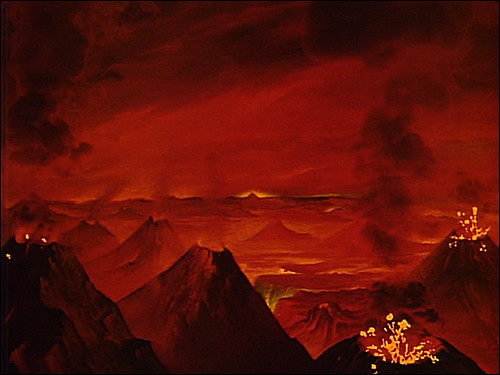
volcanos.jpg

I’ve been thinking about this encyclopedia notion. I like it, I think it works, but I also think it’s a bit vague. What’s it mean to “cover/imply the world”? How many and what distribution of topics does a real encyclopedia have to have in order to qualify, good and proper, as an encyclopedia? How is it that Mendelson and Moretti know that those texts are encyclopedic? Sure, they give reasons and examples – as I did for Fantasia. But that’s all after-the-fact rationalization. What’s the original “aha!” recognition about?
 
I’ve asserted that Fantasia is encyclopedic in the way that Allegro Non Troppo and Fantasia 2000 are not. I’m sure I can argue the point – though I’d want to watch them again, while taking notes, rather than work from, e.g. the Wikepedia summaries (which seem adequate to me BTW). And that argument will be a comparison and contrast talking about the sorts of things I mention in the summaries of the Fantasia episodes. There’s nothing wrong with that, but I’m looking for something more precise, more quantitative. Or, perhaps a better formulation, something that's tractable in a different way, even objective.

What I’m thinking is that encyclopedic works have to “sample the space” in a certain way. What space? It’s a metaphor, obviously, and a common one. Color space is well known and has been extensively explored by artists, physicists, and perceptual psychologists. So, imagine a space that displays all the colors in the world – somewhere on your computer you’ve got color-pickers that allow you to navigate through various color spaces. Pick three colors. Three shades of red will be relatively close together in the space while a red, an orange, and a yellow will be further apart. But a red, a blue, and a yellow will be still further apart. That red, blue, and yellow “cover” more of color space than your three reds.

That’s the sort of thing I’m looking for. Color is well understood and the little story I told in the previous paragraph can be told in fairly precise mathematical terms. Can we do the same thing for all of human knowledge?

We’re working on it. Psychologists and cognitive scientists map all sorts of things onto abstract spaces. The classic semantic differential maps the connotative meaning of words onto three dimensions, goodness, strength, and activity. The five-factors personality model maps personality onto five dimensions. Computational semanticists map texts onto spaces of relatively high dimensionality – 100s or 1000s of dimensions. That’s what’s doing on in the text-mining software that Matt Kirschenbaum talked about during the Moretti-fest.

What could this possibly mean for literary texts? Well, we’re used to analyzing texts in terms of binary oppositions: male-female, nature-culture, rural-urban, good-evil, Caucasian-Other, ancient-modern, mechanical-organic, and so on. Think of each opposition as indicating the positive and negative poles of a continuum. We can now think of each of these oppositions as a dimension in semantic space. How many such dimensions do we need to characterize the semantic space of a given text? I’m thinking that the dimensionality of an encyclopedic text will be higher than that of an ordinary narrative.

Let’s consider 19th century American novels. Moby Dick is Mendelson’s designated encyclopedic text. So we take the that text and those of other 19th century American novels, analyze them with text mining software, and arrive at something we might call the “space of minimum covering dimensionality.” The space for Moby Dick should be higher than that for any other novel. And I’d guess it would be higher by a considerably margin rather than just a bit higher.

So, the value for MD would be, say, 2364, while the values for the other texts would range between, say, 937 and 1272. The numbers aren’t important, what’s important is that there’s a big gap between value for MD and the highest value for any non-encyclopedic narrative.

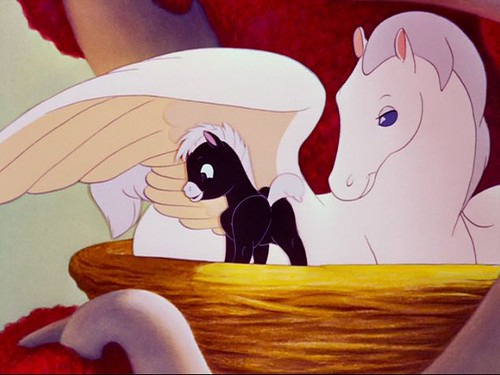
Pastoral 2 Pegasus and child

How do I know this? I’m just guessing, making it up as I go along. Why do I care about this sort of thing? Because I do. I’m just playing. Don’t I think this line of investigation will, er, harm literature? No, not in the least. The texts won’t feel a thing.

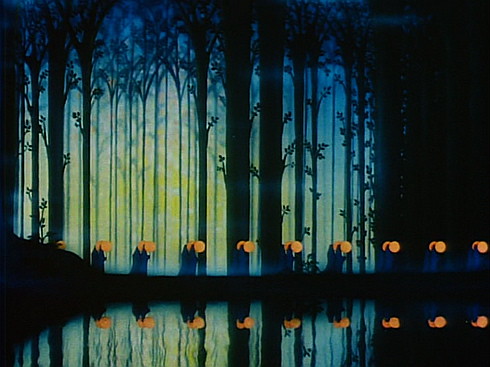
ave maria

In contrast, we might say that, e.g. Oliver Twist, covers more area in some abstract space than, e.g. Hard Times, in the way that a quarter covers more area than a dime. But that’s not about dimensionality; that’s just spatial extent. Dimensionality is about the nature of the space, its structure. The difference between an encyclopedic and an ordinary narrative is like that between a sheet of paper (2D) and a cube (3D).

x5 ignition.jpg

One of the things Moretti noted (p. 5) is that these works “do not really work all that well,” are perhaps “semi-failures”. Some measure of failure, it seems to me, follows from the singular nature of these works. If you are inventing a form as you go along, you are in no position to learn from previous examples, either your own or those of others.

But these (peculiar) failures might also be the result of the dimensionality requirements of encyclopedic coverage. There’s only so much “stuff” that can be packed into a coherent narrative. High narrative coherence puts limits on the dimensionality of the space. If you want to exceed those limits, then you have to use intrusive devices or various sorts – like long passages on whale taxonomy. If you are going to break the narrative once in such a way, well, that’s a flaw, straight-up. The flow is broken, but you don’t get much in return. So, do it once, do it 37 times, a different time each way, and be clever so that the whole becomes more than the sum of these multiple narrative interruptions.

SC22 skull in hell

Why write such narratives at all? Because we need to bring the entirety of the world within the scope of a single imaginative vision. Why do we need to do that? Because that’s the way the brain is?

2 0 onstage.jpg

Conducting this kind of investigation for written texts is one thing. We’ve got very sophisticated tools for handling them. How would we do it for movies?

For certain movies, screen plays might be adequate proxies for the films themselves. For Fantasia, I don’t know. We might be able to work from the cue sheets used to indicate the relationships between the animation and the music. More likely, we’d have to devise a coding scheme and devise methods to analyze the codings, not only of Fantasia, Fantasia 2000, and Allegro Non Troppo, but also of ordinary narrative feature-length animated films.

9 glory

Thursday, May 6, 2021

Sketches After Latour: A Working Paper

Title above, abstract, contents, and introduction below. Download at:

Academia: https://www.academia.edu/48804595/Sketches_After_Latour_A_Working_Paper.
SSRN: http://ssrn.com/abstract=3841042.
Research Gate: https://www.researchgate.net/publication/351365024_Sketches_After_Latour_A_Working_Paper.

Abstract: Thirteen various observations on the thinking of Bruno Latour, from We Have Never Been Modern through Reassembling the Social and up to modes. Excursions into Stanley Fish, Paul Feyerabend, and Claude Lévi-Strauss. Topics: religion, history, social organization, culture, mind, language, truth and felicity. Thread running throughout: Latour’s “flat ontology”, in which everything has agency, has fruitful, perhaps even substantial and revelatory, implications. COI: 10.13140/RG.2.2.15423.64164

Contents

Introduction: Latour in the bushes 2
Latour Modern, Not 5
From Fish to Latour, Really 8
Latour's Modes of Existence 12
Lévi-Strauss and Latour: Transformations of a Myth? 14
Presuppositions and Conclusions: Some Comments on Latour 16
Ontology and Epistemology: gone, together? 18
Some Latour Litanies from Feyerabend 19
The Living Cosmos 20
Chapter 1 of the New Latour Available, Apocalypse Awaits 22
Latour and the End of the End of History 24
Latour and Culture 26 Of Factish Gods and Modes of Existence 27
Latour, Language, and Translation 33

Introduction: Latour in the bushes

Just yesterday, May 5, 2021, I was looking through my hard-drive for something-I-forget-what and I came upon this, an all but complete draft of a working paper on Latour. It was from late November of 2017. All I had had to do was complete the front matter, this introduction plus the abstract, and I would have been done.

Why’d I drop it? I haven’t the foggiest idea.

In any event, I’ve now completed it. This working paper collects posts written between April 1, 2012 and August 12, 2015. I’d started blogging about Latour on August 17, 2011, with my first post on Assembling the Social; that project continued until October 11. I issued those posts as a working paper two days later, Reading Latour: Reassembling the Social. And I suppose that my engagement with Latour reached its peak when I issued Living with Abundance in a Pluralist Cosmos: Some Metaphysical Sketches in January of 2013, which is what its title implies: I’d taken Latour’s ideas, sifted them through my own work and coughed up an outline for a metaphysics. Surprised me, but there it is.

In some way, reading Latour was a return to my intellectual roots, in philosophy, in Continental thought. But a strange return. Figuring I wanted his recent thinking, I deliberately began reading him with a late work, Reassembling the Social, which turned out to be a high-level methodological manual rather than a systematic exposition of a philosophical position. It was only some months afterward that I took Graham Harman’s advice and read We Have Never Been Modern. I found it strange, a segment from an ongoing-conversation where I missed the beginning. Graham Harman thought it was easy, I thought it was tough. I marked it up quite a bit, a habit from my undergraduate days, and continued on. The posts I’ve collected here represent some of that continuing on.

* * * * *

Some of these are little squibs, some are longer.

Latour Modern, Not: In the process of reading (three chapters in) We Have Never Been Modern: “...this virtual Constitutional Convention is mostly a conversation among humans about how they’re going to talk and think about relations among humans and non-humans. In the end, though, in that Parliament of Things that Latour leaves to his successors, does he not want the Things to be among the constitutional conveners?”

From Fish to Latour, Really: Stanley Fish talks about ideas as though they are just out there in the ether. Latour seems them as embodied in a vast meshwork of intersecting networks: “While I can’t imagine Fish denying the existence of such networks, I don’t see that they’re uppermost in his mind either. It’s not what drives his intuitions. It’s like the Gestaltist’s duck-rabbit. Fish and Latour may look at the same state of affairs, but one is driven by the intuition that it is a rabbit while the other sees a duck.”

Latour's Modes of Existence: For Latour, each mode of existence has its own characteristic type of veridication. Charles Tart advanced a similar idea in the 1970s: “When you take a psychedelic drug you (may well) have a (so-called) peak experience in which deep truths are revealed to you. Those truths often seem like trite nonsense to those who've not experienced a psychedelic peak. Let's posit that those deep truths are, in fact, specific to one's biochemical neural state and can ONLY be judged and appreciated from within that state.”

Lévi-Strauss and Latour: Transformations of a Myth?: Lévi-Strauss had a tremendous influence on me early in my career. Latour has an interesting passage about him in We Have Never Been Modern. And so: “...are the two thinkers so very different as Latour’s little critique aims to suggest? There would seem to be at least one major difference, one at the center of Latour’s thinking, and at the center of Lévi-Strauss’s. Both talk a lot about the opposition between nature and culture. Latour aims to undermine it while Lévi-Strauss would seem to be enmeshed in it, as Derrida argued in ‘Structure, Sign, and Play in the Discourse of the Human Sciences.’”

Presuppositions and Conclusions: Some Comments on Latour: Latour talks of risk-taking rocks and networks of humans and everything else. But he’s rather thin on how people think and reason.

Ontology and Epistemology: gone, together?: Once you allow for multiple modes of existence, things get tricky.

Some Latour Litanies from Feyerabend: Allies in pluralist syntax.

The Living Cosmos: In an oblique way, consider this squib an homage to the John Cage of Silence.

Chapter 1 of the New Latour Available, Apocalypse Awaits: I’m all of three pages into the just-released English translation of An Inquiry Into Modes of Existence. Latour talks of climate science; I remember Hurricane Sandy. I conclude, “The weird aliens have come home to roost.”

Latour and the End of the End of History: Fukuyama was wrong about the end of history, an idea born out of washed up Hegel/Marx. “...lurking in Politics of Nature [...] are the seeds of a philosophy of history as a process of negotiations beyond the boundaries of society, of existing institutions, negotiations of collectives in dragon territory.”

Latour and Culture: He’s missing something. He fails to distinguish between society, conceived as a group of people oriented toward and interacting with one another, and culture, the beliefs, practices, a mores of those people. A tricky distinction to be sure: “Still, it changes how I think about Latour to realize that, in effect, those actor networks are important because they are the genetic substrate of culture. Finally, I’ve thought from the beginning that Latour is missing a psychology. He has little to nothing to say about the mind, and yet it is the mind that holds those actor networks together.”

Of Factish Gods and Modes of Existence: About Latour’s modes of existence, each with its own “felicity” conditions, with an excursion into a sermon delivered by a local preacher in a Black church. Religion is one mode. Science, waaayy over there, is different (Reference perhaps?). I conclude, however, that “Latour is missing some modes. He’s flattened a bunch of them into this single mode, Reproduction. Thus he’s giving us a scheme that bears an echo of that old nature/culture distinction he’s worked so hard to replace. His scheme has 14 modes which center on human activity and this one mode that, while humans as physical beings must participate in it, seems to be a single mode only in contrast to, by comparison with, the other fourteen.”

Latour, Language, and Translation: Language, whether written or spoken, is a double system in which a string of signifiers carries or encodes a string of signifieds, to use Saussure’s terms. The signifiers are physical events in the public domain, vibrations in air, marks on a page, while the signifieds exist within the privacy of individual minds and brains. In Latour’s terms, signifiers act like intermediaries while signifieds are mediators. In translation from one language to another, intermediaries must function as mediators.

Wednesday, May 5, 2021

Reality is not perceived, it is enacted

Reality is not perceived, it is enacted – in a universe of great, perhaps unbounded, complexity.

David Hays and I published that in a little article, we called it a note, we published over thirty years ago (see below). It was Hays’s formulation, but I liked it then. And I still like it?

But what does it mean? Forget the stuff after the dash, it’s that first part I’m thinking about. It clearly implies that without actors there’s no reality. Since we humans are the actors does that mean that before us, there was no reality? That’s absurd. The earth and the universe existed before we did, no?

Yes. Perhaps it means that they weren’t real. You mean they were imaginary, or illusions? No, more like the difference between the real and the not-real had no meaning.

That seems a little better. Let’s try something else. Let’s go the Latour route and say that everything is an actor, not just us humans. That leaves plenty of actors to enact reality prior to us.

That’s beginning to make sense.

It seems to me that we’re haunted by an old picture that we might as well attribute to Descartes, though it’s likely older. In this picture we are over here and the (external) world is way way over there somewhere. Our problem is to figure out what that’s like. How do we do that? By perception.

But that’s never really worked out. There’s always the problem of figuring out whether or not perception really matches the world. It never does or, what amounts to the same thing, there’s no place where we can stand to verify the match. The only way out of that bottle is to stop playing that game. We drop the convention of assigning agency only to humans and all the creatures get to enact reality.

We still have to verify our perceptions and theories, etc. But we accept that they’re always going to be provisional. But as long as we can use them to act effectively in the world, we’re OK.

Where does that leave the foundations of physics, with all that fancy mathematics and no way to test it with empirical observation? It means that the foundations of physics is no longer enacting science, which requires empirical verification. It’s doing something else. Ironic science, as John Horgan has it?

Let’s consider a very different example, “The Rite of Spring” from Disney’s 1941 Fantasia. It depicts an enactment of the solar system and the earth prior to human habitation. It’s certainly not a perception. You can call it an artistic imagining, with considerable license taken, if you will – for example, the T. Rex and the Stegosaurus couldn’t have fought because they lived a hundred million years apart (and Disney knew that). But that’s an action, no? Yes. Disney isn’t doing science, though it obviously interests him a great deal in this episode. He’s doing art.

Science and art are two different ways of enacting reality. Two different modes. Which brings us back to Latour again, who has advanced a theory of modes. Note, however, that I have decided to take a somewhat different view of modes and have offered a preliminary sketch: Living with Abundance in a Pluralist Cosmos: Some Metaphysical Sketches, Working Paper, January 2013,
https://www.academia.edu/4066568/Living_with_Abundance_in_a_Pluralist_Cosmos_Some_Metaphysical_Sketches.

I could go on and on, and probably should. But not now. Later. Meanwhile here’s the paper where Hays and I offered that formulation along with the immediate context.

* * * * *

Saturday, July 11, 2020

A Theory of EVERYTHING, really? [It's not about math]

Sabine Hossenfelder asks: Do we need a Theory of Everything? You know what she's going to say, don't you?
What physicists mean by a theory of everything is then a theory from which all the four fundamental interactions [electromagnetic force, the strong and the weak nuclear force, and gravity] derive. This means it is both a grand unified theory and a theory of quantum gravity.

This sounds like a nice idea, yes. But. There is no reason that nature should actually be described by a theory of everything. While we *do need a theory of quantum gravity to avoid logical inconsistency in the laws of nature, the forces in the standard model do not have to be unified, and they do not have to be unified with gravity. It would be pretty, yes, but it’s unnecessary. The standard model works just fine without unification.

So this whole idea of a theory of everything is based on an unscientific premise. Some people would like the laws of nature to be pretty in a very specific way. They want it to be simple, they want it to be symmetric, they want it to be natural, and here I have to warn you that “natural” is a technical term. So they have an idea of what they want to be true. Then they stumble over some piece of mathematics that strikes them as particularly pretty and they become convinced that certainly it must play a role for the laws of nature. In brief, they invent a theory for what they think the universe *should be like.

This is simply not a good strategy to develop scientific theories, and no, it is most certainly not standard methodology. Indeed, the opposite is the case. Relying on beauty in theory development has historically worked badly. In physics, breakthroughs in theory-development have come instead from the resolution of mathematical inconsistencies. I have literally written a book about how problematic it is that researchers in the foundations of physics insist on using methods of theory development that we have no reason to think should work, and that as a matter of fact do not work.

The search for a theory of everything and for grand unification began in the 1980s. To the extent that the theories which physicists have come up with were falsifiable they have been falsified. Nature clearly doesn’t give a damn what physicists think is pretty math.

Having said that, what do you think I think about Lisi’s and Weinstein’s and Wolfram’s attempts at a theory of everything? Well, scientific history teaches us that their method of guessing some pretty piece of math and hoping it’s useful for something is extremely unpromising. It is not impossible it works, but it is almost certainly a waste of time. And I have looked closely enough at Lisi’s and Weinstein’s and Wolfram’s and many other people’s theories of everything to be able to tell you that they have not convincingly solved solve any actual problem in the existing fundamental theories. And I’m not interested to look any closer, because I don’t also want to waste my time.

But I don’t like commenting on individual people’s theories of everything. I don’t like it because it strikes me as deeply unfair. These are mostly researchers working alone or in small groups. They are very dedicated to their pursuit and they work incredibly hard on it. They’re mostly not paid by tax money so it’s really their private thing and who am I to judge them? Also, many of you evidently find it entertaining to have geniuses with their theories of everything around. That’s all fine with me. [...]

The brief summary is that if you hear something about a newly proposed theory of everything, do not ask whether the math is right. Because many of the people who work on this are really smart and they know their math and it’s probably right. The question you, and all science journalists who report on such things, should ask is what reason do we have to think that this particular piece of math has anything to do with reality. “Because it’s pretty” is not a scientific answer. And I have never seen a theory of everything that gave a satisfactory scientific answer to this question.
I've got a somewhat different take on the issue. I'm not a mathematician, physicist, or a scientist – as I've remarked somewhere around here, I don't give a crap about science – so I'm not entitled to much of an opinion on the validity of those various attempts at unification. But I AM bothered that at least some of them seem so far to be without hope of empirical verification and I think any reasonably intelligent and informed person can have an opinion about that.

But I've got something else in mind. I've spent almost a half century trying to figure out how "Kubla Khan" works. I don't see how a physicist's ToE (theory of everything) or GUT (grand unified theory) would help me with that problem. And that's not the only thing I've been investigating.

What bugs me is the arrogance that calls physicists to proclaim their domain to be EVERYdamnTHING. It's not. It may be everywhere, and have it's nose in everyone's business, but it isn't all there is. Solving fundamental physics may well move some other projects along. But not all of them.