Showing posts with label adolescence. Show all posts

Sunday, November 24, 2024

Romantic Love, Conversation, Biology, and Culture

[I'm bumping it yet again in 2024]
Once more I'm bumping this to the top of the queue. Why? It discusses a methodological problem that is of current interest to me.  [2021]
* * * * *
I'm bumping this to the top of the queue because it's one of my favorite posts. FWIW, this is the post that got me my monthly slot at 3 Quarks Daily.

Note: This post grew out of reflection on older earlier post on bundling.
When I was an undergraduate at Johns Hopkins I took a course in Medieval literature and was thoroughly gobsmacked when I learned that romantic love had been invented in 12th century France. Until then I’d believed it to be a human universal – one and only, forever and ever, that was just how it was, no? Well, not quite.

What arose in Medieval Europe is something called Courtly Love, a set of conventions used by high-born men in wooing their lovers. And these lovers were not their wives, nor wives to be. For aristocratic marriage had little to do with personal preference; it was politics. Powerful families would forge alliances by arranging marriages among their young.

In time, over the course of centuries, so the story went, romantic love was transformed from an aristocratic game into a set of conventions used to define the necessary, or at least the ideal, precondition for any marriage. This set of conventions was in place, at least among the middle class, by the time Jane Austen wrote her novels in the early 19th Century. Those conventions have remained more or less in place up to the present, though they’ve become a bit tattered in the last decade or three as a soaring divorce rate has made it abundantly clear that true love does not last forever. That, of course, is not exactly news – why, for example, did Flaubert write Madame Bovary? – but the myth is so attractive that it dies hard.

That was the state of things during my undergraduate years – which coincided with the emergence of feminist activism in the late 1960s. Whatever their personal experience, everyone gave lip service to one and only forever and ever and believed that it was human nature. In that context, then, the revelations of the learned scholars shook my world.

Counter-Revolution

Learned scholars, however, do not constitute a single tribe. Their tribes are many, and often contentious. Even as the literati were blissfully proclaiming the recent and Western origin of romantic love, other scholars set out to prove them wrong. In 1992, for example, W. R. Jankowiak and E. F. Fischer published “A cross-cultural perspective on romantic love” (Ethnology 31: 149-155). They defined romantic love as “any intense attraction that involves the idealization of the other, within an erotic context, with the expectation of enduring for some time into the future” and they contrasted this with “the companionship phase of love . . . which is characterized by the growth of a more peaceful, comfortable, and fulfilling relationship.” They examined ethnographic data on 166 societies from around the world and discovered romantic love in 88.5 percent of them, suggesting “that romantic love constitutes a human universal, or at the least a near-universal.”

More recently Jonathan Gottschall and Marcus Nordland published Romantic Love: A Literary Universal? (Philosophy and Literature 30: 450-470, 2006). They conducted a cross-cultural study of folktales from 79 cultures and found at least one reference to romantic love in 55 of those collections and multiple references in 39 collections. They assert that their study “offers staunch support to the existing evidence that romantic love is a statistical cultural universal. It would also seem to increase the probability that romantic love may be an absolute cultural universal offers staunch support to the existing evidence that romantic love is a statistical cultural universal.” “Statistical universal” is a term of art meaning that something is in a lot of places, but not everywhere, yet. It seems clear that if Gottschall and Nordland were to place a bet, they'd bet that further research would find that romantic love is a true cultural universal, present in every culture for which we have reliable records.

Still more recently, just yesterday in the time-scale of academic publishing, Brian Boyd has asserted, with the calm assurance of a senior scholar in command of wide learning, that “cross-cultural, neurological, and cross-species studies have demonstrated the workings of romantic love across societies and even species” (The Origin of Stories, Harvard 2009, p. 341). To this, Michael Bérubé has replied, with the calm assurance of a senior scholar in command of wide learning, but learning leavened with a dash of school-boy wit:
This just won’t wash. Other species might court and mate for life, but they do not engage in romantic love in the sense that humanists employ the term, save perhaps for the cartoon skunk Pepé Le Pew. “Romantic love” does not mean “mammals doing it like mammals”; it refers to the conventions of courtly love, which were indeed invented in the European middle ages and cannot be found in ancient literatures or cultures. Those conventions are culturally and historically specific variations on our underlying (and polymorphous) biological imperatives, just as the institution of the Bridezilla and the $25,000 wedding is specific to our own addled time and place.
What’s going on here? Who’s right?

Back to the Drawing Board: There's that pesky elephant

I don’t know. We don’t know. Not any more.

I’m inclined to invoke that hoary old story of the blind men who, upon examining a large beast, are unable to decided what beast it is, or even whether or not it is a beast at all. We, of course, know that they’re examining an elephant, but such different parts of the elephant – tusks, years, legs, tail – that they reach vastly different conclusions about the object under scrutiny.

In the case of romantic love, I believe we’re in much the same position as those blind men. But, in our case, there is no transcendent story-teller who actually knows what creature is under scrutiny. Rather, it is up to us to approximate that story-teller by making more and more sophisticated observations and examining them through richer concepts and models about human culture and behavior.

There is no point in continuing to argue using existing observations, methods, and theories. In light of the existing contretemps we would do well to consider such arguments to be ideological in nature and thus pointless, except, of course, to all-knowing ideologues. Meanwhile, let’s take a look around and see what else is there to be explained.

Companionship, Conversation, and the Novel

Let’s return to Jankowiak and Fischer, and their contrast between the romantic phase and the companionship phase of love, a distinction, I believe, that is common, and which I accept. This companionship, is it too universal?

Take those Medieval aristocrats who were playing courtship games on the side: Did they have a companionate relationship with their spouses? I’m guessing that in some cases, yes, and in other cases no. These marriages, after all, were arranged by parents for political ends. If companionship developed in the marriage, fine; if not, no big deal. For companionship was not the point, it was not part of the ideology.

And then we have my standard passage from John Milton's Doctrine and Discipline of Divorce, Preface to Book 1:
God in the first ordaining of marriage taught us to what end he did it, in words expressly implying the apt and cheerful conversation of man with woman, to comfort and refresh him against the evil of solitary life, not mentioning the purpose of generation till afterwards, as being but a secondary end in dignity, though not in necessity: yet now, if any two be but once handed in the church, and have tasted in any sort the nuptial bed, let them find themselves never so mistaken in their dispositions through any error, concealment, or misadventure, that through their different tempers, thoughts and constitutions, they can neither be to one another a remedy against loneliness nor live in any union or contentment all their days…
That strikes me as an assertion of the need for companionship between spouses – cheerful conversation – and a rather emphatic assertion at that. Would Milton have made such an assertion if it had, in fact, been the common understanding of the day? That seems unlikely to me, though I could be wrong, as I am not a scholar of 17th century English family practices.

But the late Lawrence Stone was, and in 1977 he published a ground-breaking study, The Family, Sex and Marriage in England 1500-1800 (Harper & Row) in which he argued that, over a period of three centuries, family organization underwent a transition that started with the Open Lineage Family – permeable by outside influences, with strong “loyalty to ancestors and to living kind” (p. 4). It was succeeded by the Restricted Patriarchal Nuclear Family P. 7):
which saw the decline of loyalties to lineage, kin, patron, and local community as they were increasingly replaced by more universalistic loyalties to the nation state and its head and to a particular sect or Church. As a result, ‘boundary awareness’ became more exclusively confined to the nuclear family, which consequently became more closed off from external influences, either or the kin or of the community.
Finally, during the last half of the 19th Century, the Closed Domesticated Nuclear Family emerges among “the upper bourgeoisie and squirarchy” (pp. 7-8):
This was the decisive shift, for this new type of family was the product of the rise of Affective Individualism. It was a family organized around the principle of personal autonomy, and bound together by strong affective ties. Husbands and wives personally selected each other rather than obeying parental wishes, and their prime motives were now long-term personal affection rather than economic or status advantage for the lineage as a whole … Patriarchical attitudes within the home markedly declined, and greater autonomy was granted not only to children, but also to wives.
This was a family in which companionship between husband and wife was important, for that companionship was now the foundation of family organization. And this is the family structure that is at the heart of the British novel in the late 18th century and into the 19th century. The novel and the family structure had a reciprocal relationship (dialectical?) in which the demands of this family structure created an audience for the novel and the novel, in turn articulated the inner-workings and hidden designs of the family.

Out of what biological equipment did the novel help people construct their familial relations? Let us speculate, and freely – for what else can we do? If we’re to search for evidence, we’ve got to make a guess about what we’re looking for before there’s any point to setting out. However, we do want our speculation to be biologically plausible. So, calling on chess as a metaphor, let’s select our pieces from biology while our speculation will be the game play.
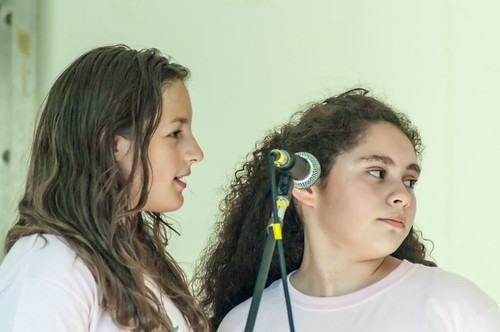

Monday, September 25, 2017

Hoboken Arts & Music Festival Fall 2017, from the Garden St. School of the Performing Arts

20170924-_IGP0407

20170924-_IGP0409

20170924-_IGP0411

Extended Adolescence – Adulthood Revised?

An analysis by researchers at San Diego State University and Bryn Mawr College reports that today’s teenagers are less likely to engage in adult activities like having sex and drinking alcohol than teens from older generations.

The review, published today in the journal Child Development, looked at data from seven national surveys conducted between 1976 and 2016, including those issued by the U.S. Centers for Disease Control and Prevention and the National Institutes of Health. Together, the surveys included over eight million 13- to 19-year-olds from varying racial, economic and regional backgrounds. Participants were asked a variety of questions about how the they spent their time outside of school and responses were tracked over time.

Beyond just a drop in alcohol use and sexual activity, the study authors found that since around 2000, teens have become considerably less likely to drive, have an after-school job and date. By the early 2010s, it also appeared that 12th graders were going out far less frequently than 8th graders did in the 1990s. In 1991 54 percent of high schoolers reported having had sex at least once; in 2015 the number was down to 41 percent. What’s more, the decline in adult activity was consistent across all populations, and not influenced by race, gender or location.
Affluence:
The analysis found adolescents were more likely to take part in adult activities if they came from larger families or those with lower incomes. This mirrors so-called “life history theory,” the idea exposure to an unpredictable, impoverished environment as a kid leads to faster development whereas children who grow up in a stable environment with more resources tend to have a slower developmental course.

In families with means there is often more anticipation of years of schooling and career before one necessarily has to “grow up”—there’s plenty of time for that later. As Twenge and Park conclude, despite growing income disparities, a significant percentage of the U.S. population has on average become more affluent over the past few decades and are living longer. As a result, people are waiting longer to get married and have children. We’re also seeing a higher parental investment in fewer children—or, in the parlance of our times, more “helicopter parenting.”
Erik Erikson talked of adolescence as a “psychosocial moratorium”, however
Yet many child psychologists believe today’s children seem to be idling in this hiatus period more so than ever before. “I'm keenly aware of the shift, as I often see adolescents presenting with some of the same complaints as college graduates,” says Columbia University psychologist Mirjana Domakonda, who was not involved in the new study. “Twenty-five is the new 18, and delayed adolescence is no longer a theory, but a reality. In some ways, we’re all in a ‘psychosocial moratorium,’ experimenting with a society where swipes constitute dating and likes are the equivalent of conversation.”
See these posts for further discussion on extended adolescence:


Is but one aspect of a new mode of life? You may recall that, in Western history, childhood wasn't recognized as a distinct phase of life until the early modern era (Philippe Ariès, Centuries of Childhood) and adolescence itself didn't emerge until the late 19th and early 20th centuries.

Saturday, August 19, 2017

Creativity through the life cycle

Writing in the NYTimes, Alison Gopnik and Tom Griffiths, report the results of a study involve people of various ages: 4- and 5-year-old preschoolers; 6- to 11-year-olds; 12- to 14-year-old teenagers; and adults. They presented these groups with two problems, one involving a physical machine and one involving a social situation.
When it came to explaining the physical machine, the pattern was straightforward. The preschoolers were most likely to come up with the creative, unusual explanation. The school-age children were somewhat less creative. And there was a dramatic drop at adolescence. Both the teenagers and the adults were the most likely to stick with the obvious explanation even when it didn’t fit the data.

But there was a different pattern when it came to the social problems. Once again the preschoolers were more likely to give the creative explanation than were the 6-year-olds or adults. Now, however, the teenagers were the most creative group of all. They were more likely to choose the unusual explanation than were either the 6-year-olds or the adults.
In explaining these results the introduce a distinction between exploitation and exploration:
When we face a new problem, we adults usually exploit the knowledge about the world we have acquired so far. We try to quickly find a pretty good solution that is close to the solutions we already have. On the other hand, exploration — trying something new — may lead us to a more unusual idea, a less obvious solution, a new piece of knowledge. But it may also mean that we waste time considering crazy possibilities that will never work, something both preschoolers and teenagers have been known to do.
This leads to:
Childhood and adolescence may, at least in part, be designed to resolve the tension between exploration and exploitation. Those periods of our life give us time to explore before we have to face the stern and earnest realities of grown-up life. Teenagers may no longer care all that much about how the physical world works. But they care a lot about exploring all the ways that the social world can be organized. And that may help each new generation change the world.
About the idea that each new generation sets out to change the world, isn't that a relatively recent idea?

Here's the original research paper: Alison Gopnik, Shaun O’Grady, Christopher G. Lucas et al. Changes in cognitive flexibility and hypothesis search across human life history from childhood to adolescence to adulthood. Published online before print July 25, 2017, doi: 10.1073/pnas.1700811114. PNAS July 25, 2017 vol. 114 no. 30 7892-7899.
Abstract: How was the evolution of our unique biological life history related to distinctive human developments in cognition and culture? We suggest that the extended human childhood and adolescence allows a balance between exploration and exploitation, between wider and narrower hypothesis search, and between innovation and imitation in cultural learning. In particular, different developmental periods may be associated with different learning strategies. This relation between biology and culture was probably coevolutionary and bidirectional: life-history changes allowed changes in learning, which in turn both allowed and rewarded extended life histories. In two studies, we test how easily people learn an unusual physical or social causal relation from a pattern of evidence. We track the development of this ability from early childhood through adolescence and adulthood. In the physical domain, preschoolers, counterintuitively, perform better than school-aged children, who in turn perform better than adolescents and adults. As they grow older learners are less flexible: they are less likely to adopt an initially unfamiliar hypothesis that is consistent with new evidence. Instead, learners prefer a familiar hypothesis that is less consistent with the evidence. In the social domain, both preschoolers and adolescents are actually the most flexible learners, adopting an unusual hypothesis more easily than either 6-y-olds or adults. There may be important developmental transitions in flexibility at the entry into middle childhood and in adolescence, which differ across domains.

Saturday, November 5, 2016

The benefits of extended adolescence

In a time when college graduates return to live under their parents’ roofs and top careers require years of internships and graduate degrees, the age of adulthood is receding, practically into the 30s. Adolescence, loosely defined as the period between puberty and financial independence, now lasts about 15 years, twice as long as it did in the 1950s.

Part of this is due to the declining age of puberty in both males and females, but most of that extension appears in the 20s, when an increasing number of young people are still dependent on their parents. There is some concern that all of this dependence could lead to a lasting immaturity and failure to take on responsibility.

But according to developmental researchers, there is one lasting gift that extended adolescence can bestow, and it resides in the brain. “Neurobiological capital” is built through a protracted period of learning capacity in the brain, and it is a privilege that comes to those lucky enough to enjoy intellectually stimulating environments in late adolescence. Far from a contributor to emotional immaturity, the trend toward an adolescence that extends into the mid-20s is an opportunity to create a lifelong brain-based advantage.
Novelty and metaplasticity:
“There is reason to believe that continued exposure to novelty keeps the brain plastic for longer,” says Laurence Steinberg, a psychologist at Temple University whom many consider the leading expert on adolescence. Some of this evidence comes from brain studies of those who have had access to higher education.

The window for developing self-regulation closes when adult life settles into a routine, and the brain begins to exchange growth for efficiency. But if an adolescent continues to be stimulated intellectually—through higher education or travel, for example—their brain remains in its formative stage into the mid-20s, and even primes itself for future learning in adulthood. Dubbed “metaplasticity,” changing brain circuits through learning during adolescence can make subsequent modifications easier in those areas.
Adolescence vs. adulthood:
Steinberg likens the distinction between the brain’s adult state and its adolescent development mode to the difference between reading a new book and learning to read in the first place. For an adult to learn, she must pay attention and place information in the context of what she already knows. In contrast, an adolescent brain remembers things even through passive exposure. After that sensitive period has closed, the brain begins to focus on stabilizing the connections it has already made, through the process of myelination. It becomes exponentially more difficult to shape decision-making and higher cognitive functions. Those final pre-adult years may be the last, best chance to put a person on a healthy path.

Saturday, March 12, 2016

Morphosis: John Green: the Antecession of Adolescence

A post by my old Valve buddy, Adam Roberts:
Morphosis: John Green: the Antecession of Adolescence: There are only a few more weeks to run of the Children's Literature course that has prompted most of the recent, longer posts on thi...
It seems he's been teaching a course on children's lit, of which I can only approve (cf. my old post on Kiddie Lit). Here's an early paragraph:
It does seem to me that YA writing has latterly achieved a mode of cultural dominance: that Potter, Katniss and the MCU bestride our contemporary cultural production like colossi; that Malorie Blackman and Patrick Ness are more important contemporary UK novelists than Martin Amis and Zadie Smith. But my own bias is towards SF/Fantasy, so perhaps I overestimate the centrality of Fantasy to the contemporary YA phenomenon. I'm not sure I do, but it's possible. It's one thing to talk about Rowling, Collins, Meyers, Blackman, Ness and Pullman (and Lemony Snicket, and Philip Reeve, and Eoin Colfer, and Tony DiTerlizzi and Holly Black, and Jonathan Stroud, and Tom Pollock, and Rick Riordan, and Cassandra Clare ... and on and on the list goes) as representing some important culture movement.

But I have to concede that not all today's YA is fantastika. Or put it another way: if my argument is that the key YA texts are all Fantasy, then how do I account for those commercially huge, culturally major YA writers who don't write Fantasy? Two names in particular leap out: the marvelous Jacqueline Wilson, and the mega-selling John Green. Both work in what we could loosely call 'realist' idioms, writing about children and teenagers. Both are very good. What about them?

Take Green. Now, I like Green a great deal: he has a funny, personable and informative online presence as *clears throat* a vlogger, and he writes intelligent, witty and prodigiously successful novels. If those novels don't move me the way they evidently move millions of younger readers, that merely reflects my age. They're not aimed at people like me. Or it would be truer to say: they're not primarily aimed at people like me. And, to speak for myself, I admire and enjoy the charm with which he writes, the cleverly packaged wisdom, the lightness of touch he brings to serious matters.
And off we go to a review & essay.

What interests me is that assertion up there in the first sentence, "YA writing has latterly achieved a mode of cultural dominance..." Is that true? I don't know, but I find it a plausible assertion on the face of it.

Friday, August 21, 2015

It's time to create new adulthoods for the new worlds now emerging

Recently the NYTimes published an article on wage-slavery in the white collar ranks of Amazon.com. Many of us reacted in horror at what we read. But there soon followed articles pointing out that, after all, that's not so different from other high-tech workplaces, which tend to brutally competitive and all-demanding. This was even offered as a defense of Amazon.

But perhaps what the article revealed is that the meritocratic ideal as realized in the Amazon workplace is toxic and embedded in a now unworkable conception of adulthood. Do we need to rethink adulthood?

For it turns out that the nature of adulthood, like childhood and adolescence as well, is not written in stone, nor inscribed in our genes. It's something we create. The world's changing and so we must reconceptualize adulthood.

That seems to be the burden of Susan Nieman's Why Grow Up?, reviewed by Tom Slater in Spiked!:
The lines between childhood, adolescence and adulthood are mutable, and have changed over time. Less than a century ago, childhood, as a time of pampered play and dependence, lasted barely a few years for the vast majority of the population. And when most young people were out of school and married by the end of their teens, adolescence – the rebellious grace period between Tonka trucks and 2.4 children – didn’t even exist.

Instead, Neiman presents adulthood as a process of coming to terms with the circumstances you find yourself in and then committing to changing them – reconciling the ‘is’ and the ‘ought’. She situates this in the history of Enlightenment thought, in which the doomy realism of Hume clashed with the rugged idealism of Rousseau. ‘It would take Kant’, Neiman writes, ‘to appreciate the fact that we must take both seriously – if we are ever to arrive at an adulthood we need not merely acquiesce in but actively claim as [our] own’.

Kant’s concept of ‘the Unconditioned’, a point at which the world makes perfect sense, is central here. In order to develop into intellectual and moral maturity we must never lose sight of the idea of perfectible society – even as we come to recognise that the world is far from perfect.
Slater concludes: "This elegant, and accessible book is the philosophical kick up the arse my generation so desperately needs." Hmmm.

Friday, December 12, 2014

It’s Complicated 3: Social Manipulation in a Culture of Fear

danah boyd. It’s Complicated: The Social Lives of Networked Teens (Yale UP 2014).
Let’s start with a footnote to Chapter 4, “Danger: Are Sexual Predators Lurking Everywhere?” (p. 232)
In The Culture of Fear, sociologist Barry Glassner provides a detailed account of how American society uses fear to regulate everyday practices. He points out that people are terrible at assessing risk; many fears are connected, not to risk, but to how the media shapes the public’s perception of key issues.
That’s it in a nutshell: “American society uses fear to regulate everyday practices.” But America is not exceptional in that regard. It’s a widespread socio-cultural practice and it’s at the heart of cultural mechanisms of social control.

Free-Form Fear

Here’s the paragraph to which that footnote is attached (p. 102):
From the advent of social media, it has been impossible to talk about teens’ engagement without addressing the topic of online safety and sexual predators. More than any other issue presented in this book, the topic of online safety generally—and sexual predators specifically—has played a significant role in configuring teens’ relation to mediated communication, adults’ attitudes toward teens’ participation, and policy discussions about social media regulation. Online safety is also a particularly complicated issue, in part because a culture of fear is omnipresent in American society, and no parent wants to take risks when it comes to their children’s safety. Statistics showing the improbability of harm fail to reassure those who are concerned. Even when highly publicized stories turn out to be fabrications, parents still imagine that somewhere, somehow, their child might fall victim to a nightmarish fate. They are afraid because terrible things do happen to children. And although those violations most commonly take place in known environments—home, school, place of worship, and so on—the internet introduces an unknown space that is harder to comprehend. Nothing feeds fear more than uncertainty.
A bit later (p. 106, emphasis mine):
Legal scholar Larry Lessig argues that four forces regulate social systems: market, law, social norms, and technology or architecture. Fear is often used in service of these forces. Companies sell fear to entice parents to buy products that will help them protect their children. Policymakers respond to fear by regulating children’s access to public spaces, even when doing so accomplishes little. The media broadcasts fears, creating and reinforcing fearful social norms. And technologies are built to assuage or reproduce parents’ fears. Given the cultural work done in the name of fear, it’s astounding that young people have as much freedom as they do.
Of course, there are real dangers out there. The existence of those real dangers lends plausibility to the hyped up dangers, and the hype, in turn, makes it difficult to deal with the real dangers in an intelligent way (p. 109):
Parental fear regarding sexual predators is understandable. No parent wants to imagine her or his child being harmed, and the potential cost of such a violation is unfathomable, regardless of how statistically improbable such an event might be. Combine this with the media’s magnification of the cultural mythos of the online sexual predator and it’s no wonder that countless parents become hyperprotective without considering the costs of their actions. But this distorted fear obscures the very real and costly risks that some youth do face. Untangling these issues requires stepping back and rethinking what we think we know regarding sexual predation.
In this situation, how do you draw a line between real danger and fantasized danger?

Tuesday, December 9, 2014

It’s Complicated 2: Graffiti and Public Space

20141207-_IGP1027

You are looking at two of the handful of arches known in Jersey City collectively as the Bergen Arches. In my experience, while many people have heard of “the Arches”, few people have a clear idea of what and where they are and even fewer have been there, though many pass beside them as they drive on Rt. 139. The arch to the left is over the remaining roadbed of a trolley line, which is where we’re standing. The one on the right goes over the Erie Cut, a man-made geological formation geographical feature that used to accommodate four railroad tracks. Three of them have been ripped out; the  fourth is broken and busted. The Erie Cut is almost a mile long and goes under four or five more arches, though three of them are better characterized as short tunnels.

Unless otherwise indicated, all the photographs in this post are of the Bergen Arches and were taken on December 7, 2014.

I’ve written about the Arches before, extensively. I’m going through the exercise again because, 1) they fascinate me, and 2) I want to discuss them in the terms that danah boyd has established for teen cyberspace hangouts in It’s Complicated: The Social Lives of Networked Teens (Yale UP 2014).

There are major differences, of course. The Bergen Arches is a real location in physical space whereas the spaces boyd has investigated are virtual. Functionally, network spaces exist online; physically, though, the servers that support them have real locations around the globe. However, copies of my photographs of the Arches exist on my Flickr page and so can be accessed by anyone who has Internet access to Flickr. And I am by no means the only one who photographs the graffiti down there. Just how many of us do that, I don’t know. I’d say 10s to 100s.

20141207-_IGP1030

We’re standing right in front of the upper arch, looking down at the lower arch. Notice the somewhat scuffed and faded graffiti at the base of the arch. I’ve got photos of that wall going back to 2007 and those show four or five paint layers below the one currently visible. The strange big-eyed character at the left, however, is unchanged, perhaps because the location is not particularly desirable; it’s small and peripheral. I’ve got photos of that character in at least two other locations. The dark black lettering in the middle, however, is relatively new. You can make out the letters “MESS.” MESS or MES writes with the PFE crew. He gets up all over the place, though I’ve only got photos from three other locations that I can think of off hand. Finally, notice the black netting in the lower arch. That was installed a year or two ago to catch the crumbling masonry.

One of the themes boyd develops is that of privacy in public. The Internet functions as a public utility and most of the places teens hang out are public spaces; anyone can go there. Some have privacy settings, like Facebook, but using them is somewhere between tricky and a pain in the ass, so most teens simply ignore them. The fact that they don’t mess with those privacy settings doesn’t mean that they’re addressing their remarks to the public large. They’re not; they’re only addressing their friends. And, for the most part, the public at large could care less about what they say – the various snooping agencies and advertisers are not the public at large, nor is it obvious that they have any very clear idea of what they’re doing; they just do a lot of it.

However, steps are taken (p. 65):
Children love to experiment with encoding messages. From pig latin to invisible ink pens, children explore hidden messages when they’re imagining themselves as spies and messengers. As children grow up, they look for more sophisticated means of passing messages that elude the watchful eyes of adults. In watching teens navigate networked publics, I became enamored of how they were regularly encoding hidden meaning in publicly available messages. They were engaged in a practice that Alice Marwick and I called “social steganography,” or hiding messages in plain sight by leveraging shared knowledge and cues embedded in particular social contexts.
front row seat in the Theater of the New Reality.jpg

That photo dates from July 6 of 2007 and is the oldest photo I have of that wall, which is the wall whose lower edge we saw in the previous photo. There’s a lot of stuff on that wall, and things seem to have been piled atop one another chaotically. There is, however, an informal ethics to that. Unless the existing imagery has been badly degraded by the weather, or by “toys” (novice writers who have more chutzpah than skill), you have to do something better than what you’re going over.

Monday, December 8, 2014

It’s Complicated 1: Escaping on a Raft in Cyberspace


Farewell to freedom on the Adriatic and to days of wild abandon. – Hayao Miazaki


Are we heading toward a world in which our activities in the physical world are totally institutionalized so that our only “free” time is the time we spend online? That’s what I’ve been thinking as I read danah boyd’s new book, It’s Complicated: The Social Lives of Networked Teens (Yale UP 2014). But before I get to that – I’m only three chapters in, anyhow – let me tell you about my childhood. It’s not that my childhood was particularly interesting or significant, but simply that in one crucial way it was quite different from the lives of the 150+ teens boyd interviewed for the book: within broad limits, I could go where I wanted, when I wanted; these teens cannot.

From there I follow boyd to a discussion of the social management of anxiety and then shift gears and end up patrolling the backwoods in the antebellum South, looking for escaping slaves and other miscreants. That’s when we meet up with Huck and Jim riding the bit stream to freedom, thereby returning me to dana boyd. You’ll see, it’ll all work out in the end.

Sorta.

Confined to Quarters

I grew up in the 1950s and 60s in Richland Township, a suburb of Johnstown in Pennsylvania about 70 miles east of Pittsburgh. My neighborhood bordered on small farms and forest. As a teenager I had to be home for dinner, be home before dark, get my homework done, and practice my trumpet. I had various activities as well, scouts, school clubs (band and others) that took time, but they didn’t fill my schedule. I could, and did, roam freely about the neighborhood. I had to tell my mother generally where I was going, but that was it.

As I’ve indicated, that’s not the case with the teens that boyd interviewed. This is important, for it is the main reason many of them spend so much time online. Cyberspace is the only place they can hangout with their friends without adult intrusion into their lives (pp. 20-21):
The social media tools that teens use are direct descendants of the hangouts and other public places in which teens have been congregating for decades. What the drive-in was to teens in the 1950s and the mall in the 1980s, Facebook, texting, Twitter, instant messaging, and other social media are to teens now. Teens flock to them knowing they can socialize with friends and become better acquainted with classmates and peers they don’t know as well. They embrace social media for roughly the same reasons earlier generations of teens attended sock hops, congregated in parking lots, colonized people’s front stoops, or tied up the phone lines for hours on end. Teens want to gossip, flirt, complain, compare notes, share passions, emote, and joke around. They want to be able to talk among themselves—even if that means going online.
While boyd has a great deal to say about just what they do, I want to leave that aside for now. Much of what she says is generally about life online, written for people who don’t spend much time online. I do, so the world she describes is familiar to me even though I’m old enough to be a grandfather to the people she’s interviewed.

Here’s a bit about one of boyd’s subjects (p. 89):
My interview with Myra, a middle-class white fifteen-year-old from Iowa, turned funny and sad when “lack of time” became a verbal tick in response to every question I asked her about connecting with friends. From learning Czech to track, from orchestra to work in a nursery, she told me that her mother organized “98%” of her daily routine. Myra did not like all of these activities, but her mother thought they were important. She was resigned to them. Lack of freedom and control over her schedule was a sore topic for Myra. At one point, she noted with an exasperated tone that weekends were no freer than weekdays: “Usually my mom will have things scheduled for me to do. So I really don’t have much choice in what I’m doing Friday nights. . . . I haven’t had a free weekend in so long. I cannot even remember the last time I got to choose what I wanted to do over the weekend.” Myra noted that her mother meant well, but she was exhausted and felt socially disconnected because she did not have time to connect with friends outside of classes.