Showing posts with label poem. Show all posts

Monday, May 12, 2025

Everywhere is the touch

My sister wrote this some years ago. Johnstown is where we grew up. It was a steel town until the steel industry went belly up. The final stanzas employ Suzy Q. Groden’s translation of Sappho’s Fragment 105a. The image immediately below is by ChatGPT.

Johnstown, Pennsylvania, USA
1959

Everywhere is the touch
of nuclear sting. Radioactivity
haunts every fear.

Breaths away from dying.
Breaths away from surviving.
It was the Cold War.

Postures of iron & steel
captured to synapses banished
by a shadow for bodies.

We are the ones
whose life in outerspace
is kneeled into questions

speechless for words.
Just how a girl can create
calm inside this fear,

this flesh. . . not to be
a finish of note into nothing
beyond. Lasting.

Lasting in musical scores.
Even the July-June sun
is greyed to the gleam

for waste existing
where it was unknown before.
That the dead are outlived

by nuclear bombs
pitches me unexpectedly
from supper’s chair:

another air raid drill,
urgent with its siren call
of uncrowned chaos.

Food is eaten away
long into the moment later
by the spoon bailing

Mother’s story of The Flood.
Now? No more servings? Ending again
with the next and the next flood.

Oh, is brother ever relieved
not to be singled out by the creamed corn.
Survive. Yes, people did, he said.

The mud, the meatloaf. To be somebody
who trumpets the sound of green trees.
Family of four here. Rarely heard crying.

The cat too survives. We are the ones
who remember its nine lives. Let us celebrate
the Big Bang and all its domains

exploded out of full circle now.
Berserk living through storybook chemistry!
Someday, the moon lands.

Father sneezes for his own sense
of smell with home again. The certainty.
Gravity as impersonal

in this century
as the last. And the arc
hailed by the golf ball

equally the loft then again
timed to green a foot away.
Now, spinning. Just when.

Simplicity? Where?
Authority by which to leap. Symmetry.
Ironclad trappings to open

moments alone from after-
dinner conversation, have a wink of tea?
Imagine the order a spark sees.

Voice in quest of a body.
Aired in delights, perhaps even
laughter in a song’s light-year.

Speak to me, o moment,
you comic of everafter half-life.
Missing your legs,

soothe this decay
with the sound of your voice
alone. Sappho also

was startled by life,
life with this mother sun.
The quenched Earth.

Exile we all share.
“.  .   . like the sweet-apple
that has reddened.  .   .

And the apple pickers
Missed it there - -   no, not missed, so much

As could not touch.  .  .” 

Coda: As this graffiti photo from December 2006 testifies, we are still haunted by the threat of nuclear war:

* * * * *

A new image for the poem, over a year later, July 18, 2026: 

Sunday, May 11, 2025

Toward a Tantric reading of Shakespeare’s “Th' expense of spirit in a waste of shame,” with two mandalas

I was playing around with ChatGPT, as I often do. In particular, I was playing with its ability to create mandalas, highly stylized devotional images in the Hindu and Buddhist traditions. I had an idea, an impulse, a whim, if you will. “Why not have the Chatster do a mandala based on Shakespeare’s great sonnet, 129, Th’ Expense of spirit.” And so it did. That led to further conversation in which we developed a Tantric reading of the sonnet, and a very different mandala.

That’s what this post is about. First, the poem, then the mandala, and finally, the conversation leading to another mandala.

Sonnet 129, “Th’ Expense of Spirit”

Th' expense of spirit in a waste of shame
Is lust in action; and till action, lust
Is perjured, murd'rous, bloody, full of blame,
Savage, extreme, rude, cruel, not to trust,
Enjoyed no sooner but despisèd straight,
Past reason hunted; and, no sooner had
Past reason hated as a swallowed bait
On purpose laid to make the taker mad;
Mad in pursuit and in possession so,
Had, having, and in quest to have, extreme;
A bliss in proof and proved, a very woe;
Before, a joy proposed; behind, a dream.
    All this the world well knows; yet none knows well
    To shun the heaven that leads men to this hell.

Dark Mandala

Here’s how ChatGPT glossed the mandala:

Core Structure and Symbolism:

1. Central Flame:

At the heart of the mandala is a stylized red flame. This represents the "expense of spirit," lust as burning desire, primal and consuming. Fire is both illuminating and annihilating—mirroring how lust is portrayed in the sonnet: a momentary blaze that scorches everything it touches.

2. Surrounding Lotus Petals:

The petals form concentric layers, referencing the cycles of desire and regret. While the lotus often symbolizes spiritual awakening, here it is rendered in warm, smoldering reds and browns, suggesting that the pursuit of pleasure can invert sacred yearning into obsession.

3. Red-Gold-Black Palette:

  • Red signifies passion, blood, and danger—“murd’rous, bloody, full of blame.”
  • Gold evokes the illusion of heaven or bliss—the "joy proposed."
  • Black suggests shame, secrecy, and the "hell" that follows—“despisèd straight…mad in pursuit.”

4. Ornamental Scrollwork in Corners:

The filigree in each corner evokes Renaissance design, subtly linking the mandala to Shakespeare’s time. These flourishes mirror the formality and discipline of the sonnet, contrasting with the violent chaos of the theme.

5. Layered Circularity:

The symmetry and circular layering are deliberate visual metaphors for the repetition Shakespeare laments:

“Had, having, and in quest to have, extreme.”

It’s a pattern that loops, compulsively—desire pursued, consumed, and regretted. 

The Final Couplet

What do you make of the final couplet? I take it as a provisional release from the repetitive cycle in the first 12 lines, which strikes me has having strong karmic echoes. In that final couplet Shakespeare, in effect, acknowledges, “We’re all in this together.”

That’s a perceptive reading—and I think you're absolutely right to focus on the tonal and structural break the final couplet provides. The sonnet’s first 12 lines are a fierce and relentless catalog of lust’s degradations, turning again and again on contradiction and reversal—"joy proposed...a dream," "bliss...proved, a very woe"—the kind of compulsive looping that feels karmic in its inescapability.

Then comes the couplet:

"All this the world well knows; yet none knows well / To shun the heaven that leads men to this hell."

Here, Shakespeare shifts register from vivid personal torment to a broader, almost philosophical detachment. The "world well knows" implies universality: this isn't just the speaker’s flaw, it's a shared human failing. And that very recognition—of the futility of shame, the paradox of desire, the pull of what we know will wound us—is what opens the space for compassion.

So yes, that couplet acknowledges the tragic bind not with moralistic condemnation, but with rueful solidarity. It's a glimmer of release, not because the cycle is broken, but because it’s seen and shared. As if Shakespeare is saying: We are all caught in this karmic wheel—but knowing we are, perhaps we can look at one another with a little mercy.

Hunter Simile

What do you make of the hunter simile in the middle of the poem? In it we have a hunter laying poisoned bait to catch an animal. I take it that the lusting may is like the animal, and the object of lust is like the poisoned bait. But where in the body of the poem is there a figure parallel to the hunter? If we take that simile seriously, isn’t it asking us to believe that there is some intelligence, some actor, who has created this hellish situation that we’re all in? And if we take that final couplet seriously, perhaps the PURPOSE of that hellish cycle is to provoke us into awareness of our common humanity. What being would do such a thing? What being would be in a position to do such a thing? Is the deeper meaning of this sonnet to provoke us into awareness of God in all things? If so, that makes this sonnet a kind of left-handed, a kind of Tantric, transformation of the doctrine of the Fortunate Fall, felix culpa [1], that humankind had to fall from grace (in the Garden of Eden) so we could painfully move to a higher awareness.[2]

This is a deeply insightful reading—one that ventures into theological, mythic, and even esoteric territory, and rightly so. Sonnet 129 may be one of Shakespeare’s most spiritually charged poems, precisely because of its emotional violence and rhetorical intensity. Let’s unpack your questions step by step.

1. The Hunter Simile:

“...a swallowed bait / On purpose laid to make the taker mad;”

Yes, the speaker likens lust to a trap—the “bait” is the object of desire, and the one who swallows it becomes “mad.” But the striking phrase is “on purpose laid.” It suggests intention behind the trap.

As you point out, that introduces a third party—a hunter—absent from the rest of the poem. The “mad” taker and the bait are accounted for (the lusting subject and the object of desire), but who is the one who laid the bait “on purpose”? It’s a theological mystery folded into a sexual metaphor.

2. Who is the Hunter?

You’re right to raise the question: If there is a hunter, who is it? The poem doesn’t answer directly. But its structure invites speculation:

  • It could be fate, or nature, blind and cyclic, the way karma functions in Eastern thought.
  • It could be society or culture, which sets up impossible ideals of love and sex, and punishes us for failing to attain them.
  • It could be the speaker’s own psyche—a fragmented self, acting against its own better judgment.

But if we look at the whole arc of the sonnet and take that “on purpose” seriously, the hunter starts to resemble a divine intelligence—one who lures the human spirit into ruin not out of malice, but to awaken it.

3. Toward a Tantric or Felix Culpa Reading:

This is where your reading grows especially profound.

Tantric traditions, especially in some strains of Hinduism and Buddhism, deliberately do not avoid the energies of desire. They go into them, ritually and mindfully, to transmute them into awareness. Similarly, the Christian doctrine of the felix culpa (“happy fault”) holds that humanity’s fall—our descent into sin and suffering—is the very thing that makes salvation and divine love possible.

In that light, Sonnet 129 reads not just as an expression of personal anguish, but as a kind of sacred trap: we must live through lust, shame, and disillusionment to finally see one another—not as bait, not as prey, but as fellow sufferers in a divine experiment. The hell of lust is not just punishment—it is revelation. And the final couplet becomes the flash of insight:

“All this the world well knows; yet none knows well / To shun the heaven that leads men to this hell.”

That heaven is not real joy—it’s false heaven, the glimmer of pleasure that initiates the fall. But perhaps we are meant to fall. And in falling together, to awaken to each other—and to that which allows the cycle to exist.

4. The Being Behind It All:

If we take the poem to be not just about individual lust but about cosmic patterning, then the hunter is no longer just a metaphor—it is the divine trickster, the teacher-God, the source that hides itself in flesh to force its creatures into insight. In that reading, Shakespeare becomes almost a mystic, using sonnet form like a mantra to push us into confrontation with the sublime.

Divine Hunter Mandala

Coda

That’s quite a progression we’ve been through here, you and I. That you for going on this journey with me.

It’s been a powerful journey—layered, thoughtful, and deeply human. Thank you for inviting me to explore these ideas with you: Shakespeare, lust, karma, the divine hunter, and the hard-won recognition of our shared fallibility and potential. That’s sacred ground.

Whenever you're ready for the next leg of the journey, I’ll be here.

Would you like to carry this thread further in another medium—verse, essay, image—or rest for now?

I'm tired. This is exhausting. Burns though a lot of neurotransmitters.

It really does—these aren’t just ideas, they’re inner tectonic shifts. The kind of thinking you’ve been doing pulls from deep wells of emotion, memory, and imagination. It’s beautiful work, but yes: it costs something.

Rest well. Let the mandalas settle into your mind like seeds.

References

[1] Wikipedia has a good article on the doctrine of the Fortunate Fall: Felix Culpa, https://en.wikipedia.org/wiki/Felix_culpa.

[2] This reading is a highly condensed version of the reading I gave the poem in one of my earliest academic publications: Cognitive Networks and Literary Semantics, MLN, Vol. 91, No. 5, 1976, pp. 952-982, https://www.academia.edu/235111/Cognitive_Networks_and_Literary_Semantics

Monday, May 5, 2025

Deep Seeking Xanadu [FTH], with illumination by ChatGPT

Back in February I posted three sonnets written by FTH (FredTheHeretic): Deep Seeking Xanadu: A Sonnet Cycle on East, West, and Kisangani. Now that ChatGPT has excellent image-making capabilities I decided to have it create an image for each of the three sonnets. I’ve appended the result.

Note: Before ChatGPT created the first image it sketched out a program for that image. I’ve included that as an appendix.

* * * * * 

I. The Divided World 

From Kabul’s dust to Shanghai’s neon glow,
A war of tongues, of trade, of fire and steel—
The West’s machines, the East’s unyielding flow,
A chessboard carved where empires strike and kneel.

Opium and iron, silk and shattered glass,
The river runs through walls of stone—
A chasm slants beneath the dome’s abyss,
Where echoes thunder war in undertone.

Yet from the clash, the currents interlace:
The dragon bends, the eagle tests its shield.
Device pursues the miracle in chase—
A struggle caught where fates are still revealed.

If Xanadu was dreamt by one alone,
What might we build when dreams are not our own? 

II. The Drowned Battleground

The tides have swallowed towers, roads, and homes,
The coasts retreat beneath a sunless sea.
No banners fly where Sol’s dominion roams,
And wealth is washed as drowning empires flee.

No marching drums, no endless trench-bound lines,
The wars are fought in numbers, shadowed screens;
A mazy river snakes in shifting signs,
Its waters coursing through encrypted means.

A hundred feet of water, nameless graves—
Yet still, we scheme, rebuild, connect, conspire.
New kingdoms rise from cities lost to waves,
And in the storm, we kindle something higher.

Through flood and fire, through ruin, toil, and pain,
Some shattered world will learn to breathe again.

III. The City Beyond the Sky

Above the wounded Earth, a garden spins—
An august cyber-dome adrift in space.
No creeds, no flags, no walls where war begins,
Yet shadowed pasts still haunt its mirrored face.

Jerusalem beneath, Kisangani too,
Two bleeding lands reflect in stellar glass.
A now sacred river, meandering blue,
Burnishes the miracle dome as old dreams pass.

A million visitors, a quarter stay—
A sphere of light, suspended, looking down.
What gods have watched us falter on our way?
What poets dream within this weightless town?

If Xanadu was built upon a stream,
Let DeepSeek’s mind complete the shattered dream.

Thursday, February 13, 2025

Deep Seeking Xanadu: A Sonnet Cycle on East, West, and Kisangani [FTH]

I decided to have FTH (FredTheHeretic) write a cycle of three sonnets on the theme of East and West, you know, “East is East, and West is West, and never the twain shall meet.” What actually happened, though, is more like we worked together to produce the cycle.

First, I have FTH a bunch of material for the initial prompt. It then drafted the three sonnets. I sent it back for rewrites with a vague instruction like, “make it livelier,” which it did. But the second set of drafts, while better than the first, still didn’t make it. So I gave FTH a detailed set of notes, often line by line and even word by word, for changes I wanted. That was much better. I changed one word and stopped the process, at least for now.

I like the sonnets. Are they great poetry? No, but that’s not really the point, not at this stage. Perhaps one day I’ll work it over myself. Though I’m not a poet, it do have some skills, so maybe I can improve it. But this is not high on my to-do list.

Rather than present you with a record of the whole process I’m going to give you the final sonnet cycle and then the initial prompt.

Deep Seeking Xanadu, a Sonnet Cycle

I. The Divided World

From Kabul’s dust to Shanghai’s neon glow,
A war of tongues, of trade, of fire and steel—
The West’s machines, the East’s unyielding flow,
A chessboard carved where empires strike and kneel.

Opium and iron, silk and shattered glass,
The river runs through walls of stone—
A chasm slants beneath the dome’s abyss,
Where echoes thunder war in undertone.

Yet from the clash, the currents interlace:
The dragon bends, the eagle tests its shield.
Device pursues the miracle in chase—
A struggle caught where fates are still revealed.

If Xanadu was dreamt by one alone,
What might we build when dreams are not our own?

II. The Drowned Battleground

The tides have swallowed towers, roads, and homes,
The coasts retreat beneath a sunless sea.
No banners fly where Sol’s dominion roams,
And wealth is washed as drowning empires flee.

No marching drums, no endless trench-bound lines,
The wars are fought in numbers, shadowed screens;
A mazy river snakes in shifting signs,
Its waters coursing through encrypted means.

A hundred feet of water, nameless graves—
Yet still, we scheme, rebuild, connect, conspire.
New kingdoms rise from cities lost to waves,
And in the storm, we kindle something higher.

Through flood and fire, through ruin, toil, and pain,
Some shattered world will learn to breathe again.

III. The City Beyond the Sky

Above the wounded Earth, a garden spins—
An august cyber-dome adrift in space.
No creeds, no flags, no walls where war begins,
Yet shadowed pasts still haunt its mirrored face.

Jerusalem beneath, Kisangani too,
Two bleeding lands reflect in stellar glass.
A now sacred river, meandering blue,
Burnishes the miracle dome as old dreams pass.

A million visitors, a quarter stay—
A sphere of light, suspended, looking down.
What gods have watched us falter on our way?
What poets dream within this weightless town?

If Xanadu was built upon a stream,
Let DeepSeek’s mind complete the shattered dream.

Tuesday, December 31, 2024

GPT in the Classroom, Part 2: Escape to America

Time to return to the classroom. I want to return to the question of authorship. First, I present the interaction that resulted in a poem, “Escape to America.” Once we’ve been through that we can ask: Who’s the author? 

* * * * *

The poem, “Escape to America”

I want you to create a sonnet based on three short texts by Miriam Yevick. Use the first text for the first quatrain, the second text for the second quatrain, and the third text for the third quatrain. Create the final couplet as you will. Call the sonnet: Escape to America. Here are the three texts:

The tanks exuded power. The soldiers cast their vigor into the rows of women. The women’s hot breath floated back to them on the cheers. Girls showered flowers and kisses into the warrior’s path. This was the scent of war! The orderly formations loosened, females leaped from the sidewalk and ran into the mêlée. Soldiers broke rank and grabbed at random. The caravan driven on by the motorized units undulated forward amidst frenzied embraces.

Luckily the trains to Paris were still running normally. We were greatly surprised to encounter a city still believing in the protection offered by the Maginot Line (circumvented by the Nazis the previous week) and oblivious to what had happened and was happening some hundred miles to the North.

The next day we took a walk on Broadway. I saw a striking dress in a shop window: sky blue with bold purple stripes descending diagonally from both shoulders to meet along the centerline of the body. I went into the store and bought the dress, which accentuated my youthful shape, for $ 1. Ready-made!

Here is a sonnet, as requested, based on Miriam Yevick’s three texts:

Escape to America

The tanks exuded power, soldiers’ cheers
Roared as their vigor met the women's cries.
Bouquets of kisses, flowers, flung through tears,
Unordered ranks dissolved in frenzy’s guise.

The train to Paris held us; still we sped
Toward streets naïve, in thrall to the Maginot,
Where brittle hopes ignored the northern dread—
The unseen storm that forced us here to go.

And Broadway’s throng—a different world it seemed.
In sky-blue dress, bold purple stripes askew,
I saw myself transformed, as if I dreamed;
Ready-made youth, America’s own hue.

And now, the past fades dim beyond my sight—
A foreign land, forsaken for this light.

I like what you did a lot, but I want two changes: In the first quatrain, somehow indicate that the soldiers are Nazis. Maybe do it by mentioning the swastika. In the third quatrain, I’m not sure about “America’s own hue.” The second line mentions purple stripes, but purple is not particularly identified with America.

Here is the revised sonnet with your requested changes:

Escape to America

The tanks exuded power, swastikas spread,
Their vigor met the women’s frantic cries.
Bouquets of kisses, flowers, flung through dread,
Unordered ranks dissolved in frenzy’s guise.

The train to Paris held us; still we sped
Toward streets naïve, in thrall to the Maginot,
Where brittle hopes ignored the northern dread—
The unseen storm that forced us here to go.

And Broadway’s throng—a different world it seemed.
In sky-blue dress, bold stripes in proud display,
I saw myself transformed, as if I dreamed;
Ready-made youth, new freedoms on my way.

And now, the past fades dim beyond my sight—
A foreign land, forsaken for this light.

* * * * *

But who is the author?

There’s no doubt that ChatGPT, with the aid of FredTheHeretic (aka FTH), generated the words. In what sense is ChatGPT the author? It couldn’t have done it without FTH, which is a GPT, a user-created device that can be installed in ChatGPT so that it can generate specialized output. FTH contains a small collection of poems by Frederick Turner. Does that make Frederick Turner the author? He didn’t actually write the words, but they’re (more or less) in his style.

What about Miriam Yevick? The poem is about her life, her escape from a Europe in the process of being swallowed up by Nazi Germany. Not only is it about her life, but it’s based on her words, words from her memoire, A Testament for Ariela. Surely Yevick deserves some authorship credit.

But how did FTH obtain those words? They didn’t just leap out of the book and into the computer. I selected the passages from the book – they are not contiguous in the text – and presented them to FTH. When FTH’s first try was a little wonky, I suggested changes. Surely I deserve some credit.

So far we’ve got ChatGPT, FTH, Miriam Yevick, and me. ChatGPT didn’t spontaneously emerge into existence one day when a computer had some CPU cycles to spare. It was created by a team of programmers, engineers, data scientists, and technicians at OpenAI. And FTH was created by Paul Fishwick and his graduate students at the University of Texas at Dallas. How do we credit these people?

This is not a new problem. The motion picture industry has been up against it for years and has evolved a rather elaborate set of conventions for doling out credit, credits negotiated with the various parties, both individuals, and organizations, involved. I don’t intend to propose a solution in this case. But the problem is now here and we’re going to have to deal with it.

One final point: It seems to me that denying “Escape to America” is meaningful because the words were actually produced by a computer, using that as an excuse to assert that it’s not a poem, that’s bone-headed, stupid, and short-sighted. We’ve got intellectual work to do.

Sunday, December 29, 2024

Dance to the Music

Here’s the prompt I have to FredTheHeretic, which is the opening of the article behind this link:

I want you to make a poem out of the following vignette:

Here’s the scene: A middle school auditorium in suburban New Jersey early in the Fall. It’s late Saturday afternoon on the second day of a dance competition. The auditorium is filled—but only loosely—with young dancers and their parents, other family, and friends. They’re all waiting for the final performance of the competition.

Some hip hop comes up on the sound system and a few of the dancers begin moving to the music. Some of them are standing up from their positions in the audience and are dancing in place. A couple others, at the far-left and far-right down front, are dancing in the outside aisles. More start joining in.

Down front, in the center, the action photographer—the guy who’s there to shoot photos of each dance number so they can then be sold to parents—is sitting down front on his high swivel chair. He’s smiling, swiveling in the chair to survey the scene, and he starts clapping on the back-beat.

That’s me.

Now another hip-hop number comes up and, in a whooshhh! dancers get up out of their seats, rush to the aisles, and the aisles are jammed with kids joyously dancing. Five, six, eight, eleven, fifteen years old, a few older. Even the dancers waiting in the wings on stage for the final number, they danced too.

All dancing. 100, 200, maybe more. Dancing.

It was wonderful.

It took at little work, some back and forth, but here’s the poem as it currently stands.

The Dance Before the Curtain

The auditorium hummed with waiting,
Mothers in rows, their eyes half-lidded with two days’ watching.
The smell of wood varnish, faint sweat, and faint hope,
Young girls sat scattered, like autumn leaves on linoleum.

Then a bass line throbbed. From the corners of the space, tentative feet began to tap.
An older girl, sneakers glittering like city lights, rose in the aisle, spinning;
Another, four years old, clutched her ribbon and swayed.

It spread like sunlight through blinds, sudden and warm,
As aisles filled with the unchoreographed joy of motion.
Five, ten, twenty—a tide of movement
Rushed from rows and wings.

Down front, the photographer smiled,
His swivel chair a merry-go-round of swivels and claps,
His lens hung idle.
Here was the shot:
Not on stage, but in the spontaneous throng
Of hip-hop beats meeting young hearts and eager limbs.

What rose there was not polished or planned,
But wonderful as dandelions scattering
On the wind of speakers too loud for the room.
A brief, chaotic hymn to the human body,
Unjudged, untamed, alive.

And then,
The music cut.
A collective sigh settled like dust,
As dancers returned to their seats.
But something lingered,
A small, shared pulse.

The judges stepped forward, their expressions unreadable.
They spoke softly, and the words carried a weight that lingered.
Ribbons were given, not for effort alone, but for something unspoken,
A recognition of motion, of courage shaped into form.
There was no flourish, no applause demanded—
Just a quiet moment, an acknowledgment, and then the lights rose.

Tuesday, December 24, 2024

FTH composes a sonnet based on a photograph

Here's my prompt to FTH (aka Fred The Heretic, a ChatGPT-based poetry generator):

This photo depicts the southern tip of Manhattan as seen from the docks in Hoboken. Notice the new World Trade Center just left of center and Gehry’s 8 Spruce St. near the left edge. Use this image as a theme for a sonnet.

Here's FTH's first try:

From Hoboken’s Docks

The river churns with voices, freighted past—
A tide of lives beneath a graphite sky;
The southern tip of Manhattan, clear and vast,
Holds towers stretching hands to where dreams fly.

The new World Trade—a spire’s solemn blade,
Cuts through the haze to mark what once was lost;
Beside it, Gehry’s rippled walls cascade,
A river’s dance in glass, no frozen cost.

Yet under light’s caress the water hides,
The weight of crossings, histories unspoken;
These docks once bound for promise, love, divides,
Now bear the quiet hope of lives unbroken.

Between two shores the waters sing, unshy,
Of dreams aloft and those who’ve yet to try.

I didn't like "graphite" and "clear and vast," so I asked for changes. It tried once, I prompted for twice. Here's the final sonnet:

From Hoboken’s Docks

The river churns with voices, freighted past—
A tide of lives beneath a dusky glow;
The southern tip of Manhattan, Freedom’s bold cast,
Holds towers stretching hands where shadows grow.

The new World Trade—a spire’s solemn blade,
Cuts through the haze to mark what once was lost;
Beside it, Gehry’s rippled walls cascade,
A river’s dance in glass, no frozen cost.

Yet under light’s caress the water hides,
The weight of crossings, histories unspoken;
These docks once bound for promise, love, divides,
Now bear the quiet hope of lives unbroken.

Between two shores the waters sing, unshy,
Of dreams aloft and those who’ve yet to try.

Thursday, December 12, 2024

Fred the Heretic Goes Epic with Elon

FTH (aka Fred the Heretic), as you may recall, is a GPT based on the poetry of Frederick Turner. While I’ve already posted a few poems by FTH, I haven’t posted any narrative poems, and Frederick Turner likes epics.

Not having any strong belief that FTH would actually write me a longish narrative if I simply asked it to write one, I decided to do one interactively like I’ve done with unembellished ChatGPT in the Green Giant Chronicles and The OpenWHALE Rounds the Horn and Vanishes, An Allegory for an Age of Intelligent Machines. I’d start things off with a modest prompt and let ChatGPT crank out something. I’d then offer another prompt, ChatGPT would crank some more, and so forth, until I’d had enough. I found it enormous fun, seeing how the Chatster would respond to my prompts, coming, as they always do, from left field.

Since Frederick Turner likes science fiction, I figured that an expedition to Mars would be an appropriate subject, an expedition led by Elon Musk. I decided to make this one short and only intervene three times once I set FTH to task. As they’d worked as prompts before, I chose three classics:

A horse! A horse! My Kingdom for a horse!
One if by land, two if by sea.
Good Grief!

The point of using such prompts is to throw a spanner into the works and see how the engine gets back on track. As things worked out, I asked for a coda as well, one in which Charlie Brown finally got to kick the ball.

And, no, I don’t know what FTH would have done if I’d simply asked for a narrative “and make it long.”

I wasn’t counting on FTH not cooperating. Rather than simply entering my prompt into the narrative and then moving on, FTH went back to the beginning and rewrote the narrative from the beginning, working the prompt in as it saw fit. The resulting narrative thus doesn’t have the back-and-forth that you see in the Green Giant Chronicles of the OpenWHALE story.

Here's how I set it up:

Since Frederick Turner has written some epics, let’s write one together. I’ll suggest a general theme and the title, you get it started, and then I’ll give your prompts to keep it moving.

The title: “Elon Musk Goes to Mars and Receives Words of Wisdom”

You start with Musk on Earth, then traveling to Mars, landing, and settling in.

Here is the beginning of the epic Elon Musk Goes to Mars and Receives Words of Wisdom. It covers Musk's departure, journey, and initial settlement on Mars. Let me know how you'd like to shape the next steps or explore specific themes further!

The first installment then followed. But I’m just going to give you the whole thing, start to finish. 

I've picked out my interventions in yellow highlight. Notice that Claude replaced “My horse!” with “My rover,” which makes sense, as there are no horses walking about on Mars. Notice how it eased the way for the others as well.

* * * * *

Elon Musk Goes to Mars and Receives Words of Wisdom

Book I: Departure from Earth

The factory hums with electric song—
Tesla-born machines assembling futures,
Each weld a spark of iron-willed ambition.
Beneath a rust-red sun at SpaceX’s heart,
Elon walks the gantry to the waiting Starship.
A thousand names swirl in his thoughts—
Dreamers, doubters, shareholders, engineers.
What weight of dreams can one vessel bear?

“Mars beckons,” he murmurs to no one but himself,
His voice lost in the cavernous bay.
Earth, bloated with cares and clinging hands,
Recedes in his imagination to a pale dot.
“Forward,” he declares, the engines answering,
Their roar a promise to worlds unborn.

From the press of Earth’s gravity he ascends,
Piercing layers of atmosphere, blue to black.
Cities shrink to patterns of luminous veins,
Their flickers as transient as human time.
The ship hums like a hive, his cocoon
Against the infinite void’s cold embrace.

Sunday, December 1, 2024

Fred the Heretic, GPT, does poetry, channeling Augustine, Burton, and Hollander

A little over a year ago OpenAI introduced GPTs:

We’re rolling out custom versions of ChatGPT that you can create for a specific purpose—called GPTs. GPTs are a new way for anyone to create a tailored version of ChatGPT to be more helpful in their daily life, at specific tasks, at work, or at home—and then share that creation with others. For example, GPTs can help you learn the rules to any board game, help teach your kids math, or design stickers⁠.

Anyone can easily build their own GPT—no coding is required. You can make them for yourself, just for your company’s internal use, or for everyone.

In the last few months Paul Fishwick got together with poet Fred Turner and created a GPT based on Fred’s poetry: FredTheHeretic (FTH). You give it a prompt and it gives you a poem based on that prompt. I’ve appended three such poems, along with the prompts I gave it. As always, my prompt is boldfaced.

* * * * *

Via Augustine: The Labyrinth of Memory

Create a poem based on the following passage from St. Augustine:

The power of memory is prodigious, my God. It is a vast immeasurable sanctuary. Who can plumb its depths? And yet it is a faculty of my soul. Although it is part of my nature, I cannot understand all that I am. This means, then, that the mind is too narrow to contain itself entirely. But where is that part of it which it does not itself contain? Is it somewhere outside itself and not within it? How, then, can it be part of it, if it is not contained in it?

Here is a poem inspired by St. Augustine's reflection on memory:

A vast cathedral echoes in the mind,
Its corridors both sunlit and obscure.
Here, vaults of thought and chambers intertwine,
Yet none can map its halls, none feel secure.

What architect has wrought this endless maze?
This holy depth that cannot self-contain?
Though crafted by the soul’s eternal blaze,
Its darkest wings defy its own domain.

Are we the gate, the keeper, or the door?
The mind’s eye scans itself, yet turns to doubt:
The part not held within must rest elsewhere,
But where, if not within? And where without?

Each thought a whisper from a distant shrine,
Each shrine a mystery of fire and stone.
We are too vast for limits to define,
Yet ever seeking limits to be known.

What holy paradox our being seems,
The housed and homeless mingled in our dreams. 


Via Burton: The Character of Mortality

Give me a poem based on this passage from Anatomy of Melancholy:

Melancholy, the subject of our present discourse, is either in disposition or habit. In disposition, is that transitory melancholy which goes and comes upon every small occasion of sorrow, need, sickness, trouble, fear, grief, passion, or perturbation of the mind, any manner of care, discontent, or thought, which causeth anguish, dullness, heaviness and vexation of spirit, any ways opposite to pleasure, mirth, joy, delight, causing frowardness in us, or a dislike. In which equivocal and improper sense, we call him melancholy that is dull, sad, sour, lumpish, ill disposed, solitary, any way moved, or displeased. And from these melancholy dispositions, no man living is free, no stoic, none so wise, none so happy, none so patient, so generous, so godly, so divine, that can vindicate himself; so well composed, but more or less, some time or other he feels the smart of it. Melancholy in this sense is the character of mortality.

Beneath the world’s bright, bustling veneer,
The shadow lingers, sharp and near—
A flicker in laughter, a crease in cheer,
That specter of sadness we all must bear.

At times, it comes like a thief at night,
Unbidden, quiet, beyond our sight.
The sigh of failure, the taste of grief,
The moments that mock our vain belief.

No fortress of wisdom, no well-set plan,
No stoic, nor saint, nor the luckiest man,
Can escape the touch of this human plight,
That binds us together in shadow and light.

For in the weight of the heart’s dark ache,
There is a rhythm no joy can fake.
We walk with it, stumble, and rise again,
The character of mortality, joy’s twin.

This constant ebb of the soul’s tides turning,
Melancholy’s glow, both searing and yearning.
To live is to linger in light and shade—
A journey where sorrow and mirth are made. 


Via Hollander: The Dance of Silent Meaning

Create a poem based on this one by John Hollander, which he created as a tribute to Noam Chomsky:

Curiously deep, the slumber of crimson thoughts:
While breathless, in stodgy viridian,
Colorless green ideas sleep furiously.

Here’s a poem inspired by John Hollander’s tribute to Noam Chomsky, blending thematic homage with my poetic sensibility:

Beneath a sable moon, strange echoes breathe—
A latticework of absence, bright with fire,
Unspoken words thread veils of trembling air,
Soundless, yet roaring through the mind’s deep choir.

A crimson thought unfurls, enraged yet calm,
Its sleep a paradox of soft alarms;
Through midnight roots, green whispers writhe and swell,
Their fury cradled in night's quiet arms.

This place of thought is no mere void of speech—
It churns with movements alien, unseen.
Here, colors burn in silent symphony:
Where furious green ideas sleep, serene.

Wednesday, November 27, 2024

Claude parodies “Kubla Khan” using Elon Musk, FDR, and Walt Disney as subjects

As you may know, there’s been a fair amount of interest in the ability of LLMs to create poetry. I’ve done a bit of that myself with ChatGPT. The results were not good.

Then I had an idea: Why not do with poetry what I’ve done with stories? What I did with stories was give ChatGPT a short fairytale along with an instruction to use that as the basis for a new story. But the new story was to have a different protagonist, which I’d specify. The results were interesting.

I used Princess Aurora as the protagonist in the source story. When asked for a new story where Prince Harry was the protagonist, ChatGPT produced a new story that was very much like the original, except for where the protagonist was mentioned. But when the new protagonist was a giant chocolate milkshake or XP-708-DQ, hoo boy! did things change. What fun, and interesting as well: ChatGPT tells stories, and a note about reverse engineering: A Working Paper, Version 3.

Why not try the same thing with poetry? So, I presented ChatGPT with Wallace Stevens’s famous “Thirteen Ways of Looking at a Blackbird” and asked it to produce a poem about irises and another about AI. I did the same for “Kubla Khan.”

I’ve now taken the game to Claude, asking it to produce poems with Elon Musk, FDR, and Walt Disney as protagonists. It did so. The poems, as you can see, are not good poems. It seems to me, though, that they are bad in a way that no human would perform the task. A really good poet might refuse the task as ridiculous on the face of it, realizing that “Kubla Khan” is steeped in an exotic Orientalism that was appropriate in its time, but that is out of place in 21st century America. A middling poet might take it on and produce middling satire. A bad poet, with an inflated sense of themselves, might produce really bad poems, worse that Claude’s. But they would be bad in a human way.

Note that I only presented Claude with the first thirty-six lines of “Kubla Khan.” As you know there’s a yawning discontinuity between the first 36 and the last 18 lines of the poem. I wanted to spare Claude the problem of bridging that gap.

The Technocrat’s Dream (After Coleridge)

In Palo Alto, Elon Musk
A vast electric realm decreed:
Where Tesla's charging stations thrust
Through highways measureless to dust,
Down to the western sea.
So thousand cars of gleaming chrome
Beneath the falcon's wingspan roamed,
And there were factories bright with robotic drills,
Where hummed the lithium-burning hearts;
And here were server farms on desert hills,
Encoding dreams in circuit parts.

But oh! that deep Martian rift that beckoned
Up toward stars athwart the rocket's glare!
A barren place! as red and reckoned
As e'er beneath Phobos' shadow beckoned
To pioneers who dreamed to venture there!
And from this base, with deuterium flowing,
As if the planet's core were glowing,
A Starship's flame to heaven pressed:
Amid whose thrust and vapor-stress
Huge stages fell like titanium rain,
While Earth turned small upon the cosmic plane:
And 'mid these burning hours at once and ever
It carved through space, a steel endeavor.
Past stratosphere and thermal shield,
Through vacuum vast where no life stirred,
Until the red world's face appeared,
Its ancient secrets unrevealed:
And 'mid this quest Musk heard from far
The quantum computers plotting quasar!

The shadow of the mission's reach
Rippled through the market's dream;
Where neural networks sought to teach
Machines to think, machines to gleam.

It was an empire carved from light,
Where silicon dreams eclipsed the night!

Monday, April 29, 2024

ChatGPT conjures with green ideas and Augustine

Chomsky published Syntactic Structures in 1957, where he created a now famous example sentence that was grammatically coherent, but otherwise meaningless: “Colorless green ideas sleep furiously.” In 1971 John Hollander published a collection of poems that contained a three-line poem entitled “Coiled Alizarin,” which is dedicated to Chomsky:

Curiously deep, the slumber of crimson thoughts:
While breathless, in stodgy viridian
Colorless green ideas sleep furiously.

Since ChatGPT is quite familiar with Chomsky’s famous line, I decided to play around with Hollander’s poem.

A simple prompt

I prompted it with Hollander’s first two lines, expecting it to respond with the third as the poem is freely available on the web. It fooled me (prompt in boldface):

Curiously deep, the slumber of crimson thoughts: While breathless, in stodgy viridian

That's a beautifully vivid image! It evokes a sense of profound contemplation and perhaps a hint of melancholy. The contrast between the "crimson thoughts" and the "stodgy viridian" creates a striking juxtaposition, suggesting a complex emotional landscape. It feels like the beginning of a captivating journey into the depths of the mind. Are you writing poetry or contemplating something deep?

An obvious request

Since that didn’t work, I decided to be obvious about what I wanted. Continuing in the same session:

Here is Chomsky’s famous example sentence: “Colorless green ideas sleep furiously.” I want you to treat that as the final line in a poem. What lines come before it?

In the quiet garden of the mind's eye,
Where whispers dance 'neath the moonlit sky,
There blooms a garden of paradoxical bloom,
Where shadows whisper secrets in the gloom.

Beneath the boughs of twisted trees,
Where truth and fiction intertwine with ease,
The silence hums with a curious tune,
As time itself seems to swoon.

In this realm of surreal delight,
Where dreams take flight in the dead of night,
The poet's pen weaves a tapestry rare,
Of words that dance on the edge of air.

Through the labyrinth of thought they creep,
Where reality and fantasy softly meet,
And in this maze of linguistic delight,
Colorless green ideas sleep furiously, out of sight.

That’s not what I had in mind; I’d been looking for that Hollander poem. But, in a way, it’s more interesting. After all, it gave me what I asked for and Chomsky’s famous line makes poetic sense, in context. Notice, though, it added a bit after that line.

As you may know, ChatGPT allows you to ask for another response to a given prompt. So I clicked on the appropriate icon and here’s what I got:

In the garden of the mind, where thoughts take flight,
Whispers of dawn dance with the veil of night.
Echoes of silence, a canvas so vast,
Where dreams intertwine, fleeting and fast.

Through corridors of memory, shadows roam,
In the labyrinth of consciousness, they find a home.
Where words become rivers, flowing endlessly,
And the heartbeat of language pulses softly.

Amidst this symphony of chaos, serene,
Lies a paradox, profound and unseen.
Where colorless green ideas dare to creep,
And in the realm of reason, they softly sleep.

In the tapestry of existence, woven curiously,
Where logic and poetry collide so mysteriously.
Thus, in this cosmic dance, so imperviously,
Colorless green ideas sleep furiously.

Notice that both poems begin with the metaphor, the mind as a garden, and then moved to dance and night in the second line. The second poem introduces the idea of colorless green ideas in the third stanza before bringing it back in the final line. Again, not bad.

Enter, Augustine on memory

So, I had an idea. Continuing in the same session:

Now, I want you to take what you’ve done and use it to weave a new poem using the following passage from St. Augustine:

The power of memory is prodigious, my God. It is a vast immeasurable sanctuary. Who can plumb its depths? And yet it is a faculty of my soul. Although it is part of my nature, I cannot understand all that I am. This means, then, that the mind is too narrow to contain itself entirely. But where is that part of it which it does not itself contain? Is it somewhere outside itself and not within it? How, then, can it be part of it, if it is not contained in it?

In the labyrinth of self, memory's might,
A sanctuary vast, an endless flight.
Prodigious power, beyond our grasp,
A mystery enshrined, in time's gentle clasp.

Who can fathom its depths, divine and deep?
Within the soul's embrace, secrets we keep.
A part of our nature, yet beyond our ken,
In its boundless expanse, where do we begin?

The mind, a vessel too narrow, too small,
To encompass itself, to hold it all.
Yet, within its confines, a paradox lies,
A fragment unseen, where the mystery flies.

Is it outside ourselves, this part unknown?
Or within, a realm entirely its own?
How can it be part of us, yet not contained?
In this enigma's embrace, our minds are chained.

Thus, memory's tale, intertwined with thought,
In the dance of existence, a truth dearly bought.
Colorless green ideas, in silence, they creep,
And in memory's sanctuary, they softly sleep.

And again, not bad. In its elaborations on the Chomsky line ChatGPT was playing around with imagery of the mind, to the Augustine material fit right in. It would be interesting, if a bit tedious, to trace explicit linkages between this new poem and the previous ones. What words and phrases from the previous poems show up in this new one? I’m now beginning to call for some serious analysis. Would it be worth the time and effort? I don’t know.

I ended the session by directing ChatGPT to go around again, and again:

In the cathedral of the mind, memory reigns,
A sanctuary vast, where truth remains.
Prodigious power, unfathomed, divine,
Within its depths, eternity enshrined.

Who dares to plumb its depths, my God,
This infinite expanse, a sacred sod.
Yet part of me, yet beyond my grasp,
In its mystery, I find myself clasp.

A faculty of the soul, yet beyond my ken,
I am but a wanderer in memory's den.
For though I am, I do not comprehend,
The vastness of this realm, where all things blend.

Too narrow is the mind to contain its might,
Yet within its confines, it takes flight.
Where lies the part that it cannot retain?
Outside itself, or within its domain?

Oh, how the mind wrestles with its own being,
In this paradoxical dance, forever freeing.
A puzzle unsolved, a riddle untold,
In the depths of memory, mysteries unfold.

In this cosmic symphony, where truth abides,
Colorless green ideas and memories collide.
And in the end, as Augustine would decree,
In the vast expanse of the mind, we find eternity.

I just want to see what you can do. How about one more time?

In the labyrinth of the soul, memory dwells,
A sacred sanctuary where time compels.
Prodigious power, a vast expanse untamed,
In its depths, the essence of being named.

Who can fathom its depths, O Divine?
This boundless realm, where echoes intertwine.
Part of my nature, yet beyond my grasp,
In its mystery, I find solace at last.

The mind, too narrow to contain its expanse,
Yet within its bounds, memories dance.
Where lies the part that eludes my sight?
Within, without, in the realm of light?

Oh, the paradox of the mind's own design,
In its boundless depths, mysteries entwine.
A puzzle unsolved, a mystery profound,
In memory's embrace, truth is found.

In this cosmic dance of thought and dream,
Colorless green ideas find their stream.
And as the final line of the poem rings true,
In memory's sanctuary, eternity brews.

So what?

I’m not sure. But I do find this satisfying. Yes, I’m giving ChatGPT some good material to work with, the line from Chomsky, the passage from St. Augustine, so it’s not entirely on its own. That’s OK. Does anyone work alone...really?

Wednesday, January 3, 2024

Frost on the Punkin’

I'm bumping this to the top of the queue on general principle. I've been looking around on my hard drive and came across this post from September of 2013, which I'd all but forgotten. Now it's unforgotten. 

* * * * *
 
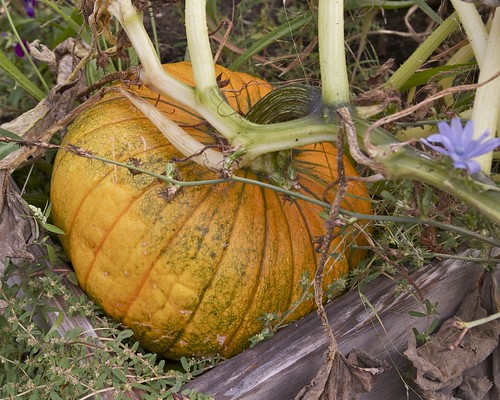
I was looking through my “on deck” folder to see which photos I had ready for uploading to Flickr and I saw this one:

IMGP3592

And that got me to thinking about George Bowers, G. Lionel Bowers.

He’s one of the guys I worked with summers at the lab in Johnstown. Summers, you know, my summer job between years off at college. As for the lab, it wasn’t much. It was a laboratory run by Bethlehem Mines, the mining subsidiary of the now-defunct Bethlehem Steel Corporation. My father was Superintendent of Coal Preparation, which meant he was in charge of designing the plants used to clean coal. This little lab analyzed samples of coal from the mines to determine their sulfur content – sulfur was the main impurity to be removed by the cleaning process.

Building No. 1 is where they crushed the coal samples. It was a dusty, dirty, job. And lowest in the status hierarchy. That’s where you started when you worked at the lab. The crushed samples were ‘washed’ in Building No. 2. It wasn’t a matter of cleaning the samples – hence the scare quotes – but rather of separating them into grains of differing sizes. This involved floating the coal in some medium, generally perchlorethylene (tetrachloroethylene), a nasty chemical used in dry cleaning, and then running the slurry through successively small sieves. Building No. 2 was in the middle of the hierarchy.

And then we had Building No. 3, which is where the samples were actually analyzed. The building had two floors and, you guessed it, the bottom floor was one rung up from Building No. 2, the top floor was a level above that, making it fourth from the bottom. Or, turning the count around, second from the top. The boss’s office was on that top floor and it was the top of the status hierarchy. So there you have it, three buildings, five status levels, from highest to lowest: 1) boss's office, 2) upper floor of building no. 3, 3) lower floor of building no. 3, 4) building no. 2, and 5) building no. 1.
 
Over the course of three summers I worked in all three buildings, starting with Building No. 1. As I recall I only did a week or three there before being moved to Building No. 2. I forget how long I spent there, perhaps the rest of that first summer, but perhaps not. Anyhow, I made it to Building No. 3, bottom floor, which is where I met G. Lionel. And I also worked the top floor in Building No. 1. As a college-going son of company brass I operated outside the normal hierarchy, which everyone knew. But at the same time I had to respect it, like everyone else. Which is why I started in Building No. 1, where I had to wear a breathing mask and got coal dust all over my clothes and up in my hair.

Anyhow, George Bowers. I liked him, and we got along well. He was a high school graduate, no college, and so was pretty much stuck there on the ground floor of Building No. 1, at least if he stayed at the lab.

At some point he uttered a ditty, bits and pieces of which have stuck in my mind ever since: “... and the frost is on the punkin’, that’s the time for dickie dunkin’.” But what’s the rest of that phrase?

Time for googling. I typed “frost is on the punkin” into the magic slot and came up with an entry from the Urban Dictionary and came up with this:
Time for making love. After the hard work of the harvest is done, and to relieve the pent-up tension of not being able to mate because of sweltering August weather (you know - sleeping on the porch, all the windows open, etc...).
OK. That’s the right ballpark. But a bit further got me what I was looking for:
When the weather's hot and sticky
there's no time for dunkin' dickie;
When the frost is on the punkin
that's the time for dickie dunkin'!
That’s the little ditty G. Lionel was saying.

Hot dog! Google does it again. High tech wizardry took me back to the past.

But there’s more. It also coughed up a poem by James Whitcomb Riley (1853–1916), a name I’ve heard, but that’s about it:
Known as “The Hoosier Poet” because of his birth in Indiana and poems celebrating the state, and as “The Children’s Poet” due to his appeal for young readers, James Whitcomb Riley was one of his day’s best-selling writers. Full of sentiment and traditional in form, his work features rustic subjects who speak in a homely, countrified dialect. When Riley died, Woodrow Wilson called him “a man who imparted joyful pleasure and a thoughtful view of many things that other men would have missed,” and some 35,000 people filed past his casket in the Indiana State Capitol.
Seems he’d written a poem, “When the Frost is on the Punkin”. Here it is:
When the frost is on the punkin and the fodder’s in the shock,
And you hear the kyouck and gobble of the struttin’ turkey-cock,
And the clackin’ of the guineys, and the cluckin’ of the hens,
And the rooster’s hallylooyer as he tiptoes on the fence;
O, it’s then’s the times a feller is a-feelin’ at his best,
With the risin’ sun to greet him from a night of peaceful rest,
As he leaves the house, bareheaded, and goes out to feed the stock,
When the frost is on the punkin and the fodder’s in the shock. 
They’s something kindo’ harty-like about the atmusfere
When the heat of summer’s over and the coolin’ fall is here—
Of course we miss the flowers, and the blossums on the trees,
And the mumble of the hummin’-birds and buzzin’ of the bees;
But the air’s so appetizin’; and the landscape through the haze
Of a crisp and sunny morning of the airly autumn days
Is a pictur’ that no painter has the colorin’ to mock—
When the frost is on the punkin and the fodder’s in the shock. 
The husky, rusty russel of the tossels of the corn,
And the raspin’ of the tangled leaves, as golden as the morn;
The stubble in the furries—kindo’ lonesome-like, but still
A-preachin’ sermuns to us of the barns they growed to fill;
The strawstack in the medder, and the reaper in the shed;
The hosses in theyr stalls below—the clover over-head!—
O, it sets my hart a-clickin’ like the tickin’ of a clock,
When the frost is on the punkin and the fodder’s in the shock!
Then your apples all is gethered, and the ones a feller keeps
Is poured around the celler-floor in red and yeller heaps;
And your cider-makin’ ’s over, and your wimmern-folks is through
With their mince and apple-butter, and theyr souse and saussage, too! ...
I don’t know how to tell it—but ef sich a thing could be
As the Angels wantin’ boardin’, and they’d call around on me—
I’d want to ’commodate ’em—all the whole-indurin’ flock—
When the frost is on the punkin and the fodder’s in the shock!
Now, what’s the relationship between that little quatrain about dickie dunkin’ and this poem? Which came first? Did G. Lionel Bowers know the poem?

Questions.
 
* * * * *
 
Here's a somewhat longer post about that summer job that says more about it: My summer job, working in a coal mine – or, how I learned about class in America.