Showing posts with label Zeal_Greenberg. Show all posts

Saturday, February 15, 2025

Claude 3.5 describes a sophisticated New York City apartment from a bygone era.

What do you see?

This appears to be a view of New York City, specifically looking at the Hudson River waterfront with a cruise ship terminal. The image shows several distinct elements:

1. A rooftop terrace or garden in the foreground on the right, featuring a cream-colored brick building with iron railings and some planted greenery

2. The city skyline on the left, with several modern high-rise buildings and older architectural structures

3. In the middle ground, there are some industrial elements including what appear to be water towers and ventilation systems on various rooftops

4. The Hudson River is visible with what looks like cruise ships docked at the terminal (likely the Manhattan Cruise Terminal)

5. The distant skyline on the far side of the river is also visible

The photo appears to be taken from an elevated position, possibly from another building's rooftop or high floor, during what seems to be a clear day with blue skies. The composition shows the interesting contrast between the residential/commercial areas of Manhattan, the industrial port infrastructure, and the modern luxury of cruise ships.

Yes. I was standing on the terrace of a penthouse in a building called “The Normandy.” The structure on the right is part of that building.

Ah, that's interesting - The Normandy must offer some spectacular views of the Hudson River and the Manhattan Cruise Terminal. The cream-colored brick architecture with the rooftop terrace appears quite characteristic of Upper West Side pre-war buildings. You can see how thoughtfully designed these older buildings were, with their setback terraces that provide both private outdoor space and architectural interest to the building's profile.

From this vantage point, you get a fascinating cross-section of New York City's evolution - from the pre-war residential buildings like The Normandy, to the industrial maritime infrastructure of the cruise terminal, to the modern glass towers of the skyline. Looking at the cruise ships docked there, it's amazing to think how this stretch of the Hudson has been a gateway to New York City for over a century, though the vessels have certainly changed from the ocean liners of the past to today's massive cruise ships.

Would you mind sharing what neighborhood this is specifically? I'd guess Upper West Side given the architecture, but I'd be curious to know the exact location.

I believe it’s at 140 Riverside Drive, between 86th and 87th Streets.

Yes, that's exactly right - 140 Riverside Drive is indeed The Normandy. The building was designed by architect Emery Roth and built in 1938, which explains its classic Art Deco-influenced pre-war style. Its location on Riverside Drive gives it those stunning views across the Hudson that we see in your photo.

[Notice that Claude didn't seem to recognize the building until I'd given it the address. The name alone was not sufficient.]

From this vantage point at 86th/87th Street, what you're seeing in the distance is likely the Manhattan Cruise Terminal at Piers 88, 90, and 92 (around West 48th-52nd Streets). The terminal has been operating since 1935 and was even used to deploy troops during World War II before becoming primarily a cruise ship facility.

The modern towers visible in the skyline would be the developments around Midtown West/Hell's Kitchen area, which has seen significant development in recent decades, creating quite a contrast with the pre-war architectural character of your building's neighborhood on the Upper West Side.

The Normandy is known for its distinctive architecture, including its rounded corners and those setback terraces we can see in your photo. These kinds of terraces were partly a result of New York's 1916 zoning laws that required buildings to set back as they rose higher to allow more light to reach the street.

This particular apartment was once occupied by Bennett Cerf. When I was visiting there – over 15 years ago – it was occupied by Glenn Boles.

That's a fascinating historical connection. Bennett Cerf was a significant figure in American publishing - he was one of the founders of Random House and became well-known to the general public as a regular panelist on the TV show "What's My Line?" from 1951 to 1967. It makes sense that such a prominent publisher would have lived in one of the Upper West Side's most prestigious buildings.

The apartment's location would have been very convenient for his work, as many of New York's publishing houses were (and some still are) located in Midtown, easily accessible from the Upper West Side.

Given that this observation is about events and individuals from 15+ years ago, and involves details that might not be widely documented, I should note that while I aim to be accurate, you may want to verify any specific historical details I've mentioned.

Would you like to share more about the circumstances of your visit to the apartment? It would be interesting to hear about how the space has been maintained or changed since Cerf's time there.

A friend of mine was living there at the time. Here’s a view of the living room.

This is a wonderfully cozy and lived-in room that speaks to someone with eclectic interests and a love of books and collecting. The space retains many classic pre-war apartment features, including:

Wednesday, February 5, 2025

Trump proposes to make Gaza “the Riviera of the Middle East!”

I kid you not. No, really, the Riviera of the Middle East. Writing in today’s New York Times, Peter Baker opens with:

President Trump basked as Prime Minister Benjamin Netanyahu of Israel praised his “willingness to think outside the box.” But when it came to Gaza, Mr. Trump’s thinking on Tuesday was so far outside the box that it was not clear he even knew there was a box.

Mr. Trump’s announcement that he intends to seize control of Gaza, displace the Palestinian population and turn the coastal enclave into “the Riviera of the Middle East” was the kind of thing he might have said to get a rise on “The Howard Stern Show” a decade or two ago. Provocative, intriguing, outlandish, outrageous — and not at all presidential.

The idea built on Trump during the day:

Indeed, it seemed to be an idea that grew by the hour as the day went on. In the morning, before Mr. Netanyahu arrived at the White House to meet with Mr. Trump, aides to the president told reporters that it would take 15 years or more to rebuild Gaza after the destructive war between Israel and Hamas and that it would require working with partners in the region to find Palestinians a place to live temporarily.

By the afternoon, as he signed some executive orders, Mr. Trump told reporters that Palestinians would have “no alternative” but to move out of Gaza because it was just “a demolition site.” A little later, he welcomed Mr. Netanyahu to the Oval Office and went even further, saying he wanted “all of them” to leave and that Gazans should “be thrilled” to live someplace better that he expected Egypt and Jordan to provide.

Then at a formal news conference with Mr. Netanyahu in the East Room on Tuesday evening, he took it the final step, declaring not just that Palestinians should leave but that “the U.S. will take over the Gaza Strip” and rebuild it into a prosperous economic destination.

This was not a temporary takeover, but “a long-term ownership position” and he made clear that he had no intention of turning Gaza back over to the Palestinians but would make it a place “not for a specific group of people but for everybody.”

What that meant exactly, he did not say. Nor did he say how this would be accomplished. Even he seemed to grasp how wild the whole thing sounded. “I don’t mean to be cute, I don’t mean to be a wise guy,” he said at one point. “But the Riviera of the Middle East!”

As you might imagine, the idea was not greeted with universal joy and hosannas:

Others saw nothing cute or wise about what amounted to “ethnic cleansing by another name,” as Senator Chris Van Hollen, Democrat of Maryland, put it.

“The notion that the United States is going to take over Gaza, including with the deployment of U.S. troops, isn’t just extreme, it’s completely detached from reality,” said Halie Soifer, chief executive of the Jewish Democratic Council of America. “In what world is this happening?”

Khaled Elgindy, a visiting scholar at Georgetown University’s Center for Contemporary Arab Studies, said Mr. Trump’s comments were “truly bizarre and incoherent,” raising more questions than answers.

But, just for the sheer hell of it, let’s set those reservations aside, I mean, the idea of forcibly relocating the Palestinians, it’s, it’s,...it’s batshit bonkers. But let’s suspend reality for a minute or three.

World Island?

What could we do with a Riviera of the Middle East? Consider the idea my friend Zeal proposed, and pursued for a number of years (and I helped him):

He proposed to transform Governors Island, a 172 acre former Coast Guard base in New York Harbor, into World Island, which he described as a “permanent world’s fair for a world that’s permanently fair”. Think of it as a combination of the best features of the United Nations, Disney World, a kid’s rumpus room, the trading floor at the Chicago Board of Trade, the Bibliothèque nationale de France, and the Japanese exhibit at the 1893 World’s Fair in Chicago. It would cost $25 billion or so and be planted with orchids. Why orchids? Beauty aside, they’re an early warning system for climate change, when the orchids go, we’re not going to be far behind.

I met Zeal in his office a couple days later and he explained.

Governors Island had been a Coast Guard base until the end of the century. Senator Moynihan convinced the government to was sell the island to GIPEC (Governors Island Preservation and Education Corporation), jointly owned by New York State and New York City. GIPEC took possession for a couple dollars rather than a price at market rate. Can you imagine the market rate for a 172 acres of developable property in New York Harbor?

Gaza is considerably larger than 172 acres, but then what Zeal envisioned for World Island was a bit much for that site. But in Gaza, in Gaza there’d be room. And, when you consider the thousands of years of conflict that has bedeviled that land, it would be the perfect place to realize Zeal’s vision. Here’s the executive summary of the proposal we submitted to GIPEC: Governors Island as a World Resource Center. Here’s slide presentation that you can scroll through.

World Island, a Global Commons by Bill Benzon

Trump's cultural policy, a speculative proposal 

What will actually happen? Who knows? I certainly don’t, and neither does Donald Trump. But you should read Tyler Cowen’s recent post: Trumpian policy as cultural policy. It’s quite provocative. Here’s a bit:

The Trump administration has issued a blizzard of Executive Orders, and set many other potential changes in the works. They might rename Dulles Airport (can you guess to what?). A bill has been introduced to add you-know-who to Mount Rushmore. There is DOGE, and the ongoing attempt to reshape federal employment. [...]

Imagine you hold a vision where the (partial) decline of America largely is about culture. After all, we have more people and more natural resources than ever before. Our top achievements remain impressive. But is the overall culture of the people in such great shape? The culture of government and public service? Interest in our religious organizations? The quality of local government in many states? You don’t have to be a diehard Trumper to have some serious reservations on such questions.

We also see countries, such as China, that have screwed-up policies but have grown a lot, in large part because of a pro-business, pro-learning, pro-work culture. Latin America, in contrast, did lots of policy reforms but still is somewhat stagnant.

OK, so how might you fix the culture of America? You want to tell everyone that America comes first. That America should be more masculine and less soft. That we need to build. That we should “own the libs.” I could go on with more examples and details, but this part of it you already get.

So imagine you started a political revolution and asked the simple question “does this policy change reinforce or overturn our basic cultural messages?” Every time the policy or policy debate pushes culture in what you think is the right direction, just do it. Do it in the view that the cultural factors will, over some time horizon, surpass everything else in import.

Simply pass or announce or promise such policies. Do not worry about any other constraints.

You don’t even have to do them!

After this that and the other:

To be clear, this hypothesis does not not not require any kind of cohesive elite planning the whole strategy (though there are elites planning significant parts of what Trump is doing). It suffices to have a) conflicting interest groups, b) competition for Trump’s attention, and c) Trump believing cultural issues are super-important, as he seems to. There then results a spontaneous order, in which the visible strategy looks just like someone intended exactly this as a concrete plan.

We live in interesting times.

Saturday, November 23, 2024

Governors Island as a World Resource Center [World Island]

I spent a good deal of time early in the millennium working with Zeal Greenberg, of the World Development Endowment Foundation, on a plan to develop Governors Island. It's located in New York harbor just below the southern tip of Manhattan between Ellis Island and Brooklyn. This photo shows the tip of Manhattan as seen from the ferry terminal on Governors Island:

Here we're on a large lawn in the middle of the island, looking toward Manhattan:

These houses used to be officers quarters when the island was a military base:

Here's a link to the executive summary for our development proposal: Governors Island as a World Resource Center: A Vision for the Future Development of New York Harbor as a Global Cultural Center. The preface:

In 2002 the federal government transferred the management of Governors Island to the Governors Island Preservation and Education Corporation (GIPEC), operated jointly by New York State and New York City. The transfer deed specified that the island be developed for public purposes and prohibited permanent housing and casinos on the island. In 2005 GIPEC issued and Request for Expression of Interest (RFEI) followed by a Request for Proposal (RFP) in February 2006. The World Endowment Development Foundation submitted a formal proposal on May 10, 2006. This document contains the executive summary for that proposal.

Friday, May 21, 2021

A World’s Fair for a world that’s permanently fair @3QD [Hey, kids! Let's create a NEW World's Fair!]

I'm bumping this to the top of the queue because Tyler Cowen's Emergent Ventures has made Cameron Wiese a Progress Studies fellow so that he can re-animate and re-conceptualize an old idea and create a new World's Fair. From Weise's call to action:

Today, World's Fairs have been rebranded as "International Expositions" that occur every 5 years, and are a hollow shell of their former glory. They no longer showcase the promise of the future or celebrate achievement. Instead, they serve as national branding exercises, infrastructure development projects masquerading as innovation, architecture competitions, and an opportunity to promote tourism. If anything, they're the perfect representation of our current vision for the future: unfocused and uninspiring.

But it doesn't have to be this way; we can't afford for it to be this way.

The world has changed dramatically since 1984. We now live in the most incredible time in human history. The internet has brought billions of people together and tech companies have given us supercomputers in our pockets. We're starting to build hyperloops and supersonic jets. We're on the cusp of incredible breakthroughs in genetics, biology, medicine, food science, energy, transportation, manufacturing, computing, and robotics. We're finally going back to the moon and then on to Mars. We've once again seen the power of a collective vision with the record-breaking development of the COVID-19 vaccine.

* * * * *
 
I’ve got a new piece up at 3 Quarks Daily: World Island: Zeal Means Hope [The World’s Got Talent]. It’s about my friend, Jerry Greenberg, who now goes by “Zeal”, and his project to create a World Island, as he calls it, “a world’s fair for a world that’s permanently fair.” It was a wonderful quixotic idea, a $25 billion dollar city-within-a-city dedicated to peace and human flourishing. It was to be located on Governors Island, 172 acres in New York Harbor a quarter of a mill off the tip of Manhattan and only 100s of yards from Red Hook, Brooklyn.

The article tells the story of what happened between the time we meet in 2003 or 2004 and the time we had to deliver a proposal to locate World Island on Governors Island. The agency in charge of the island, GIPEC (Governors Island Preservation and Education Corporation) was holding a competition for proposals. The proposals were due May 10, 2010. We made the deadline, with 5 minutes to spare.

Our proposal wasn’t accepted. No proposals were. I continued to work with Jerry on other locations for the project, Sierra Leone, and Athens, Greece were looking good at various times, and with other projects, such as WISE, World Investment Summit/Exposition. But this isn’t about that.

It’s about something else, about Jerry’s influence on others. He’s worked with a handful of people quite closely on these various projects, a very large handful. But he’s met 1000s of others and worked with some of them for a bit. How’d he change their lives?

database
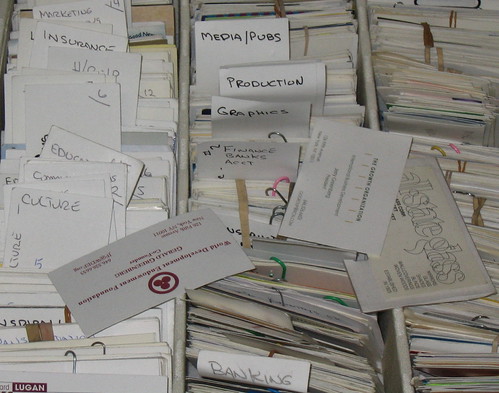
Zeal's database system
In my own case, in November of 2007, a year and a half after the Governors Island proposal, I wrote a document, Jersey City: From a Skate Park to the World, and posted it to the web. I told that story in a post, How I Found a Home in Jersey City and Got Steve Fulop Elected Mayor, Part 3. That part about electing the mayor, that’s a bit tongue in cheek; but I did give a copy of that report to Fulop. It was about a park project, a two-and-a-half mile cultural corridor, through the middle of Jersey City. I figured it would cost a quarter to half a billion dollars, much cheaper than World Island, and would transform the city. Here’s the executive summary.
Jersey City has an unparalleled opportunity for developing park space and cultural amenities in a two-mile corridor running from the Powerhouse Arts District in the East, along the Sixth Street Embankment to the Palisades, then up the River Line to the Bergen Tunnel, and west through the Erie Cut-Bergen Arches to JFK Boulevard. What is unique about this strategy is that is builds on both abandoned railroad properties and on Jersey City’s status as a center for graffiti art of the highest caliber. By capitalizing on its graffiti heritage, Jersey City can attract tourists from around the world and establish itself as an international center of cutting-edge art.

This development strategy includes three park-garden areas: 1) Sixth Street Embankment, 2) River Line Walk, and 3) Erie Cut. A skate park is already being planned for the River Line Walk area. At full development the Erie Cut would have a series of small gardens in various national styles – Indian, Chinese, Spanish, etc. – and a conservatory linking the bottom of the cut to the street-level surface(Route 139). There would also be two modest museum complexes: 1) a graffiti museum at 12th and Monmouth, and 2) a railroad museum nearby at the Bergen Tunnel. These complexes would include restaurants and shops.

A thumbnail calculation indicates that these developments could bring new tourist revenue to the city in the amount $36 to $90 million (or more) annually. Other benefits include increased property values along the corridor and new businesses.
Crazy a way – where’s the quarter to half billion construction costs going to come from? – but not so crazy. It was a vision for the future, not a concrete plan. Visions work indirectly.

A couple years later I gave a copy of that report to Greg Edgell. Since then he and I, along with dozens of others, have been working on it in one way or another. We worked with June Jones (Morris Canal CDC) and skateboarders to get the city to agree to build a skate park, albeit in a different place from the one proposed in that report. More recently we started The Bergen Arches Project, which aims to complete another aspect of that proposal, and at a much lower cost.

The vision I projected in that report is thus coming to life. I wouldn’t have written it if I hadn’t spent two or three years working on the World Island project with Zeal.

Ideas have influences. Visions have consequences. Such is the way of the world.
 
Addendum:  You can download some World Island documents at Scribd.