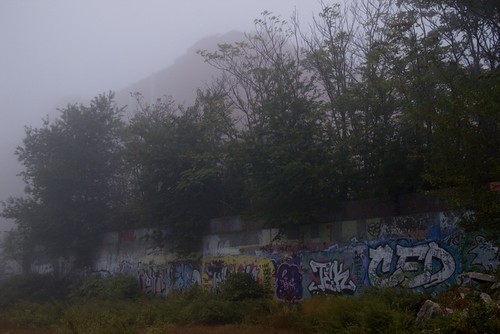
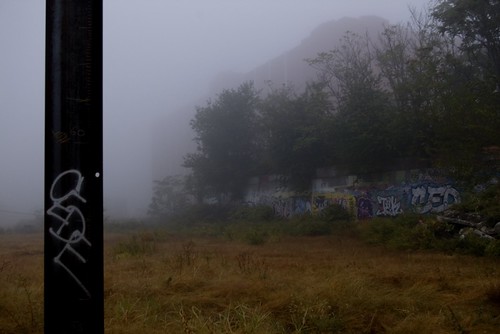
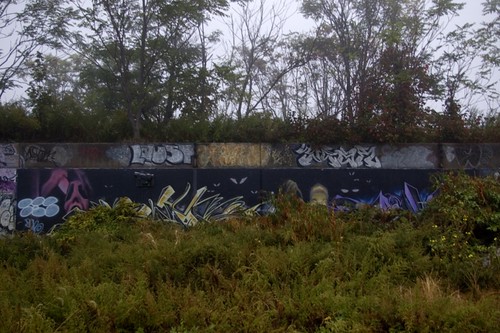
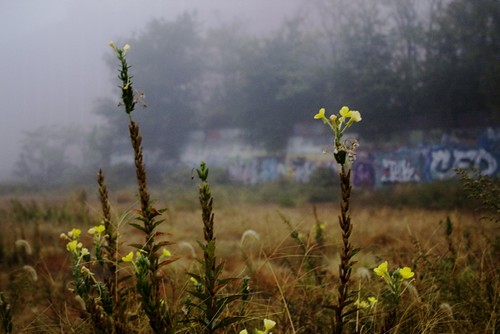
Graffiti expresses the kami of the site where it is situated
I take it from my post, Living Graffiti, that the site of graffiti is the focus of our, or at least my, investigation. But the site is to be understood, not as a mere physical place. It IS that, but the physical place is to be understood, perhaps, provisionally, as a resource accessed by the graffiti, and thus by the graffiti writer. The site is a confluence of physical, social, and aesthetic energy.
In order further to understand this, a little comparative investigation is called for. And for that we turn to—where else?—but to Japan and Buddhism. Not directly, but as interpreted through Eiko Ikegami’s wonderful book, Bonds of Civility: Aesthetic Networks and the Political Origins of Japanese Culture (Cambridge 2005). We start with linked verse, a form of collective, public poetry practiced in the 13th century (and later):
The atmosphere of a Cherry Blossom session was intensely moving for its participants. The typical number of seats poets in a za session was not fixed but usually stood at around 10. Unlike the more formal linked-verse meetings of later periods, however, members of the audience that surrounded a circle of poets in a Cherry Blossom session were free to contribute poems of the own to the circle. After one sequence of chain poems was made by seated members in the circle, the floor was open to the public. All the participants in the meeting would avidly search for the best follow-up verse, one after the other, Sometimes, dozens of poems were thrown in from the audience to provide the next stanza in a particularly difficult chain. When an unexpectedly interesting succeeding stanza was presented, the perceptive participants would be captivated by feelings of surprised exhilaration.
In other words, we be jammin’.
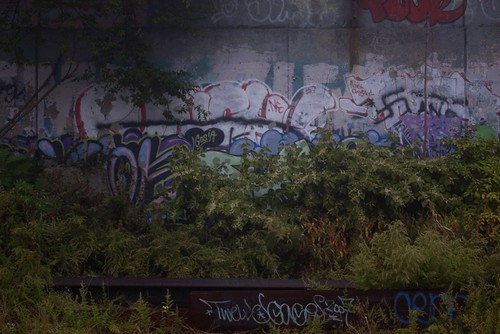
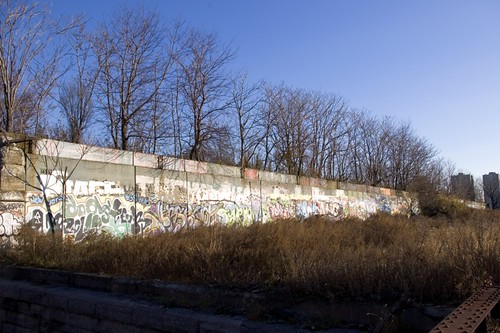
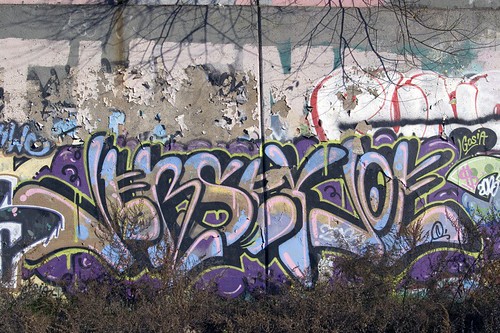
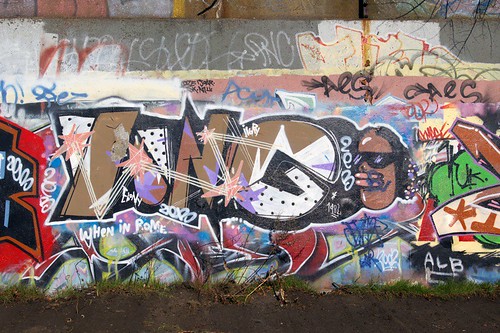
Now check this out, it’s from Roger Gastman & Caleb Neelon, The History of American Graffiti (Harper 2010); they’re quoting TDEE, a Jersey City writer talking about the Jersey City Wall of Fame, as it’s sometimes known (p. 276):
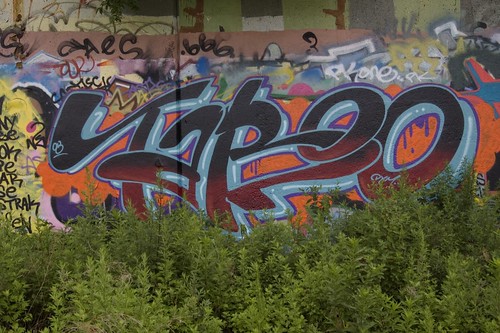
All of sudden, already seasoned writers like TECK, SERO, SNOW, and the QMB CREW started rocking ‘our’ walls, to where soon you could go up there on any given Sunday during the summers of 1991 to 1993 and find at least ten people painting, and twenty more just hanging out. . . . The Newport Wall was the first time writers from different New Jersey cities got together on the regular and had a place to meet and paint as a collective.
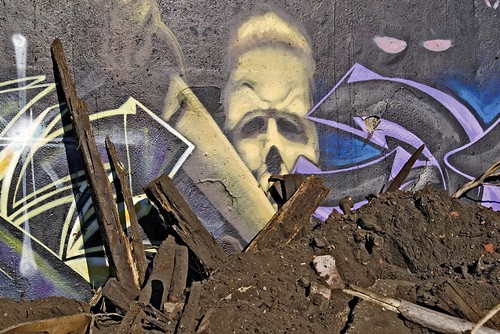
Times have changed, but the Newport Wall’s still there, only three blocks from the Holland Tunnel and thus within earshot of thousands of cars a day, though it’s been neglected of late and part of the wall’s covered with dirt, dirt thrown there as part of preparations for erecting apartment buildings that have not yet happened.