Showing posts with label downsize. Show all posts

Friday, October 12, 2018

Chilltown 2.0: Is Jersey City Ready for the World Stage?

JC_Rising BPA 5
I'm feeling feisty. This is from five years ago & I'm bumping it to the top of the queue.
* * * * *

For one thing, with immigrants from the Caribbean, Latin America, the Middle East, Asia, and the Pacific, Jersey City is already ON the world stage. But is it ready to PLAY on the world stage, that’s the question?

The most obvious response is that the question is pointless. Jersey City is a mid-size city on the west bank of the Hudson River in the shadow of New York City. New York City, of course, is a major player on the world stage. But why should Jersey City aspire to be anything more than an appendage to New York City? And even if it aspires to be more, how could it do that?
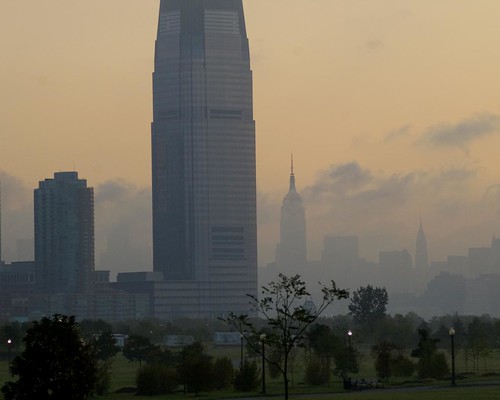
IMGP3467rd

Good questions, questions I’ll be thinking about in the coming days, weeks, and months. You should do so as well.

My basic conviction–and I’m just going to state it, not argue it–is that Jersey City’s long-term survival depends on it’s ability to actively take a role on the world stage.

In a recent column, I Want to Be Mayor, New York Times pundit Thomas Friedman argued that cities are where the action is:
In fact, if you want to be an optimist about America today, stand on your head. The country looks so much better from the bottom up — from its major metropolitan areas — than from the top down. Washington is tied in knots by Republican-led hyperpartisanship, lobbyists and budget constraints. Ditto most state legislatures. So the great laboratories and engines of our economy are now our cities. This is the conclusion of an important new book by the Brookings Institution scholars Bruce Katz and Jennifer Bradley, entitled: “The Metropolitan Revolution: How Cities and Metros Are Fixing Our Broken Politics and Fragile Economy.” ...
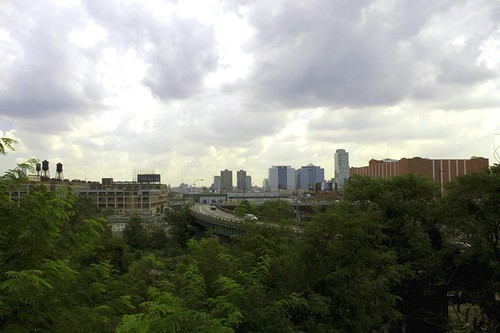
exit from manhattan.jpg

Jersey City’s Mayor Steven Fulop agrees:
I really think that the opportunity today is not really at the federal level or even at the state level to make change. It’s really on the local level. You have all this gridlock at different levels of government and the most meaningful opportunity is at the local level,” Fulop said. “I saw Jersey City as a really special place that was under-achieving and a unique opportunity to really turn it into kind of the best mid-size city in the country.”
My point is that Jersey City can ONLY do that if it plays on the world stage. Returning to Friedman’s piece:
First, [Katz and Bradley] argue, the Great Recession blew up the deformed growth model we had settled into — one “that exalted consumption over production, speculation over investment, and waste over sustainability.” The new growth model ... focuses on creating networks that combine skilled laborers and knowledge workers, with universities and technical schools, with quality infrastructure and high-speed Internet, to do manufacturing, innovation, technology development and advanced services — with an eye to exporting all of them. That’s how we build a 21st-century middle class. “The best cities now understand that you need to a have a sector of your economy that is world class” in order to thrive, the authors argue.
What’s the world-class sector of Jersey City’s economy going to be?

That’s what we have to figure out.

* * * * *

As food for thought, look at these posts where I argue, in one way or another, the general point that the action is shifting away from (large) nation states and towards smaller regions: cities, municipalities, and small nations. And then there's my recent piece, Jersey City: A 21st Century Florence? Don't forget, back in the 15th Century, when Florence was on the rise, nations as we know them didn't exist. The action in Europe was in city-states. Finally, there's my report, Jersey City: From a Skate Park to the World, where I lay out a plan that will make Chilltown 2.0 a world destination.
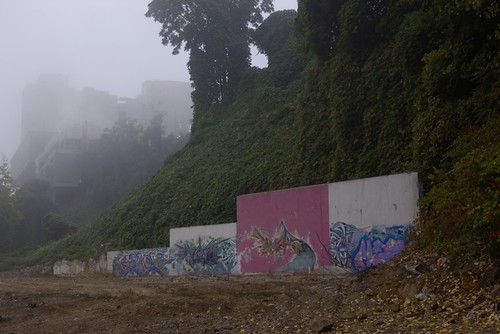
misty morning graffs.jpg

Monday, January 22, 2018

The Story of Civilization: Stuck in Traffic

Are things too big and out of hand? I'm bumping this one from September 2012 to the top of the queue.
One day I waited an hour in traffic to go a quarter of a mile so I could enter the Holland Tunnel and cross under the Hudson River to my home in Jersey City. While sitting in the cue and kept thinking why why why? Why?

In answer the question with a boiling-frog story, a parable about Happy Island. I conclude by suggesting that the world is happy island and we’re stuck in traffic.

Tunnel Traffic

I live in Jersey City, New Jersey, which is across the Hudson River from Lower Manhattan. Whenever I go to Manhattan I use public transportation, which is reasonably good, though just a bit inconvenient from my present location. Driving my car through a tunnel or over a bridge and parking it on Manhattan, that’s VERY inconvenient. And so I avoid doing it.

But I had to go to rural Connecticut to meet Charlie for a trip up to Vermont. I could have taken public transportion to a point where Charlie could pick me up. But that’s a longish walk and four trains, or a longish walk and three trains and a long walk or a cab. Which was a hassle. So I decided to drive. Yes, I’d have to cross the Hudson River, but the Holland Tunnel’s nearby and I could avoid rush-hour traffic on both trips, too and from. And driving on Manhattan was a bit of a hassle, but not too bad on this trip because I’d be mostly on the West Side Highway.

So I drove. I left on Thursday morning at, say, 9:45 AM. By 11:30 I’d crossed off the northern end of Manhattan and was headed toward Connecticut. That’s an hour and forty-five minutes to go the first 15 miles, and probably an hour to go the first four miles, from my place in Jersey City through the Holland Tunnel and onto the West Side Highway headed North.

And that wasn’t rush-hour.

Nor was it rush-hour mid-afternoon on Saturday when I made the return trip. It took at least 45 minutes to get from West Side Avenue and 12th street into the tunnel, and traffic was unusually slow inside the tunnel, for whatever reason.

I’d be very surprised indeed if tunnel traffic was that bad when the Holland Tunnel first opened early in the 20th century. Nor do I have any idea when traffic began to build-up at the tunnel. It was opened in 1927 and the first tube of the Lincoln Tunnel followed a decade later; the second tube took another eight years. Was it built in response to traffic build-up in the Holland Tunnel and the George Washington Bridge? Seems possible. A third tube was opened in ’57, a response to increased traffic.

These days local news features regular reports on traffic delays at all tunnels and bridges crossing to Manhattan. The information is, of course, readily available on the web. Rush-hour delays run between half an hour and an hour. It’s crazy.

No one would ever design a system to work like that. But that’s how the system’s evolved. And it’s going to get worse.

Two years ago the governor of New Jersey killed a project to build another railroad tunnel under the Hudson. It would have doubled the number of passenger trains at peak hours. Meanwhile the mayor of New York City, Michael Bloomberg, billionaire, wants to change zoning in Mid-Town so that higher office towers can be built. You know what that means, don’t you? More traffic on the already over-loaded bridges and tunnels.

Of course, that has no direct meaning to Mayor Mike. He can afford to live in Manhattan, along with his executive cronies. When he crosses the Hudson or the East River he can fly his helicopter or he can sit in the back of a nice limo, with his laptop wified to the world, along with a wet bar, pool table, squash court and whatever else he needs to pass the time while the limo waits in traffic, the limo driver twiddling his thumbs while Mayor Mike is reeling in the big ones off the Grand Banks. Bridge and tunnel traffic is just numbers to him; it’s not a reality that hits him directly.

Sure, build taller office buildings in Mid-Town. You know what that means to Mayor Mike, Billionaire? It means more business for his company, that’s what it means. His company and the companies of his buddies. That’s the reality that’s most immediate to him. Not all the hassle more traffic will cause for the people who work in those bigger buildings, but can’t afford to live on Manhattan.

So the problem’s just going to get worse and worse.

Sunday, September 10, 2017

Bleg: Beyond/Beneath the Nation-State

This stuff is much on my mind these days. If anyone has any suggestions, please pass them on.
Back in September, 2012, I put up a post in which I asserted, by the time-honored method of pulling it out of my arse, that
in the long run, more and more political action which shift to cities and thereby ‘hollow out’ the increasingly sclerotic system of nation states which governs the earth and the global level. In a century the nation states will be husks of what they are now and most of the world’s civic business will be conducted by shifting coalitions of cities and regions.
I’m interested in exploring that notion.

Very.

Anyone have ideas, suggestions for things to check out, etc.? Any relevant science fiction?

* * * * *

In that post I cited, as examples,
  • the Second Vermont Republic, a group of citizens who want Vermont to secede from the USofA,
  • the Transition Town movement, folks who are adamantly apolitical but who, in anticipation of peak oil, are working toward local self-sufficiency in food and energy and all that that implies, and
  • Mayors of Peace, an international organization of cities seeking to end nuclear weapons by 2020.
What else is there like that, where “like that” is interpreted generously?

Do sister cities programs belong here? The Wikipedia definition:
Twin towns or sister cities are cooperative agreements between towns, cities, and even counties in geographically and politically distinct areas to promote cultural and commercial ties.
And the charter cities movement? Again, the good old Wikipedia:
A charter city is a city in which the governing system is defined by the city's own charter document rather than by state, provincial, regional or national laws. In locations where city charters are allowed by law, a city can adopt or modify its organizing charter by decision of its administration by the way established in the charter. These cities may be administered predominantly by citizens or through a third-party management structure, because a charter gives a city the flexibility to choose novel types of government structure. Charter cities are similar in administrative structure to special administrative regions.
A special administrative region (SAR) is a provincial-level administrative division of the People's Republic of China, for which creation is provided by Article 31 of the 1982 Constitution of the People's Republic of China (while the administrative divisions are provided by Article 30 of the Constitution.) Article 31 reads "The state may establish special administrative regions when necessary. The systems to be instituted in special administrative regions shall be prescribed by law enacted by the National People's Congress in the light of the specific conditions".

At present, there are two special administrative regions, namely Hong Kong and Macau, which were former British and Portuguese territories respectively. Neither of them is part of any other administrative division.
Beyond that, will China be able to sit on Tibet forever? What about the Uyghurs in Zingjiang?

And then we have the curious legal status of Native American peoples within the United States:
Tribal sovereignty in the United States refers to the inherent authority of indigenous tribes to govern themselves within the borders of the United States of America. The federal government recognizes tribal nations as "domestic dependent nations" and has established a number of laws attempting to clarify the relationship between the federal, state, and tribal governments. The Constitution and later federal laws grant local sovereignty to tribal nations, yet do not grant full sovereignty equivalent to foreign nations, hence the term "domestic dependent nations".
The conventional money, of course, says that those are all just curious exceptions to the rule of the nation-state, which is here to stay. And perhaps it is. I note, however, that cities didn’t disappear when nations rose up around them. The nations may well stick around, but in somewhat reduced form.

The imaginative money notes several things. In the first place, many existing nation states are colonial constructions cobbled out of disparate peoples who have little more in common than they fact that they lived in contiguous territories ruled by colonial powers. Secondly, while many things no doubt contributed to the collapse of the Soviet Union, with economic stress perhaps chief among them, it never really was a unified nation in the sense that America has been. Three, Vermont is by no means the only contemporary secession movement in the USofA. Indeed, the world is riddled with secession movements. Four, the European Union is looking mighty shaky. Will it hold, or break up?

Perhaps the biggest threat to national sovereignty comes from the large multi-national corporations, who can, among other things, deprive nation states of tax revenue by moving money around internally. Who rules the USofA anyhow, the citizens through their elected representatives, or the large corporations through their influence on the electoral process? One could make an argument that 100 years from now, or less, the international order will be dominated by these corporations rather than by nation-states.

Not a happy prospect.

Finally, over the long historical haul things change, radically and fundamentall so. The nation-state is a relatively new form of government, less than a millennium old. Why should it be eternal? Is there any reason to believe that humankind has run out of political imagination? I see none.

And so I see the possibility of radical change in the future, but based on principles and mechanisms not yet articulated.

Wednesday, September 6, 2017

Cities are breaking free ... on climate change (I hope)

"I was elected to represent the citizens of Pittsburgh, not Paris,” President Donald Trump declared at the White House in Washington, DC, on June 1, 2017, after announcing he would pull the United States out of the Paris climate change agreement. Within minutes, Pittsburgh’s mayor, Bill Peduto, was responding to the president on Twitter.

“The United States joins Syria, Nicaragua & Russia in deciding not to participate with world’s Paris Agreement. It’s now up to cities to lead,” Peduto tweeted. “As the Mayor of Pittsburgh, I can assure you that we will follow the guidelines of the Paris Agreement for our people, our economy & future.”

Friction among state and substate actors is nothing new. But climate change is one issue where the role of urban leaders is growing in importance, according to Ian Klaus, a former senior adviser for global cities at the US Department of State and deputy US negotiator for Habitat III, the 2016 UN Conference on Housing and Sustainable Urban Development.

In a phone interview with the Stanley Foundation in June, Klaus said the decision of hundreds of American city leaders to diverge from the president’s official stance on the Paris Agreement was a “remarkable moment in diplomacy.” But it also highlighted the necessity of other multilateral players, such as civil society and nonstate actors, to help cities implement climate action. Scores of university and business leaders also have declared their support for the Paris Agreement, along with networks such as the C40 Cities Climate Leadership Group and the Global Covenant of Mayors for Climate & Energy, and organizations such as Bloomberg Philanthropies have pledged financial assistance.
The world's population is increasingly urban:
According to the 2016 World Cities Report from UN Habitat, by the year 2030, more than 60 percent of the world’s population will be living in urban environments.

“Some of the key global macro trends are making cities and the voice of mayors and city hall more important than ever before,” Klaus said. “As an example, if you are in the innovation economy and you’re thinking about ridesharing or apartment sharing, state governments, provincial governments, and city governments often are the regulatory keys. And so we have a shift in a lot of issues, from climate to the nature of economic growth, that I think is making cities also more important. You have this convergence of population, demographics with other trends in the economy, and security and climate.”

The relationship that citizens have with their cities also often diverges from their view of national government, Klaus said, and differs “all over the world.”
Substate diplomacy is growing:
Klaus anticipates that substate diplomacy will only grow in the coming years. In fact, US cities aren’t the only ones increasingly engaging with foreign nation-states. After President Trump announced the US departure from the Paris Agreement, California Governor Jerry Brown announced the formation of the US Climate Alliance, journeyed to China for multilateral discussions, and announced a 2018 global climate summit in San Francisco. Also, the New York Times reported that Canada has begun engaging with US cities on climate action.

“I think we’re increasingly seeing that cities and states and counties, and provinces in other countries, can take action. And, obviously, because of the pressure they are under from their own citizens, because of the moral calling to deal with an issue such as climate change, I think we’ll see more action than ever for sure,” Klaus said. “It’s a tremendous moment.”

Friday, April 28, 2017

Four Point Plan to Change the World, or at Least the USofA

In the era of His Highness Lord Trump, this old post seems worth a thought.
Ha!

This is going to be quick and crude.

Some Assumptions

I’m making many assumptions, including: 1) Limits are near, 2) Science and technology cannot change that, and therefore 3) the American Century is over. 4) Recognizing and accepting 3 is the chief stumbling block to major political change. It’s a matter of mythology, symbolism, and emotional investment, not rational principle and reasoned argument.

Until this symbolic problem is overcome the reasoning behind 1 (limits), 2 (tech won’t work), and 3 (hegemony gone) is invisible.

The Hegemony Myth

So, how do we create a new mythology to replace that of American Hegemony? Good question. I don’t know.

I do know that, after Japan was defeated in World World II, some Japanese managed to shed the old imperial mythology which had Japan at the center of the world. One can see that process of mourning in, for example, three manga by Osamu Tezuka: Lost World, Metropolis, and Next World. That the Japanese had lost the war was an inescapable fact, and so many Japanese could find their way to a new mythology. Those Japanese grieved for their lost Japan and, out of that grief, managed to create a new one.

Nothing of comparable finitude has happened to America. The recent financial disaster was a shock, and it has had permanent repercussions, but it isn’t the equivalent of having several major cities incinerated, two by atom bombs, and enduring a military occupation. Before that, there was the terror bombing of 9/11. That too was shocking, but America responded to the shock by doubling down on the old mythology and thereby walking into two unwinnable wars half way around the world.

Sunday, March 9, 2014

Could Vermont Really Secede from the Union?

A year an a half ago I went to a meeting in Vermont where people talked seriously about seceding from the Union. But I don't recall any discussion of what that would actually involve. The current conflict in the Ukraine over Crimea has put the issue of secession on the front page and the NYTimes has an op-ed on the subject: Sovereignty vs. Self-Rule: Crimea Reignites Battle. Here's a couple of paragraphs:
Of course, the fractiousness that has chopped up the Soviet empire into increasingly smaller and often dysfunctional pieces is not relegated only to that part of the world, although in the West in recent years it has played through political and legal processes rather than military ones.

In September, for example, Scotland will hold a referendum on secession, a vote being held with the acquiescence of London. In November, Catalonia plans its own vote on independence from Spain, although in that case the Madrid government has called it illegal. Quebec held unsuccessful referendums on independence from Canada in 1980 and 1995 and as recently as last week its separatist government was discussing whether another should be held.
I assume that a Vermont – or, for that matter, a Texas secession – secession would be more like Scotland or Quebec than like what's been happening with the former Soviet empire. Under what circumstances could that actually happen? How would the free republic of Vermont disentangle itself from the Federal system, the military, banking, and tax systems?

Thursday, November 8, 2012

What Have I Learned from Sandy? Resilience Begins in Responsibility

I phrase it as a question because, though, considered as a weather event, hurricane Sandy is over and done with, as a psycho-cultural-historical event, it is only in the early phases of its life. In an earlier post (Thoughts on Sandy: We Must Change Our Ways, NOW) I talked about the need to restructure our world:
We have to rethink and restructure. We have to decouple and downsize. Otherwise we’re committing suicide by “civilization” and technology.
That idea isn’t new to me. It’s been with me in one form or another for a long time.

But, whatever lessons Sandy has for others—and I hope her lessons have been deep ones—I’m beginning to think that she does have a lesson for me, a lesson about self-reliance, community, and their interdependence. Still, I’m not sure. It’s too soon to tell. In any event, before I get around to a tentative account of THAT lesson, I want first to talk about some other lessons.

Sputnik, Martial Law, Berlin Wall

These lessons are personal lessons, though not entirely so. They are lessons about the intersection of my life with the larger currents of history. As such, I don’t expect that these historical events will have the same or similar significance for others, though they might. Briefly, these are the events:
  • 1957: The Russians launched Sputnik, the first man-made satellite to circle the earth
  • 1968 1969: Martin Luther King was assassinated, riots broke out, and martial law was declared in Baltimore
  • 1989: Berlin Wall came down and set the stage for the reunification of Germany
I was ten years old in 1957 and was fascinated by outer space, rockets, and such—a fascination stoked, no doubt, by various TV programs by Walt Disney and films such as Forbidden Planet (1956). The launching of Sputnik marks the first time my dreams and fantasies met-up with history.

The launching of Sputnik was certainly a world historical event. Shorn of politics, it was the first time that humans stepped off of the earth to function in outer space, if only indirectly. But of course, we can’t divorce Sputnik from Cold War politics, nor did I do so as a ten-year old. I knew, in my ten-year old way, that it was important for America to beat the Russians in the space race that Sputnik had catalyzed.

However, by the mid-1960s I had decided that, if the Cold War was in fact a real and pressing international conflict, it was a conflict dominated by a military-industrial complex that was more interested in preserving itself than in preserving the peace. The war in Vietnam had made me a pacifist and the counter-culture had almost made me a hippie.

Almost. I wore hippie clothing, listened to the Beatles, the Doors, and Jimi Hendrix, and smoked weed—yes, I inhaled. But I never made it to full-out hippiedom. I was too much of an intellectual for that.

And when Martin Luther King was assassinated in 1968, riots broke out in Baltimore, where I was attending The Johns Hopkins University. The riots took place in East Baltimore, far from the North Charles Street campus of university (though the medical school and hospital were in East Baltimore), but that made no difference when martial law was declared. The whole city was put on lock-down. Curfew was 4PM and National Guard vehicles and men patrolled the streets. Of course I had to break curfew, along with some of my hippie (and non-hippie) friends.

Wednesday, September 19, 2012

Political Connections: Lafayette to Montpelier

On the one hand I’m involved in projects in my neighborhood (Lafayette in Jersey City, NJ), most notably a community garden, but also an anti-litter campaign, and I’m looking to do something with music. On the other hand I just got back from a trip to northern Vermont where I was part of a five-state aggregation of nine musicians that provided music for a conference on Vermont independence, which means Vermont seceding from the United States and establishing itself as a sovereign nation once again (Vermont was a republic between 1777 and 1791).

What do these two spheres of activity have to do with one another? What are the connections?

Some People Links

There is, of course, the fact that I’m involved in both sets of these arenas. I live in the Lafayette neighborhood of Jersey City and am working to make it a better neighborhood. Lafayette’s my home.

I traveled to Vermont at the behest (when was the last time I used that word?) of Charlie Keil, an intellectual and musical compatriot. Charlie is an anarchist, as am I, and a pacifist, ditto. We were both conscientious objectors during our years of draft eligibility. And we’re both musicians.

In particular, Charlie is interested in getting more people to make live music and he’s interested in what he calls a 12/8 Path band, which is a strolling brass band at home in 12/8 time. We’ve played many demonstrations together in New York City, including a large anti-war demonstration prior to the invasion of Iraq and an anti-nuclear demonstration where Japanese and out-numbered everyone else.

But, how’s that get us to Vermont celebrating the future independence of Vermont? Simple, really. Charlie believes in “small is beautiful” and I’m OK with it. Breaking the USofA into a number of smaller and more flexible states seems like a reasonable thing to do. That’s something advocated by Thomas Naylor, an economist and an activist for Vermont independence. It’s Naylor who brought Charlie to Vermont and I came along.

Me and a bunch of other guys. Since this post is about connections I could legitimately talk about these others. But I won’t. For one thing, that could easily go on and on and on as I start moving out along those networks. For another, I don’t know much about most of them except that they’re good and versatile musicians, which I learned from playing with them, some of the for the first time in Vermont. But I’ll mention one, trombonist Steve Swell, who’s sympathetic to Charlie’s politics and mine. You can track his musical links through his Wikipedia entry. Also, Steve’s loosely familiar with my neighborhood as he went to college in Jersey City.

Sunday, September 16, 2012

Celebrating the Future Independence of Vermont, at the Vermont Statehouse in Montpelier: Toward a Politics of Jubilee

I spent Friday, 14 September, in and around the Vermont Statehouse. Sometime back in the mists of time past some good Vermont citizens decided that, in the face of the cancerous growth of the American state, that Vermont folks of conscience and caring had to organize and urge their fellow Vermonters to secede from the Union. And so the Vermont Independence Party (VIP) was born.

Friday was their third state-wide convention, with visitors from several other states as well. This convention was organized toward the reading of The Montpelier Manifesto, listing 29 grievances against the Federal Government of the United States of America and urging secession. The conference was held in the House Chamber of the Vermont Statehouse, for it seems that, by law, Vermont citizens have the right to occupy use the statehouse when it is not otherwise in use.

I was there with the Northeast Irregulars, a contingent of the New York Path to Peace, organized by Charlie Keil. We brought musicians from Jersey City, New York City, Connecticut, and Vermont. At least.

Here's some photographs of that glorious day. I apologize to all those who were there but not in these photos.

* * * * *

IMGP0226rd

That's Charlie Keil on the right and Jack Lazarowski on the left. Jack and his wife Linda put Charlie and I up for the night. Thanks, Jack and Linda!

Tuesday, September 4, 2012

Downsize the State: Nothing Succeeds Like Secession

The good people at the Second Vermont Republic are at it again, helping to organize The Third Statewide Convention on Vermont Self-Determination, with a keynote address by Morris Berman (Why America Failed).

The convention will be held in the Vermont State House, Montelier, VT, on Saturday 14 September, 2012, from 9AM ro 4PM (party afterwards!).

Occupy Secession has this to say:
Only in Vermont would it be possible to hold a statewide convention on political independence in the House Chamber of the State House, where the Governor, the Lt. Governor, Council of State, Congressional Delegation, and the vast majority of the members of the State Legislature are all unconditional apologists for the American Empire and vehemently opposed to Vermont separatism. Yet that is precisely what is about to happen in Montpelier, Vermont on September 14th. Not only that, it is the third such convention, the other two having been held in 2005 and 2008. There is no charge for the use of the most prestigious venue in the entire Green Mountain State, because it happens to be the People’s House....

At the end of the meeting convention delegates will be invited to consider endorsing The Montpelier Manifesto calling for the rejection of the immoral, corrupt, decaying, dying, failing American Empire as well as its rapid and peaceful dissolution. Not unlike the 1963 Port Huron Statement issued by the Students for a Democratic Society, The Montpelier Manifesto is aimed at all citizens of the United States, not just those living in Vermont.