Showing posts with label pollution. Show all posts

Friday, June 19, 2015

Friday Fotos: Laudato Si, Pond Scum

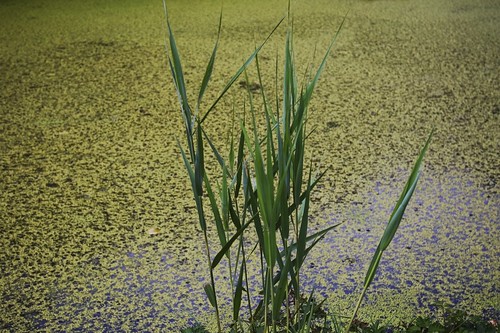
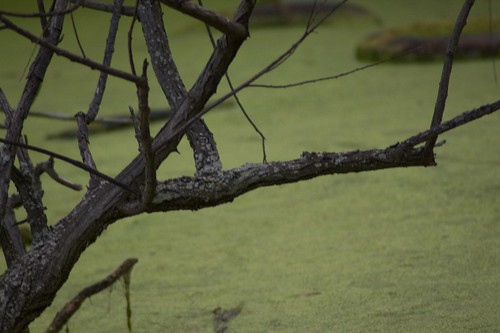
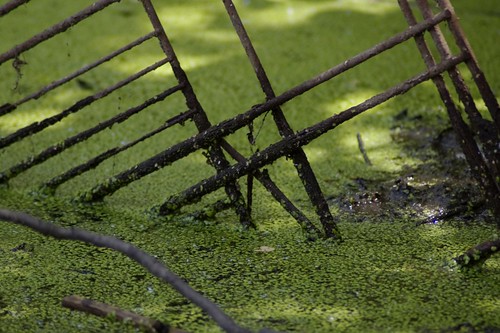
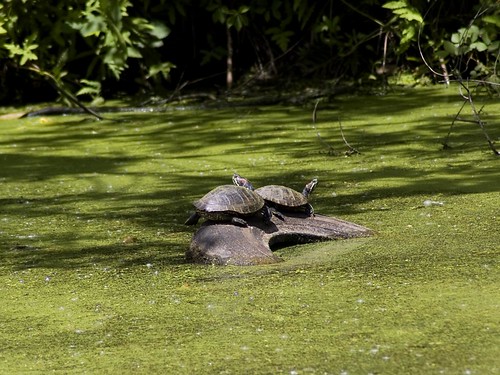
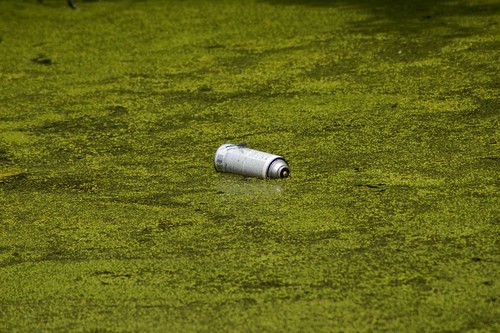
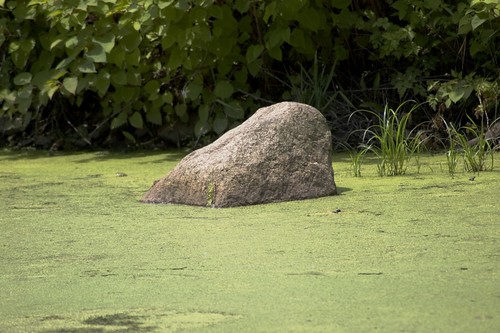
In honor of the Pope Francis' environmental encyclical I give you photos of phosphate run-off at work.  You can find commentary on the encyclical and a link to the document HERE.

IMGP8813rd graffiti connection II.jpg


The green is pretty, no? We have to own it before we can clean it up or prevent it.


IMGP2442rd

You  can find larger versions of these images, and more like them, at my Pond Scum set on Flickr.

Thursday, June 18, 2015

Pope Francis on the Environmental Crisis

Pope Francis on Thursday called for a radical transformation of politics, economics and individual lifestyles to confront environmental degradation and climate change, as his much-awaited papal encyclical blended a biting critique of consumerism and irresponsible development with a plea for swift and unified global action.

The vision that Francis outlined in the 184-page encyclical is sweeping in ambition and scope: He described a relentless exploitation and destruction of the environment, for which he blamed apathy, the reckless pursuit of profits, excessive faith in technology and political shortsightedness. The most vulnerable victims are the world’s poorest people, he declared, who are being dislocated and disregarded.
It will be interesting to see what effect, if any, this encyclical will have on world affairs. The Pope, of course, is not the first public figure to speak out on climate, and it takes more than words to change the world.

But a papal encyclical is not a speech or a white paper, it is the official expression of an institution whose history stretches back two millennia and whose constitutions live on every continent and speak a multitude of tongues. It is thus transnational in scope in a way that perhaps no other document is. And it is a teaching document (emphasis mine):
Francis has made clear that he hopes the encyclical will influence energy and economic policy and stir a global movement. He calls on ordinary people to pressure politicians for change. Bishops and priests around the world are expected to lead discussions on the encyclical in services on Sunday. But Francis is also reaching for a wider audience when in the first pages of the document he asks “to address every person living on this planet.”
Will that happen? And not just on this Sunday, but on many Sundays after, Saturdays too, and Wednesday evenings.

In part we can measure the impact of Laudato Si (Praise Be to You) by the opposition it provokes.
Yet Francis has also been sharply criticized by those who question or deny the established science of human-caused climate change and also by some conservative Roman Catholics, who have interpreted the document as an attack on capitalism and as unwanted political meddling at a moment when climate change is high on the global agenda.

Saturday, August 25, 2012

Let us fight no more forever

Late in 1877 the Nez Perce nation fought an asymmetrical war with the United States of America. For over three months Chief Joseph led 800 companions in a battle against the United States Army as they made a thousand-mile flight to Canada that stopped 40 miles short. On October 5, 1877 Chief Joseph surrendered, uttering these words:
Tell General Howard I know his heart. What he told me before, I have it in my heart. I am tired of fighting. Our Chiefs are killed; Looking Glass is dead, Ta Hool Hool Shute is dead. The old men are all dead. It is the young men who say yes or no. He who led on the young men is dead. It is cold, and we have no blankets; the little children are freezing to death. My people, some of them, have run away to the hills, and have no blankets, no food. No one knows where they are - perhaps freezing to death. I want to have time to look for my children, and see how many of them I can find. Maybe I shall find them among the dead. Hear me, my Chiefs! I am tired; my heart is sick and sad. From where the sun now stands I will fight no more forever.
Joseph and his people were not treated well in surrender. Alas.

But it is not the Nez Perce that I’m thinking about today.

Friday, March 18, 2011

“Our Friend the Atom” and He is Us

One idea that I’ve seen here and there in discussions of the nuclear emergency in Japan goes like this: “Why the coverage of the nukes? After all, thousands have already died from the earthquake and tsunami, 100s of thousands are homeless, and whole towns have been wiped away. All that damage far exceeds anything so far caused by those collapsed plants and any damage likely to be caused by them. Why not more coverage of the big story?”

The question, I believe, is a good one. And the answer, I suspect, goes like this: The earthquake and the tsunami were caused by Nature. We can take preventive measures, but we can’t predict or control them (though we’re working on prediction). Those atomic plants, however, they are Us. To say we can’t control them is to say that we can’t control ourselves. If we can’t control ourselves, are we any better than animals?

The issue of control is crucial. The difference between an atomic explosion and an atomic power plant is one of control: WE CONTROL what happens in the power plant. We can turn it on, turn it off, and make it go faster or slower. It does our bidding. Of course, it also creates dangerous radiation, which we must control. If we don’t, the radiation causes disease, cancer, mutations, strange unnatural beings, monsters (Gojira).

Back in the 1950s, when the USA and the USSR were one-upping each other, missile for missile and nuke for nuke, we were confident in our ability to control the atom for peaceful purposes. Why? Because Uncle Walt told us so. Early in 1957 Walt Disney televised a program, Our Friend the Atom, in which he made the case for peaceful uses of atomic energy. The atom, so Disney’s myth went, is like the genie in that old Arabian story:
atom genie1