Showing posts with label body. Show all posts

Tuesday, August 5, 2025

Smoking as embodiment in a virtual age

Christine Emba, Coming to Terms With Embodied Pleasures, NYTimes, August 5,2025.

It’s not hard to imagine, then, that smoking might serve as an antidote — or at the very least, a refutation of an existence lived at a remove from the real. Editors’ Picks How Does a Rewards Start-Up Know What Credit Cards Are in Your Wallet? 15 Ways to Break Free of Your Phone How Your Diet Influences Your Colorectal Cancer Risk

Cigarettes are unavoidably analog; smoking is an embodied task. The handling of a cellophane-wrapped pack, the flick of a lighter — or better yet, the strike of a match — the deliberate draw and release of breath and the heady nicotine buzz all engage the senses in a way that can’t be replicated on a screen. Many smokers describe the ritual of lighting up, the tangibleness of the particular task. And unlike a bulbous, plasticy vape, they seem real; not just another thing to plug in.

Plus, in a time of persistent distance between individuals, cigarettes are often social — a connective experience. Most of those paparazzi shots of celebrities smoking involve them circling up with friends; they’re “outside,” in the Eric Adams sense. “The party cig is so back,” a Gen Z acquaintance told me, referring to the idea of stepping out from a function to huddle and chat, the possible flirtation inherent in bumming one off someone else — a much more sensual experience than swiping on an app.

And they are symbolic. Smoking has always signaled a certain devil-may-care mood; in our nihilistic times, haunted by fears of apocalypse — A.I., climate, institutional, other — it’s a celebration of being alive by way of chipping away at it, treating the body casually in service of a life fully enjoyed. A pack of cigarettes is the opposite of an Oura ring or any of the other tech brands of bodily surveillance that seek to become the new norm.

Against all of this, though, is the incontrovertible fact that cigarettes can kill you. Lung cancer, chronic obstructive pulmonary disease and emphysema are certainly less aesthetically pleasing than an artfully arranged spread of loosies and lighters at a fashion industry party.
Sunday, June 9, 2024

Adult obesity around the world

Friday, May 6, 2022

Investigating entrainment of spontaneous activity of brain and body physiology between subjects [synch!]

From the linked paper:

Abstract

Significance: Functional near-infrared spectroscopy (fNIRS) enables measuring the brain activity of two subjects while they interact, i.e., the hyperscanning approach.

Aim: In our exploratory study, we extended classical fNIRS hyperscanning by adding systemic physiological measures to obtain systemic physiology augmented fNIRS (SPA-fNIRS) hyperscanning while blocking and not blocking the visual communication between the subjects. This approach enables access brain-to-brain, brain-to-body, and body-to-body coupling between the subjects simultaneously.

Approach: Twenty-four pairs of subjects participated in the experiment. The paradigm consisted of two subjects that sat in front of each other and had their eyes closed for 10 min, followed by a phase of 10 min where they made eye contact. Brain and body activity was measured continuously by SPA-fNIRS.

Results: Our study shows that making eye contact for a prolonged time causes significant changes in brain-to-brain, brain-to-body, and body-to-body coupling, indicating that eye contact is followed by entrainment of the physiology between subjects. Subjects that knew each other generally showed a larger trend to change between the two conditions.

Conclusions: The main point of this study is to introduce a new framework to investigate brain-to-brain, body-to-body, and brain-to-body coupling through a simple social experimental paradigm. The study revealed that eye contact leads to significant synchronization of spontaneous activity of the brain and body physiology. Our study is the first that employed the SPA-fNIRS approach and showed its usefulness to investigate complex interpersonal physiological changes.

Saturday, September 5, 2020

Mike Tyson and Joe Rogan talk about fighting


What's the difference between merely getting in shape and getting into fighting condition? What's the relationship between sexual arousal and getting ready to fight? This is a fascinating conversation, a look into a fighter's mind.

Tuesday, October 29, 2019

How we move reveals who we are: Movement signatures

Gretchen Reynolds, Something in the Way We Move, NYTimes, Oct 23, 2019:
Each of us appears to have a unique way of moving, a physical “signature” that is ours alone, like our face or fingerprints, according to a remarkable new study of people and their muscles. The study, which used machine learning to find one-of-a-kind patterns in people’s muscular contractions, could have implications for our understanding of health, physical performance, personalized medicine and whether and why people can respond so differently to the same exercise.

Intuitively, most of us probably know there is something in the way we move, and that that something defines us. In studies and daily life, most people can pick out their friends and loved ones, based solely on how they walk. At least one surveillance company also claims to be able to identify and track people using their gaits.

But those identifications, whether fond or creepy, rely on external cues about how we look in motion and depend on anatomical features, such as height, limb length or how we swing our arms, which may not be stable. Wear heels, develop sore feet, limp, and you could move differently.

Some scientists have speculated that other subtler, interior movement patterns, such as the ways in which our muscles fire in choreography with one another when we will our body to move, might be particular to each of us and relatively constant. But little research had delved into what our muscles are up to when we move.

So, for the new study, which was published this month in the Journal of Applied Physiology, French and Australian researchers decided to turn to algorithms to ferret out whether unique, personal muscle patterns exist.
They recorded the muscle contractions from eight muscles on each of 80 volunteers as they rode stationary bikes and walked on treadmills in a human performance lab. They then fed the measurements to a machine-learning program in a supervised learning design. Once the system had been exposed to identified measurements it was then given unidentified measurements, which it was able to identify with 99 percent accuracy on the basis of readouts from eight muscles. Accuracy dropped to 80 percent with readouts from only two muscles.

Monday, September 16, 2019

How music works, Hiromi edition

Do you want to know how music works? Watch this clip of Hiromi Uehara taking a piano lesson.


Here's some quick and crude observations from an email I just sent to a friend:
A younger Hiromi takes a lesson. Alas, not in any language I can understand. But at least you get to see a lot of supple fingers. And the left-hand gesture at 10:22. This is getting really interesting. But you have to watch their whole bodies, no?

You know about the lizard brain, right? Well, within the lizard brain there’s the worm’s brain (the reticular activating system, RAF). How does the RAF modulate whole body motion and the “long line” of the performance? There must be some kind of hierarchy of motor activation, from whole body/trunk, to arms, to fingers, whatever.

And it’s interesting how easily they slip in and out of intense playing mode.

So much to observe. So much to understand.

And the moments they play together. You notice how sometimes the teacher only tracks Hiromi on a note here and there, not every note in the passage.

Monday, November 12, 2018

Placebos work [annals of mind and body]

Gary Greenberg, New York Times Magazine, What if the Placebo Effect Isn’t a Trick?, November 7, 2018.
And after a quarter-century of hard work, they have abundant evidence to prove it. Give people a sugar pill, they have shown, and those patients — especially if they have one of the chronic, stress-related conditions that register the strongest placebo effects and if the treatment is delivered by someone in whom they have confidence — will improve. Tell someone a normal milkshake is a diet beverage, and his gut will respond as if the drink were low fat. Take athletes to the top of the Alps, put them on exercise machines and hook them to an oxygen tank, and they will perform better than when they are breathing room air — even if room air is all that’s in the tank. Wake a patient from surgery and tell him you’ve done an arthroscopic repair, and his knee gets better even if all you did was knock him out and put a couple of incisions in his skin. Give a drug a fancy name, and it works better than if you don’t.

You don’t even have to deceive the patients. You can hand a patient with irritable bowel syndrome a sugar pill, identify it as such and tell her that sugar pills are known to be effective when used as placebos, and she will get better, especially if you take the time to deliver that message with warmth and close attention. Depression, back pain, chemotherapy-related malaise, migraine, post-traumatic stress disorder: The list of conditions that respond to placebos — as well as they do to drugs, with some patients — is long and growing.
And it may not be a 'mere' psychological trick:
Aided by functional magnetic resonance imaging (f.M.R.I.) and other precise surveillance techniques, Kaptchuk and his colleagues have begun to elucidate an ensemble of biochemical processes that may finally account for how placebos work and why they are more effective for some people, and some disorders, than others. The molecules, in other words, appear to be emerging. And their emergence may reveal fundamental flaws in the way we understand the body’s healing mechanisms, and the way we evaluate whether more standard medical interventions in those processes work, or don’t. Long a useful foil for medical science, the placebo effect might soon represent a more fundamental challenge to it.
More in the article, which also goes into the history of the placebo effect.

Wednesday, August 15, 2018

Leg exercise is critical to brain and nervous system health (in mice)

Groundbreaking research shows that neurological health depends as much on signals sent by the body’s large, leg muscles to the brain as it does on directives from the brain to the muscles. Published in Frontiers in Neuroscience, the study fundamentally alters brain and nervous system medicine — giving doctors new clues as to why patients with motor neuron disease, multiple sclerosis, spinal muscular atrophy and other neurological diseases often rapidly decline when their movement becomes limited.

“Our study supports the notion that people who are unable to do load-bearing exercises — such as patients who are bed-ridden, or even astronauts on extended travel — not only lose muscle mass, but their body chemistry is altered at the cellular level and even their nervous system is adversely impacted,” says Dr. Raffaella Adami from the Università degli Studi di Milano, Italy.
Here's the original paper:

Adami Raffaella, Pagano Jessica, Colombo Michela, Platonova Natalia, Recchia Deborah, Chiaramonte Raffaella, Bottinelli Roberto, Canepari Monica, Bottai Daniele, Reduction of Movement in Neurological Diseases: Effects on Neural Stem Cells Characteristics, Frontiers in Neuroscience, 12, 2018, Article 336.
DOI=10.3389/fnins.2018.00336
ISSN=1662-453X
Abstract: Both astronauts and patients affected by chronic movement-limiting pathologies face impairment in muscle and/or brain performance. Increased patient survival expectations and the expected longer stays in space by astronauts may result in prolonged motor deprivation and consequent pathological effects. Severe movement limitation can influence not only the motor and metabolic systems but also the nervous system, altering neurogenesis and the interaction between motoneurons and muscle cells. Little information is yet available about the effect of prolonged muscle disuse on neural stem cells characteristics. Our in vitro study aims to fill this gap by focusing on the biological and molecular properties of neural stem cells (NSCs). Our analysis shows that NSCs derived from the SVZ of HU mice had shown a reduced proliferation capability and an altered cell cycle. Furthermore, NSCs obtained from HU animals present an incomplete differentiation/maturation. The overall results support the existence of a link between reduction of exercise and muscle disuse and metabolism in the brain and thus represent valuable new information that could clarify how circumstances such as the absence of load and the lack of movement that occurs in people with some neurological diseases, may affect the properties of NSCs and contribute to the negative manifestations of these conditions.

Wednesday, February 21, 2018

Sensorimotor Transition in Three Modes (vocal production, dance, drumming)

A post from four and a half years ago that I'm bumping to the top because it interests me. It's about physical movement; more specifically, about the need to practice transitions between physical movements. I'm particularly interested in the physical movements required to make music, or to dance.
Just yesterday I reported research indicating that both birds and human infants devote considerable time to learning how to switch between one sound and another. Here’s a passage from the abstract published in Nature:
We find a common, stepwise pattern of acquiring vocal transitions across species. In our first study, juvenile zebra finches were trained to perform one song and then the training target was altered, prompting the birds to swap syllable order, or insert a new syllable into a string. All birds solved these permutation tasks in a series of steps, gradually approximating the target sequence by acquiring new pairwise syllable transitions, sometimes too slowly to accomplish the task fully. … The babbling of pre-lingual human infants showed a similar pattern: instead of a single developmental shift from reduplicated to variegated babbling (that is, from repetitive to diverse sequences), we observed multiple shifts, where each new syllable type slowly acquired a diversity of pairwise transitions, asynchronously over development. Collectively, these results point to a common generative process that is conserved across species, suggesting that the long-noted gap between perceptual versus motor combinatorial capabilities in human infants may arise partly from the challenges in constructing new pairwise vocal transitions.
Compare that to this passage in an article by David Hays, The Evolution of Expressive Culture:
Balanchine's working career was long (Taper 1963/1984): born in 1904, he began making ballets in Russia in 1920, and made ballets in New York until 1982; he died in 1983. During that time, techniques for training the body advanced remarkably: In athletics (Mandell 1984), gymnastics, circus, and also in dance. Around 1900, I have heard, ballet dancers took several musical beats to move into a position, which they then held in tableau. Taper (p. 360) quotes Balanchine: "If present-day critics and audiences could actually see Apollo as it was performed in 1928, 'they would laugh their heads off at how it used to be.'" At the peak of his career, Balanchine made dances in which there was no time between steps for preparation; other choreographers still allowed a pause between movements so that the dancer could shift from the end pose of one movement to the start pose of the next, but not he. Reynolds (p. 98) quotes Maria Tallchief on Firebird (1949): "it was practically impossible. The variation contained many low, fast jumps, near the floor, lots of quick footwork, sudden changes of direction, off-balance turns, turns from pointe to pointe, turned-in, turned-out positions, one after another. It was another way of moving . . . There was no time."
There’s nothing in there about the practice required to learn these smooth pose-to-pose transitions but making such transitions is clearly a problem–not the least because they involve keeping the entire body in balance–and it took time for dancers to arrive at practice regimes that allowed for such transitions.

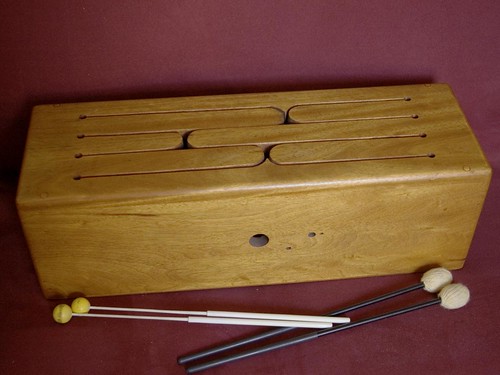
I have had some experience with the transition problem in teaching myself to play a tongue drum, which I discuss a bit in this post on free drumming.

IMGP9254rd

Let’s say I’m learning some particular pattern, one that involves four strokes, left-hand right-hand left right, using, say, three particular keys on the drum, which each key is given a different letter identification, thus:
1) L(A) R(B) L(C) R(B) . . .
I begin by playing the pattern slowly and gradually pick up the pace. Now I decide that I want to hit the E key rather than the B key with the right hand. So I practice that:
2) L(A) R(E) L(C) R(E) . . .
That comes up to speed very quickly because the pattern of alternation between hands remains the same. All that’s changed is the target for the right hand stroke.

Imagine, now, that I want to alternate between patterns 1 and 2, thus:
L(A) R(B) L(C) R(B) L(A) R(E) L(C) R(E) . . .
Getting that to happen will not be easy. I’m going to have to start it slow and consciously think about the transition. As the transition becomes more comfortable I can pick up speed and, at some point, I will no longer have to think about the transition. It will happen smoothly and easily, without thought.

What’s going on? I don’t know, of course. The most obvious suggestion, however, is that, when one has to make a transition from one pattern to another, you have to (mentally) prepare the second transition while the first is being executed. And each pairwise transition requires different preparation, so each must be learning individually.

I would further speculate that this is a general problem in motor learning.

Thursday, October 13, 2016

Gunnar Johannson and motion perception

These videos may have some bearing on Jamie Bérubé's biomorphs, so I'm bumping this post to the top of the queue. Think of his  biomorphic sheets as a form of proto-animation. Does those graphic objects 'tickle' the same neurons as these moving-dot images?
Watch these two videos, which are about the work of Gunnar Johansson. They're interesting and important. Just why they're important is more than I've got time for now, but it has to do with how we perceive motion. And perception of motion is VERY important. The world is full of moving things, many of the important to us. Like our fellows, and sources of food, or predators.


Some of these demonstrations use a primitive form of the motion capture technology Hollywood uses in driving computer-generated figures by the motions of human actors.

Tuesday, October 27, 2015

Finger Knowledge, A Note About Me and My Machines

A couple of months ago, before I got my new machine, two keys on my keyboard failed. First the left Shift key failed, and then the left Command key (on a Macintosh). Both are important frequently used keys. But, as there are two of each, I decided not to get a new keyboard – who knows, maybe they’d come back.

Continuing one, of course, meant that I had to change my keyboarding habits, which I figured I could do. The fact is, though I’m a semi-competent touch typist, I never really got competent secretary-class good. Though I do a lot of writing, I never go for long stretches of flat-out typing. So, while changing my keyboarding habits was a PITA, it was no more than that.

It was an inconvenience, not a disaster.

But it meant that I actually had to think about what my fingers were doing while typing. I couldn’t simply let them go on autopilot. And I had to think about just what workarounds I’d use for various situations. For example, you need the Left Shift key to type a capital “i” or to type left and right parentheses, each of which I use fairly often. Now what do I do?

What I did isn’t important. What I’m getting at is that, now that I’ve got a fully functioning keyboard, I’ve got to erase those workarounds. And that takes conscious thought and effort. I couldn’t just flip some mental switch – zhupp! – and go back to the old routines.

It seems that, in order to learn these new routines, I had to “erase” those old routines. So, now I’ve got to erase the new routines and consciously “relearn” the old routines. And I’m particularly aware of that as I type this note.

That”s what interests me. That’s what this post is about. That mental threshold between being able to switch back and forth between two ways of doing something and having to learn, unlearn, and relearn “low level” routines. I’m sure that has to do with how the nervous system works, but I don’t want to think very hard about that and the moment.

I’m pretty sure that I could be a piece of software that would remap my keyboard to the more physically efficient Dvorak mapping – for all I know, something like that might actually be an option somewhere in the Mac OS operating system. If I did that I would have to expend considerable effort to learn to use that mapping. Let’s imagine that I did so. Would I then be able to “turn it off” and will and return to the standard mapping. Or would I have to “relearn” the standard mapping, just as I am, to some extent, relearning the standard uses of Left Shift and Left Command keys?

I don’t know.

Orchestral trumpet players have to do something like that. When you learn to read trumpet music you learn a certain mapping between the written notes and the (right hand) finger action – which of the three valves do you depress? – you need to execute that note. But there are times when you might want to play every note consistently higher or lower than what’s written. To do this you need to learn a different mapping between the written notes and your finger actions.

Sure, you can “calculate” in your mind what you have to do. And if the music you are playing is simple enough, this will rework. But there are situations where that’s not fast enough. To cope with those situations you need to learn a new mapping. Orchestral and other “legit” trumpet players do it all the time.

I’ve never learned to do that, because I’ve never needed the skill. How do these trumpeters keep the different mappings separate in their minds? How do they keep from slipping into the wrong mapping? If they played while drunk, would they slip?

Interesting questions.

Thursday, April 30, 2015

What Letterman Thinks about the Mind

As we all know, David Letterman is retiring from the "Late Show" after, well, not forever, but a long time. He gave a long interview to the good folks at The New York Times and they then boiled it down to 11 highlights. I've picked two of them.
On his heart surgery in 2000:

I was concerned that I’ll never be able to run again — that was my big concern. Because I had so relied on running, all my life, to get myself clearheaded. And of course, I was worried that somebody would go on while I was off with my heart surgery, and be good enough that they didn’t want me back. As I’m trying to recover from quintuple bypass surgery, I’m paranoid that my life is ending. And then, six weeks after the surgery, I ran for five miles. So let’s face it, I am a hero. There’s no two ways of looking at it.
The general issue is, of course, we all need ways of keeping in balance. But just what IS that about? What're we trying to balance with what? What is it about brain and body that's getting balanced, what chemicals and connections?
On what he’ll do after his final show:

I will be completely in the hands of my family. I will be going, later in the month, to the Indianapolis 500. And then beyond that, for the first time since Harry’s been alive, our summer schedule will not be dictated by me. It will be entirely dictated by what my son wants to do. And I think that’s pretty good. After you take a good, solid punch to the head, you’re just a little wobbly. I think in that state it would be good to have others making my decisions. That’s how he’s describing his retirement. A good solid punch to the head.
This is about balance as well, but from a different angle. For the last two decades this TV show has dominated his life; it's been one of the things he's been balancing against/with his running. And now it's gone. Whoosh! There's a big hole. How do you fill it?

I remember how, back in my university days, the Spring semester would come to an end and I wasn't teaching anymore. Teaching no longer took up a big chunk of my tine and mind-space. I spent the summer doing research. And it would take me a good two or three weeks to transition to an efficient and focused research mindset. I figured my brain was reorganizing itself around my new regime (I've got some more remarks along these lines at the end of "The Evolution of Narrative and the Self").

Friday, August 23, 2013

Breathing, Calligraphy, Graffiti

stop = write.jpg

tag's a winner.jpg

From an essay by Hassan Massoudy, “Two Daughters of the Same Parents” in Arabic Graffiti (p. 31):
The Arabic calligraphy I do literally comes directly from the heart, the movement of my arm and the heartbeat work together. When I direct the brush, I stop breathing. This also limits the size of the calligraphy; a brush stroke cannot last longer than it takes my heart to beat. So most Arabic calligraphy is limited to a diameter of maybe one, two meters. If the writing becomes any bigger, it has to be constructed and thus it is not calligraphy anymore, but a design...When I painted a mural with the French graffiti writer Marko 93 – the only time I did try to do actual graffiti – I discovered the fluidity of the spray can, which suddenly allowed me to do a continuous gesture of five meters before stopping a stroke.
That is interesting, this distinction between “calligraphy” and “design.” Massoudy continues:
Arabic calligraphy and graffiti are two daughters of the same parents. Obviously both are about the use of letters and their alphabets, and their center of gravity is the beauty of writing. For both, a letter is more than just a letter and they fill them with emotions. The use of empty space and composition within this space is something else they have in common. The resemblance of Arabic calligraphy and graffiti is most obvious in tags, because here the tools – in and pen – are quite the same. Gestures are also done with the whole body and are in synch with breathing. The movement of writing graffiti leaves the restrictions of the paper – it is like a dance in front of a wall.
Again, this is interesting, the gestures done with whole body. I’m sure that’s how Jackson Pollock’s very different gestures were done, with the whole body.

Monday, July 23, 2012

Golf and the Groove

Here’s another out-take from Beethoven’s Anvil. This is about how a so-so player rose above himself when matched against \, who was then on the rise.

* * * * *

Let us, for a moment, return to athletics. During the period in which I have written this book, Tiger Woods established himself as arguably the greatest golfer in history, and he is not yet thirty, which is a prime time for golfers, though other athletes are often on the decline by that time. In particular, Woods became the youngest golfer ever to complete a so-called Grand Slam, winning the four most prestigious tournaments in the game--the British Open (open meaning that both professionals and amateurs compete), the United States Open, the Master’s, and the PGA (Professional Golfer’s Association)--and, beyond that, winning three of them in a single season.

However, it’s not Tiger Woods who interests me. Yes, he may well be the greatest golfer in history. And whatever role natural athletic endowment plays in that greatness, one must also consider the amount of time Woods spent playing golf at a very early age. By the time he was five he may well have logged more hours playing golf than any other five-year-old in history. Given what we now know about the brain’s maturation, that implies that Woods’ may be more intimately attuned to the requirements and rhythms of golf than any other player. And that is why he will raise the bar on golfing excellence. But, as I said, the mystery of his excellence is not the mystery I want to think about.

Friday, May 7, 2010

Musician’s Journal: Awareness and Balance

I’ve been a musician most of my life. Though I’ve never made my living as a musician, there have been times when it’s put food on the table, though not paid the rent. And there have been times when I’ve hardly picked up the horn.

That’s how it’s been for the past three or four years. I’ve jammed every week or three with some friends, and maybe play the horn for a minute or three every other day. But I’ve not played enough to keep my chops in shape – and the trumpet is a physically demanding instrument.

I’m now getting back to a routine of daily practice. And I’m finding, almost for the first time in my life, that technical exercises are no longer quite so boring. You know, the same scales and arpeggios, repeated time and again, and again, and ... again. Same old same old.

Nothing like it to get the fingers and lips moving in concert. But, it’s not like a hot blues in the early morning when the lights are low and spirits high. No sirree, not like that at all. The exercises are necessary, but ...

If you pay attention, those repetitive exercises can be interesting too. It’s about awareness, mindfulness. What you’ve got to pay attention to is what’s not so repetitive. You must pay attention to your body, while also hearing the sound. What you’re attending to, above all else, is the relationship between what you’re hearing and what you’re doing.

Sounds simple, no? Not so simple.
 
It’s easy to think that the trumpet is about lips and fingers, because it is. But not only. The lips do two things: 1) they vibrate and thus produce the sound, 2) they act as a valve to regulate the air flow. The air flow, in turn, is produced by the respiratory system, which involves the lungs and the large muscles of the trunk. Those muscles, in turn, are supported by the pelvis and legs and their musculature. So, the lips are connected to all that, and you need to be aware of all that when you practice – when you perform, of course, you don’t want to be aware of any of that.

I find that, in particular, I am aware of my buttocks. They affect tension in the trunk and thus the air stream. Sometimes I relax my buttocks, sometimes I tense them. All according to what the situation requires.

Then there’s the fingers. The muscles controlling your fingers are in your arms, forearms mostly. The big issue, of course, is the independence of the fingers for the second and third valves (ring finger and middle finger). Training them to move independently of one another is a bitch. When the fingers don’t move where they should when they should, you tend to tense up, which makes things worse.

And not just the muscles in your arms. The tension can easily spread to your whole body. This came home to me with particular strength when I was watching a young boy who’s taking occasional lessons from me. When he has to concentrate on finger movements his whole body gets tense and jerky and his lower legs start flailing about (he’s sitting on a chair) with the effort of bringing his fingers into line. Why is that? Why should concentrating on finger movement recruit the entire body?

I don’t know, though I suppose I could guess at an explanation if I wanted to. The point is simply that telling your fingers what to do will activate your whole body if you’re too insistent.

In that situation my immediate objective is to get the fingers to move properly without, however, inducing tension throughout the body. That requires active relaxation, being aware of overall tension, but not forcing it. And that while you are regulating your breath, another whole body activity. It’s all a matter of balance, of loosening up, of differentiating one’s movements so that each component of one’s effort can move freely on its own, rather than being strapped to everything else.

You play simple repetitive patterns so you don’t have to think about what notes you’re going to play. Put that on autopilot so you can be aware of your body and of the sound itself. As your body functions more efficiently the sound becomes cleaner and more even. Sound and body, body and sound.

Or is it body and soul?