Friday, December 23, 2016

Bridgewater: The AI-dominated firm of the future?

The Wall Street Journal has an interesting article about Bridgewater Associates LP, the world's largest hedge fund. By Rob Copeland and Bradley Hope, it is entitled "The World’s Largest Hedge Fund Is Building an Algorithmic Model From its Employees’ Brains." Whoa! 
The goal is technology that would automate most of the firm’s management. It would represent a culmination of Mr. Dalio’s life work to build Bridgewater into an altar to radical openness—and a place that can endure without him.

At Bridgewater, most meetings are recorded, employees are expected to criticize one another continually, people are subject to frequent probes of their weaknesses, and personal performance is assessed on a host of data points, all under Mr. Dalio’s gaze. ...

Rules for Bridgewater’s staff are laid out in a 123-page public manifesto known as the “Principles,” which every employee is expected to know and diligently apply. Along with maxims such as “By and large, you will get what you deserve over time,” the Principles are filled with advice from Mr. Dalio such as “Don’t ‘pick your battles.’ Fight them all.”
I wonder if this "fight them all" culture has means to prevent truth-seeking from devolving into win-or-lose debates? And those data points are being entered into the new software under development:
At the core of the technology project now under way is a walled-off group called the Systematized Intelligence Lab, headed by David Ferrucci, who led development of the artificial-intelligence system Watson at International Business Machines Corp. before joining Bridgewater in 2013.

Though outsiders expected Mr. Ferrucci would use his talents to help find hidden signals in the financial markets, his job has focused more narrowly on analyzing the torrent of data the firm gathers about its employees. The data include ratings employees give each other throughout the work day, called “dots.”

The Systematized Intelligence Lab is involved in several iPad applications that are part of employees’ everyday lives, among them the “Dot Collector.” It allows employees to rate each other on dozens of attributes and to hold snap polls on issues during meetings, including asking blunt questions such as whether a current conversation is a waste of time.
Thursday, December 22, 2016

On Discussion and Debate in the Blogosphere: Some reflections on a recent example

Not so long ago I got caught up in a long and somewhat contentious discussion at Crooked Timber. It’s one of my regular sites; I’ve been following it for years. I comment there often enough, but there are others who comment more, and much more, than I do.

This particular post was by John Holbo, and had the (ironic) title, Hazards of Evolutionary Psychology, Royalty Edition (“royalty” plus “edition” is the tip-off). It was a slight post, a quick juxtaposition of two passages from Baboon Metaphysics, an excellent book about the mentality of baboons in the wild. It didn’t seem to call for much discussion, but then it just took off. “Evolutionary psychology,” after all, can be a polarizing subject and so it proved here.

I’m not interested in the pros and cons of the discussion, but simply that it kept teetering on the edge – comment moderation is now in place there, so it never erupted into a full-out flame war. First, then, I discuss the conduct of an online conversation, such as this one, where the discussants don’t know one another, some are posting anonymously, we have widely varying levels of expertise in the topic at hand, and the topic is controversial. Then I present a brief account of a research group I’d been in while in graduate school; that was hands-down the best intellectual venue I’ve ever experienced. The comparison is unfair – how can asynchronous online interaction among all-but strangers compare with week-by-week face-to-face conversation among people who’ve come to know one another’s minds quite well? – but it’s unfair in a useful direction.

The Rules of the Game and a Contentious Discussion

I’d been going back and forth with Z, some good, some bad, whatever. It got to the point where he felt he needed to school me on the etiquette of such things (comment #216):
I am commenting in a blog, Buss [a prominent evolutionary psychologist] is writing a research article. “Not much worse than the typical blog comment” is not the standard we want in a scholarly publication so I am entitled to be maximally intellectually critical of Buss while you have to be maximally charitable in the interpretation of the criticism, those are the rules of the games.
My initial reaction was, on the face of it, sensible enough. Blog commenting is relatively casual; trivial mistakes are common (spelling, punctuation, grammar) and casual formulations and sketchy reasoning is all but a necessity. Unlike preparing a comment for publication in, e.g. Behavioral and Brain Science, one does not expect blog comments, even in the academic blogosphere, to meet peer-review standards (whatever they are).

But, if I may put my Kantian hat on, how does Z’s comment generalize? I’d criticized a comment he’d made about Buss’s article and he’s telling me that I should have been more charitable in my remarks. Perhaps, if I’d done so, I wouldn’t have made those remarks. Who knows, I might even have agreed that, of course, Z, you are correct. So he reminds of the informal rules of the game.

But might I not turn around and suggest that, by the rules of the game, he’s obliged to cut me some slack in my criticism of him? If he’s not obligated to be careful and meticulous in his criticism of Buss, why should I be careful and meticulous in my criticism of him? Is he in effect asserting that he should be exempt from the rules when criticizing me? That hardly seems fair.

Shoes

20161217-_IGP8368

20161217-_IGP8370

A new (digital humanities) tool: TimeLineCurator [#DH]

Johanna Fulda, Matthew Brehmer, and Tamara Munzner of the UBC InfoVis Group. From the online documentation:

About
Want to make a visual timeline, but don't have the time to draw one manually? Or maybe you have some documents, but you're not sure if the events they depict form a compelling timeline?

TimeLineCurator quickly and automatically extracts temporal references in freeform text to generate a visual timeline. You can then interactively curate the events in this timeline until you are satisfied, or quickly decide that there is no interesting temporal structure within the document. You can also create a mashup of multiple documents against each other to compare their temporal structure.

Already using TimelineJS? TimeLineCurator works with TimelineJS: instead of tediously assembling your timeline in a spreadsheet, TimeLineCurator allows you to curate your timeline visually. When you are ready, you can export your curated timeline to a TimelineJS widget that you can embed on your website or blog.

Web Application
Use TimeLineCurator v0.4 (alpha) here

Research Paper

TimeLineCurator: Interactive Authoring of Visual Timelines from Unstructured Text

Abstract: We present TimeLineCurator, a browser-based authoring tool that automatically extracts event data from temporal references in unstructured text documents using natural language processing and encodes them along a visual timeline. Our goal is to facilitate the timeline creation process for journalists and others who tell temporal stories online. Current solutions involve manually extracting and formatting event data from source documents, a process that tends to be tedious and error prone. With TimeLineCurator, a prospective timeline author can quickly identify the extent of time encompassed by a document, as well as the distribution of events occurring along this timeline. Authors can speculatively browse possible documents to quickly determine whether they are appropriate sources of timeline material. TimeLineCurator provides controls for curating and editing events on a timeline, the ability to combine timelines from multiple source documents, and export curated timelines for online deployment. We evaluate TimeLineCurator through a benchmark comparison of entity extraction error against a manual timeline curation process, a preliminary evaluation of the user experience of timeline authoring, a brief qualitative analysis of its visual output, and a discussion of prospective use cases suggested by members of the target author communities following its deployment.

Pre-Print PDF

TimeLineCurator: Interactive Authoring of Visual Timelines from Unstructured Text
by Johanna Fulda, Matthew Brehmer, and Tamara Munzner
To appear in IEEE Transactions on Visualization and Computer Graphics (TVCG).
Proceedings of IEEE Conference on Visual Analytics Science and Technology (VAST), Chicago, USA, 2015.  Download [Pre-Print PDF]

* * * * *

From the FAQ:
How much text can I timeline-ify?: Around 10,000 words at once, that's around 12 pages. The current limit is a 30 second timeout from Heroku. We hope to fix that problem soon, stay tuned. For now, if your input text is larger, you could just split it into pieces and add them as individual documents.
So, it's not going to do Tristram Shandy. Could it do it, though, when the 10,000 word limit disappears?

The brain is maturing into one's 30s

The human brain reaches its adult volume by age 10, but the neurons that make it up continue to change for years after that. The connections between neighboring neurons get pruned back, as new links emerge between more widely separated areas of the brain.

Eventually this reshaping slows, a sign that the brain is maturing. But it happens at different rates in different parts of the brain.

The pruning in the occipital lobe, at the back of the brain, tapers off by age 20. In the frontal lobe, in the front of the brain, new links are still forming at age 30, if not beyond.

“It challenges the notion of what ‘done’ really means,” Dr. Somerville said.

As the anatomy of the brain changes, its activity changes as well. In a child’s brain, neighboring regions tend to work together. By adulthood, distant regions start acting in concert. Neuroscientists have speculated that this long-distance harmony lets the adult brain work more efficiently and process more information.
This is based on a recent review article by Dr. Leah Sommerville, published in Neuron (PDF).

Wednesday, December 21, 2016

Night crossing

20150829-_IGP5558

My Plate is Full! – What I’m Up To as the Year Comes to an End [Ramble 3]

As the year comes to an end I find myself with fingers in a number of pies – or, if you will, trying to keep a half-dozen or more balls in the air. There are several relatively small projects which I want to complete within a few weeks, and a number of more ambitious projects. I figured I’d just ramble on about them and see where I come out.

About Conflict in Blog Commentary

I’ve just been participating in a conversation the John Holbo at Crooked Timber, Hazards of Evolutionary Psychology, Royalty Edition, that got pretty contentious, with one commenter informing me about the proper rules of the game. I then pointed out that those rules didn’t work very well.

At this point I’ve pretty much drafted a post in which I elaborate on what I said in the discussion and then compare that situation with the best intellectual venue I’ve ever experienced, David Hays’s research group at SUNY Buffalo. I don’t see anything particularly deep going on, just some useful observations of a fairly standard kind. More data points.

Comment on Sidney Lamb’s Paper

Sidney Lamb has a paper up for comment in a new online journal, Linguistic structure: A plausible theory, Language Under Discussion, Volume 4, Issue 1 (2016), pp. 1–37. I would be commenting on Lamb’s paper (others have done so already). This would be a formal academic paper, but not article length. Lamb will reply to all the comments sometime next year.

This is something I very much want to do as I’m quite fond of Lamb’s stratificational linguistics. It’s just a matter of figuring out what to say. I’m leaning toward something more philosophical than detailed. I’m currently working on a blog post about Searle’s famous Chinese Room thought experiment as a warm-up to commenting on Lamb. In the Lamb comment I think I want to look at what his theory might have to say about conversation and about meaning in conversation.

The interesting thing about Lamb’s relational networks is that the meaning of an item is a function of its place in the network as a whole. And Lamb has explicitly defined his network as a high-level view of the brain, which means that it is hooked up to sensory and motor processes. So, we have a person looking at some object, an apple, a bicycle, a tree, a cloud, whatever. The meaning of that object (to the person) is a function of the process it sets off in the network. That’s what I want to talk about and use that as a way of bootstrapping semantics into the system – something I’ve done a bit of informal work on under the rubric of attractor nets – and say something about conversation.

Not much. Just something. Is it doable? I’m not sure. Perhaps I’ll know better once I’ve finished the Chinese Room blog post (which is well under way).

Direction of Cultural Evolution

I want to write up a short working paper that would be directed toward the newly formed Society for Cultural Evolution. This – the direction of cultural evolution – is an old topic of mine, and I’ve already written a short blog post to this end. This is prompted by the new paper by Morin & Acerbi on a two-century decline in emotional expression in Anglophone fiction. They don’t appear to be aware of relevant work in digital humanities, and, correlatively, the DH folks aren’t aware of them.

The basic purpose of this piece is to make some conceptual and theoretical connections – I’ve already done a flurry of emails and tweets to get these folks connected with one another. I’m quite comfortable with the idea that cultural evolution has direction, but it’s a tricky topic. 

Rejected by NLH

In late September of this year I’d submitted a paper (Sharing Experience: Computation, Form, and Meaning in the Work of Literature) to New Literary History, my first formal submission to a literary journal in a decade or so. The paper has been flat-out rejected. That’s not terribly surprising, though obviously it’s not what I wanted or even expected. And the terms of rejection – I’m thinking of the reviewer’s report – are familiar, with echoes of the rejection of my first “Kubla Khan” paper three decades ago.

What do I make of this rejection? I does seem I misjudged the receptivity of NLH, so that’s one thing. While the journal is actively looking for “new things” perhaps not this new. So I want to think about that.

But why think about it in public? Why not? This is not the academic world of old.

Political skills: LBJ got the Civil Rights bill passed, could Obama have done it? JFK?

I'm watching a BlogginHeads discussion between Glenn Loury and Joshua Cohen. They've been evaluating Obama, giving him a C of C-. Cohen is comparing Obama's standard-issue back-room wheeling-and-dealing political skills with those of Lyndon Johnson (starting at, say, 29:00), noting that Johnson got he Civil Rights bill passed. He and Loury agree that most likely Obama couldn't have done that. They keep saying that, as a person Obama is admirable in various ways, but his ability to make political deals is not so hot.

Tuesday, December 20, 2016

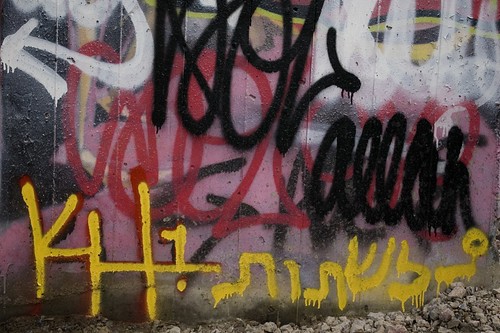
Kosher Howie [#KH1]

KH1

First time out, Obama never doubted he could get white support

From an interview with Ta-Nehisi Coates, in The Atlantic:
Coates: Did you have doubts?

Obama: Yes.

Coates: You did have doubts?

Obama: Look, I think Valerie remembers us sitting around our kitchen table—a group of friends of mine, some political advisors, Michelle—and I think our basic assessment was maybe we had a 20, 25 percent chance of winning.

Coates: The presidency?

Obama: The presidency, yeah. Because I did think given the problems President Bush had had, that whoever won the Democratic nomination would win the presidency. And so, the issue really was could I get the nomination, particularly with a formidable candidate like Hilary Clinton already preparing to run. And my view was not that this was a sure thing, but what I never doubted was my ability to get white support.

Coates: You never doubted that?

Obama: No. And I think that in addition to the proof of my Senate race, if you want to go a little deeper, there is no doubt that as a mixed child, as the child of an African and a white woman, who was very close to white grandparents who came from Kansas, that I think the working assumption of discrimination, the working assumption that white people would not treat me right or give me an opportunity, or judge me on the basis of merit—that kind of working assumption is less embedded in my psyche than it is, say, with Michelle. There is a little bit of a biographical element to this. I had as a child seen at least a small cross section of white people, but the people who were closest to me, loved me more than anything. And so, even as an adult, even by the time I’m 40, 45, 50, that set of memories meant that, if I walked into a room and it’s a bunch of white farmers, trade-unionists, middle age—I’m not walking in thinking, ‘Man, I’ve got to show them that I’m normal.’ I walk in there I think with a set of assumptions like, these people look just like my grandparents. And I see the same the same Jello mold that my grandmother served, and they’ve got the same you know, little stuff on their mantle pieces. And so, I am maybe disarming them by just assuming that we’re okay. And if anything, my concern had more to do with ‘I’m really young.’ I mean when I look back at the pictures of me running in ’08, I look like a kid. And so my insecurities going into the race had more to do with the fact I had only been in the senate two years. Three, four years earlier I had been a state legislator, and I was now running for the highest office in the land. [...]

The new immediacy, live birth

As some of you no doubt know, Facebook now allows you to broadcast live to FB with your smart phone. I've watched a number of these, a friend driving to work, another performing at a Christmas party for some old folks. I've just seen a dad broadcast the birth of his child. Well, not the actual birth, but him talking about it while it was happening. For me, this guy is mostly just a FB friend, though I have met him once or twice in real. But some of those tuned in obviously knew him (and his wife) well. Lot's of thumbs-up and hearts streaming across the screen during the narration.

Changing Shape of US Income Distribution

Monday, December 19, 2016

Bat suspension test chamber?

bat suspension test chamber

Well at least it's more or less red and green. Doesn't look very much like Christmas, though.

Ontology and Cultural Evolution: “Spirit” or “Geist” and some of its measures

This post is about terminology, but also about things – in particular, an abstract thing – and measurements of those things. The things and measurements arise in the study of cultural evolution.

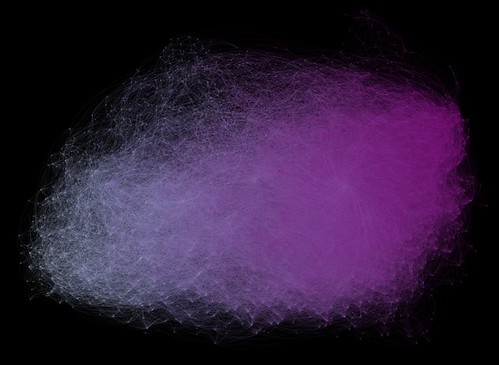
Let us start with a thing. What is this?

9dot3

If you are a regular reader here at New Savanna you might reply: Oh, that’s the whatchamacallit from Jocker’s Macroanalysis. Well, yes, it’s an illustration from Macroanalysis. But that’s not quite the answer I was looking for. But let’s call that answer a citation and set it aside.

Let’s ask the same question, but of a different object: What’s this?

20141231-_IGP2188

I can imagine two answers, both correct, each it its own way:
1. It’s a photo of the moon.

2. The moon.
Strictly speaking, the first is correct and the second is not. It IS a photograph, not the moon itself. But the second answer is well within standard usage.

Notice that the photo does not depict the moon in full (whatever that might mean), no photograph could. That doesn’t change the fact that it is the moon that is depicted, not the sun, or Jupiter, or Alpha Centauri, or, for that matter, Mickey Mouse. We do not generally expect that representations of things should exhaust those things.

Now let us return to the first image and once again ask: What is this? I want two answers, one to correspond with each of our answers about the moon photo. I’m looking for something of the form:
1. A representation of X.

2. X.
Let us start with X. Jockers was analyzing a corpus of roughly 3300 19th century Anglophone novels. To do that he evaluated each of them on each of 600 features. Since those evaluations can be expressed numerically Jockers was able to create a 600-dimensional space in which teach text occupies a single point. He then joined all those points representing texts that are relatively close to one another. Those texts are highly similar with respect to the 600 features that define the space.

The result is a directed graph having 3300 nodes in 600 dimensions. So, perhaps we can say that X is a corpus similarity graph. However, we cannot see in 600 dimensions so there is no way we can directly examine that graph. It exists only as an abstract object in a computer. What we can do, and what Jockers did, is project a 600D object into two dimensions. That’s what we see in the image.

A Cultural Evolution Approach to Digital Media

REVIEW ARTICLE

Front. Hum. Neurosci., 15 December 2016 | https://doi.org/10.3389/fnhum.2016.00636

A Cultural Evolution Approach to Digital Media

  • School of Innovation Science, Eindhoven University of Technology, Eindhoven, Netherlands
Digital media have today an enormous diffusion, and their influence on the behavior of a vast part of the human population can hardly be underestimated. In this review I propose that cultural evolution theory, including both a sophisticated view of human behavior and a methodological attitude to modeling and quantitative analysis, provides a useful framework to study the effects and the developments of media in the digital age. I will first give a general presentation of the cultural evolution framework, and I will then introduce this more specific research program with two illustrative topics. The first topic concerns how cultural transmission biases, that is, simple heuristics such as “copy prestigious individuals” or “copy the majority,” operate in the novel context of digital media. The existence of transmission biases is generally justified with their adaptivity in small-scale societies. How do they operate in an environment where, for example, prestigious individuals possess not-relevant skills, or popularity is explicitly quantified and advertised? The second aspect relates to fidelity of cultural transmission. Digitally-mediated interactions support cheap and immediate high-fidelity transmission, in opposition, for example, to oral traditions. How does this change the content that is more likely to spread? Overall, I suggest the usefulness of a “long view” to our contemporary digital environment, contextualized in cognitive science and cultural evolution theory, and I discuss how this perspective could help us to understand what is genuinely new and what is not.