Showing posts sorted by relevance for query turn-taking. Sort by date Show all posts

Wednesday, June 13, 2018

A comparative perspective on turn-taking

Pika S, Wilkinson R, Kendrick KH, Vernes SC. 2018 Taking turns: bridging the gap between human and animal communication. Proc. R. Soc. B 285: 20180598. http://dx.doi.org/10.1098/rspb.2018.0598

Abstract
Language, humans’ most distinctive trait, still remains a ‘mystery’ for evolutionary theory. It is underpinned by a universal infrastructure—cooperative turn-taking—which has been suggested as an ancient mechanism bridging the existing gap between the articulate human species and their inarticulate primate cousins. However, we know remarkably little about turn-taking systems of non-human animals, and methodological confounds have often prevented meaningful cross-species comparisons. Thus, the extent to which cooperative turn-taking is uniquely human or represents a homologous and/or analogous trait is currently unknown. The present paper draws attention to this promising research avenue by providing an overview of the state of the art of turn-taking in four animal taxa—birds, mammals, insects and anurans. It concludes with a new comparative framework to spur more research into this research domain and to test which elements of the human turn-taking system are shared across species and taxa.
9. The comparative turn-taking framework
The new framework enabling comparative, systematic, quantitative assessments of turn-taking abilities centres on four key elements characterizing human social action during conversation:
(A) Flexibility of turn-taking organization
(B) Who is taking the next turn?
(C) When do response turns occur?
(D) What should the next turn do?
The first element—flexibility of turn-taking organization (A)—refers to the phenomena of varying size and ordering of turns and intentionality involved in human turn-taking sequences [9]. The element mirrors the ability to voluntarily change and adjust signals/actions and thus the degree of underlying cognitive flexibility. It can be operationalized by quantifying the number, frequency and degree of repetition of signals and actions produced in turn-taking events, their combination (e.g. A-B-A; A-B-C), distribution of roles between participants (e.g. role reversal), and intentionality involved (e.g. goal persistence, sensitivity to the social context) [34,112,113].

The second element—who is taking the next turn (B)—concerns who can or should produce the next signal and includes techniques for allocating turns to individuals or parties [9]. Parameters should involve (i) body orientation towards recipient(s), (ii) gaze direction of signaller, (iii) response waiting, and (iv) whether recipient(s) can perceive the signal (e.g. being in the visual or auditory field).

The third element—when do response turns occur (C)—addresses the time window or temporal relationship between an initiating turn and the response turn [10,24]. Since the normative timing of signal exchanges may differ across species, modalities, and transmission medium, a first mandatory step should be to establish typical time windows for a given species (see [34] for ideas to operationlize this element).

The fourth element—what should the next turn do? (D)—concerns one of the most fundamental structures in the organization of human conversation: adjacency pairs [114]. An adjacency pair can be recursively reproduced [115] and expanded in conversation and—in its minimal, unexpanded form—is composed of two turns, by different participants, that are adjacently placed, and are relatively ordered into first pair parts (actions that initiate some exchange, e.g. requests), and second pair parts (responsive actions, e.g. grants) [114]. This element can be operationalized by testing whether subsequent turns qualify as adjacency pairs involving predictable signal-response sequences (e.g. a request gesture is typically responded with a granting signal; a call is typically responded with the same call type, e.g. common marmosets) [74,116].

Wednesday, March 6, 2019

Turn-taking in mouse vocalization

Carl Zimmer, These Mice sing to One Another – Politely, NYTimes, Feb 28, 2019.

It was once believed that monkeys and apes were not able to exert voluntary cortical control over their vocalizations; that was the case when I published my book on music, Beethoven's Anvil, in 2001. We've since learned that's not true. Now, it seems, (some) mice also have cortical control over vocalization.
Alston’s singing mice sometimes belt out a song when they’re alone, but they’re especially vocal when other mice are around. Males sing as a way to fight over territory with other males, and both males and females sing to one another during courtship.

Working with Steven M. Phelps, a biologist at the University of Texas at Austin, Dr. Long set up a home for the mice in his lab to study their brains.

“They’re kind of divas,” he said. “They need exercise equipment in their cages and specialized diets. But they thrive here.”

One day, Andrew M. Matheson, one of Dr. Long’s graduate students, noticed something odd about two male mice in neighboring cages. Instead of singing over each other, they sounded like they were having a conversation.

Dr. Long and his colleagues eventually discovered that Mr. Matheson’s hunch was correct. The singing mice never overlapped: Each mouse would wait for the other to stop, and then start up within a fraction of a second. [...]

So the researchers began probing the brains of the mice, searching for the neurons that led them to be “polite” raconteurs.

In one experiment, the researchers cooled down patches of mouse brain by a few degrees, slowing the neurons. One patch in the mouse cortex is essential for controlling their singing, the scientists found. If this section is cooled, the mouse sings extended songs, adding on extra notes.

The researchers also injected nerve-blocking drugs into this brain patch and then played a recording of another male. Drugged males often failed to sing back. And when they did, they were slow to begin, taking seconds to start their own song.

Dr. Long thinks this region of the mouse cortex is crucial to the mice’s special communication. “We think of it as a conductor,” he said. “It allows the animals to sing in this turn-taking way.”
How long is that fraction of a second?

It's this turn-taking that's interesting. Human turn-taking is precisely timed and implies that the interlocutors are synchronized to a common pulse. Is that the case for these Alston’s singing mice? 

I once emailed the late Walter Freeman about human turn-taking. I was interested in how quickly one turn followed upon another, on the order of 10s of milliseconds. I was curious about the conduction speed in the nervous system, which is much slower than electrical signals in wires. Was it slow enough that instant turn-taking was possible only if one's vocalization was initiated before the interlocutor had stopped talking? That is, you can't take the cessation of speech as a cue for initiating your reply. The reply has to be initiated a fraction earlier. Freeman replied that, yes, that's how it would have to be.

Human brains and vocal apparatus are larger than those of mice (think, e.g., of breath control) and so conduction times are longer. But perhaps those mice are still subject to the same limitation.

Thursday, December 20, 2018

Isochrony in Human Rhythm

Andrea Ravignani and Guy Madison, The Paradox of Isochrony in the Evolution of Human Rhythm, Front. Psychol., 06 November 2017 | https://doi.org/10.3389/fpsyg.2017.01820
Isochrony is crucial to the rhythm of human music. Some neural, behavioral and anatomical traits underlying rhythm perception and production are shared with a broad range of species. These may either have a common evolutionary origin, or have evolved into similar traits under different evolutionary pressures. Other traits underlying rhythm are rare across species, only found in humans and few other animals. Isochrony, or stable periodicity, is common to most human music, but isochronous behaviors are also found in many species. It appears paradoxical that humans are particularly good at producing and perceiving isochronous patterns, although this ability does not conceivably confer any evolutionary advantage to modern humans. This article will attempt to solve this conundrum. To this end, we define the concept of isochrony from the present functional perspective of physiology, cognitive neuroscience, signal processing, and interactive behavior, and review available evidence on isochrony in the signals of humans and other animals. We then attempt to resolve the paradox of isochrony by expanding an evolutionary hypothesis about the function that isochronous behavior may have had in early hominids. Finally, we propose avenues for empirical research to examine this hypothesis and to understand the evolutionary origin of isochrony in general.

Contents

This paper deals with isochronous temporal patterns. The emphasis is on the quantitative properties of isochronous patterns, and their perception and production in humans. The paper is organized in seven sections, namely:

(1) What is isochrony?, where we lay out crucial definitions and summarize basic relevant concepts;

(2) The relevance of isochrony to human music and speech, where we discuss how isochrony might partly underlie some behaviors in modern humans, such as music, speech and dance;

(3) Mathematics, physics and signal processing, where we discuss isochrony from the pure perspective of its physical and mathematical structure (as opposed, for instance, to its biological, behavioral or cognitive nature);

(4) Physiology and neuroscience, where we suggest how isochronous patterns have biological and psychological relevance for living organisms;

(5) Comparative cognition: Non-human animals, where we briefly summarize previous empirical attempts in finding, either directly or indirectly, isochronous behaviors in other species;

(6) Isochrony in interaction, where we move from isochronous behaviors in single individuals to group behaviors potentially involving isochrony;

(7) Evolutionary hypotheses and future empirical work, where we join all strands laid out in the previous six sections, and sketch an evolutionary account for the origin of isochrony in our species.

The aim of this paper is not to provide an exhaustive review of each of these areas. Rather, we attempt to establish a first connection between as many explanatory levels of isochrony as possible, across scientific disciplines and research traditions.
In the penultimate section:
There is a close match between the most precise levels of isochrony that humans are capable of producing and those they are capable of perceiving (Madison and Merker, 2002; Merker et al., 2009). This match also offers some support for the hypothesis that isochrony might have been shaped for communicative purposes. In other words, a communication system, and in particular one that takes advantage of, and evolves from, perceptual biases (Ryan, 1998), will show a match between features of the signal and the capacities to perceive those features. For example, the plumages of many bird species reflect ultraviolet light, which humans and other species cannot see, while conspecific birds can readily perceive and use to select a mate (Andersson and Amundsen, 1997; Vorobyev et al., 1998; Eaton, 2005). We hypothesize that an analogous process might have resulted from isochrony (expanding on Merker, 1999, 2000), if this were a communicative trait. In particular, a communication system employed to transmit information about deviations from an isochronous pulse would evolve toward levels of precision comparable between production and perception (Merker, 1999, 2000). This comparable precision is exactly what can be observed in human motoric and perceptual isochrony (Madison and Merker, 2002; Merker et al., 2009), offering some preliminary, indirect support for a possible communicative function of isochrony.

Isochrony does not appear to be used in the overt communication of modern humans, but might have played a role in some form of communication employed by our ancestors. In fact, isochrony is the optimal way to establish synchronized group signaling because it makes the duration of next interval perfectly predictable by another person or conspecific (Merker et al., 2009). This musical perspective on the evolution of isochrony connects to turn-taking, which is a crucial component of human language (Figure 8). Turn-taking allows speakers to effectively interact in conversation: it avoids that speakers’ utterances overlap, while still enabling utterances to occur within a reasonable amount of time from each other. Interestingly, turn-taking in language is both predictive and exogenous, but seems to lack isochrony, except maybe in a few special cases. Still, turn-taking exhibits a particular temporal structure (Stivers et al., 2009; Levinson and Torreira, 2015). This structure appears to arise by a constant 200 ms lag (Figure 9C) between the ends and starts of utterances across cultures (Stivers et al., 2009), rather than a lag between the starts of consecutive utterances. This fixed-interval delay contrasts with the slightly positive or negative lags found in animal synchronization experiments (Figures 9A,B), and the anticipatory reaction in human musical synchronization. So, in modern humans, turn-taking is far from isochrony (except for when it is a by product of utterances having the same duration within and between speakers), but it might promote isochrony (Schultz et al., 2016). This makes turn-taking in modern organisms a potential approach to understand the evolution of isochrony (see Figure 8).

Monday, October 21, 2013

Entrainment in human conversational turn-taking

Margaret Wilson has a guest post at Language Log that's questioning a recent article arguing that marmoset vocal interactions have a similar style of turn-taking. In the course of that argument she gives the following brief summary of the literature on human conversational turn-taking, which strongly implies that people are entrained to one another's rhythms:
When humans take turns, there is a cyclic structure to the extremely short gaps between speakers' utterances (Sacks, Schegloff, & Jefferson, 1974; Wilson & Wilson, 2005; Wilson & Zimmerman, 1986). A between-turn gap of, say, 200 milliseconds is more likely to be broken by the second speaker at certain regular intervals (say, odd multiples of 50 ms) than during the "troughs" between those intervals. That is, short silences are not of arbitrary length, but reflect a cyclic passing back and forth of who has the "right" to speak next (Wilson & Zimmerman, 1986). The troughs represent moments when the right to speak has shifted back to the original speaker, hence the second speaker inhibits speech during those fractions of a second. And this is happening at the order of tens of milliseconds. This "structured silence" can only be explained by extremely tight coupling — entrainment — of some oscillatory mechanism in the brains of the two speakers. (For further research on this framework, see O'Dell, Neiminen & Lennes, 2012; Stivers et al., 2009).

Thursday, January 18, 2018

Micro-timing in conversation

Tanya Stivers, et al. Universals and cultural variation in turn-taking in conversation, PNAS June 30, 2009 vol. 106 no. 26 10587-10592
Abstract:Informal verbal interaction is the core matrix for human social life. A mechanism for coordinating this basic mode of interaction is a system of turn-taking that regulates who is to speak and when. Yet relatively little is known about how this system varies across cultures. The anthropological literature reports significant cultural differences in the timing of turn-taking in ordinary conversation. We test these claims and show that in fact there are striking universals in the underlying pattern of response latency in conversation. Using a worldwide sample of 10 languages drawn from traditional indigenous communities to major world languages, we show that all of the languages tested provide clear evidence for a general avoidance of overlapping talk and a minimization of silence between conversational turns. In addition, all of the languages show the same factors explaining within-language variation in speed of response. We do, however, find differences across the languages in the average gap between turns, within a range of 250 ms from the cross-language mean. We believe that a natural sensitivity to these tempo differences leads to a subjective perception of dramatic or even fundamental differences as offered in ethnographic reports of conversational style. Our empirical evidence suggests robust human universals in this domain, where local variations are quantitative only, pointing to a single shared infrastructure for language use with likely ethological foundations.

Thursday, February 25, 2016

What makes an effective team?

Charles Duhigg in the NYTimes Magazine. A few years ago google set up Project Aristotle to figure out what makes some teams more effective than others. Of course, they had scads of data available as Google collects data on everything, and they collected even more (naturally):
Project Aristotle’s researchers began by reviewing a half-century of academic studies looking at how teams worked. Were the best teams made up of people with similar interests? Or did it matter more whether everyone was motivated by the same kinds of rewards? Based on those studies, the researchers scrutinized the composition of groups inside Google: How often did teammates socialize outside the office? Did they have the same hobbies? Were their educational backgrounds similar? Was it better for all teammates to be outgoing or for all of them to be shy? They drew diagrams showing which teams had overlapping memberships and which groups had exceeded their departments’ goals. They studied how long teams stuck together and if gender balance seemed to have an impact on a team’s success.

No matter how researchers arranged the data, though, it was almost impossible to find patterns — or any evidence that the composition of a team made any difference. ‘‘We looked at 180 teams from all over the company,’’ Dubey said. ‘‘We had lots of data, but there was nothing showing that a mix of specific personality types or skills or backgrounds made any difference. The ‘who’ part of the equation didn’t seem to matter.’
And then they discovered group norms:
As they struggled to figure out what made a team successful, Rozovsky and her colleagues kept coming across research by psychologists and sociologists that focused on what are known as ‘‘group norms.’’ Norms are the traditions, behavioral standards and unwritten rules that govern how we function when we gather: One team may come to a consensus that avoiding disagreement is more valuable than debate; another team might develop a culture that encourages vigorous arguments and spurns groupthink. Norms can be unspoken or openly acknowledged, but their influence is often profound. Team members may behave in certain ways as individuals — they may chafe against authority or prefer working independently — but when they gather, the group’s norms typically override individual proclivities and encourage deference to the team.
Paydirt: a few years ago researchers at Carnegie-Mellon and MIT figured out:
As the researchers studied the groups, however, they noticed two behaviors that all the good teams generally shared. First, on the good teams, members spoke in roughly the same proportion, a phenomenon the researchers referred to as ‘‘equality in distribution of conversational turn-taking.’’ On some teams, everyone spoke during each task; on others, leadership shifted among teammates from assignment to assignment. But in each case, by the end of the day, everyone had spoken roughly the same amount. ‘‘As long as everyone got a chance to talk, the team did well,’’ Woolley said. ‘‘But if only one person or a small group spoke all the time, the collective intelligence declined.’’

Second, the good teams all had high ‘‘average social sensitivity’’ — a fancy way of saying they were skilled at intuiting how others felt based on their tone of voice, their expressions and other nonverbal cues. One of the easiest ways to gauge social sensitivity is to show someone photos of people’s eyes and ask him or her to describe what the people are thinking or feeling — an exam known as the Reading the Mind in the Eyes test. People on the more successful teams in Woolley’s experiment scored above average on the Reading the Mind in the Eyes test. They seemed to know when someone was feeling upset or left out. People on the ineffective teams, in contrast, scored below average. They seemed, as a group, to have less sensitivity toward their colleagues.
Psychological safety:
Within psychology, researchers sometimes colloquially refer to traits like ‘‘conversational turn-taking’’ and ‘‘average social sensitivity’’ as aspects of what’s known as psychological safety — a group culture that the Harvard Business School professor Amy Edmondson defines as a ‘‘shared belief held by members of a team that the team is safe for interpersonal risk-taking.’’ Psychological safety is ‘‘a sense of confidence that the team will not embarrass, reject or punish someone for speaking up,’’ Edmondson wrote in a study published in 1999. ‘‘It describes a team climate characterized by interpersonal trust and mutual respect in which people are comfortable being themselves.’’
So just what is the best relationship between work life and outside life?
What Project Aristotle has taught people within Google is that no one wants to put on a ‘‘work face’’ when they get to the office. No one wants to leave part of their personality and inner life at home. But to be fully present at work, to feel ‘‘psychologically safe,’’ we must know that we can be free enough, sometimes, to share the things that scare us without fear of recriminations. We must be able to talk about what is messy or sad, to have hard conversations with colleagues who are driving us crazy. We can’t be focused just on efficiency. Rather, when we start the morning by collaborating with a team of engineers and then send emails to our marketing colleagues and then jump on a conference call, we want to know that those people really hear us. We want to know that work is more than just labor.
I'm thinking that the concept of alienation might be useful here.

And I'm also thinking about the group dynamics of The Out of Control Rhythm and Blues Band, in which I played for five years or so back in the later 1980s. We were a good band, but we were also a pretty good team. 

Thursday, August 18, 2016

What’s Computation? What’s Literary Computation?

Continuing a line of thought from yesterday… More thinking out loud.
I’m interested in both of the title questions. But, for the purposes of this post, I’m interested in the first question mainly because I figure that thinking about it will help me answer the second question. That’s the one that really interests me.

Concerning that first question, as far as I can tell, it’s under investigation. Yes, we’ve been doing calculation for like years and years and centuries and even longer. But the emergence of modern computing technology involves more than just packaging already existing computational know-how into new physical devices. The act of packaging computation into those devices has forced us to re-think computation, and we’re still working on it.

As for literary computing, by which I mean the computational processes underlying literary texts, that is little more than a dream. For the most part, we have to invent it. We can’t just take some off-the-shelf (OTS) computing tech and applying to literary texts.

Where I’m currently going is that literary form is computational. I don’t know how to get there, but I figure a way of starting is to think about ordinary conversation as computational in kind.

How so?

Simulation and Phenomena

This is tricky. There are those who think that whatever the brain does, it’s computational in nature. I might even be one of those on one day out of ten. If that’s the case, then of course computation is computational. THAT doesn’t interest me.

What makes this tricky is that digital computers can be used to simulate many different phenomena. That doesn’t mean that those phenomena are themselves computational. It is one think to simulate an atomic reaction on a computer and another thing entirely to initiate one in a reactor or a bomb. The physical phenomenon is one thing; its computational simulation is something else.

That’s clear enough. Where things get murky is when we’re talking about minds and brains. Walter Freeman, for example, used computers to simulate the dynamics of neural systems. Does that mean that the physical process being enacted by those neurons is itself a computational process? Some would say, yes, but I suspect that Freeman would say, no, it’s not computational. It’s something different. That is, Freeman makes the same distinction between physical phenomenon and simulation that the physicist or nuclear engineer makes in the case of nuclear reactions.

Conversation IS computation

I’m willing to go along with Freeman on this one, at least on, say, three days out of five. And that’s kind of the position I want to take in the case of conversation. But, with that distinction in place, I want to say is that conversation is in fact a computational process. Which implies that, if we use a computer to simulate conversation, then we’re using one kind of computation, artificial digital computation, to simulate another kind of computation, natural digital/analog computation. For the purposes of a certain line of thought, a line of thought that leads to the analysis and description of literary form, conversation is the prototypical form of computation.

On this view apes do not engage in computation, not when they perceive and act in the world, not when they interact with one another through gestures that seem conversation-like. That’s something else. In the human case, conversation/computation is implemented in processes that are not themselves computational.

If that is the case, then what are the basic computational processes? I’m thinking that there’s the binding of sound to sense, and there’s the mechanisms of conversational repair. But, to the extent that apes exhibit turn taking in gestural interaction, turn-taking would not computational in kind. Rather, it belongs to the sensorimotor equipment in which conversational computation is implemented.

Can I live with this? I don’t know. I just made it up. Can I construct an account of literary form from this, or at least motivate such an account, that’s the question. We’ll see.

* * * * *

And it is the conversation-as-computation – or it is computation-as-conversation? – that is the root of the cultural evolutionary process that will yield arithmetic computation and, eventually, digital computers and the abstract theory of computation. This is most peculiar and tricky.

These mechanisms are at the borderline of consciousness.

To be continued.

Tuesday, May 25, 2021

Synchrony and sociality observed in mouse brains [neuroscience beyond the individual]

Virginia Hughes, Scientists Drove Mice to Bond by Zapping Their Brains With Light, The NYTimes, May 25, 2021.

Late one evening last March, just before the coronavirus pandemic shut down the country, Mingzheng Wu, a graduate student at Northwestern University, plopped two male mice into a cage and watched as they explored their modest new digs: sniffing, digging, fighting a little.

With a few clicks on a nearby computer, Mr. Wu then switched on a blue light implanted in the front of each animal’s brain. That light activated a tiny piece of cortex, spurring neurons there to fire.

Mr. Wu zapped the two mice at the same time and at the same rapid frequency — putting that portion of their brains quite literally in sync. Within a minute or two, any animus between the two creatures seemed to disappear, and they clung to each other like long-lost friends.

“After a few minutes, we saw that those animals actually stayed together, and one animal was grooming the other,” said Mr. Wu, who works in the neurobiology lab of Yevgenia Kozorovitskiy.

Mr. Wu and his colleagues then repeated the experiment, but zapped each animal’s cortex at frequencies different from the other’s. This time, the mice displayed far less of an urge to bond.

Research originally reported in an article in Nature Neuroscience.

Beyond individual brains:

For centuries, she noted, most neuroscientists have been focused on the individual brain and the function of its various parts. “The whole field is built on looking at a brain in a jar — Where’s memory? Where’s vision?” Dr. Wheatley said. But to understand nuanced social behaviors, which by definition can’t be observed in isolation, “it’s very important that we’re beginning to look at more than one brain at the same time.”

The new study also raises questions about a tantalizing phenomenon that has been observed in humans for decades, with potential implications for everything from social anxiety disorders to pandemic isolation: When two people interact, their brain patterns align in intriguing ways.

Is there something here not?

The results may suggest that brain synchrony is a causal driver of social behavior — and is more than just a byproduct of brains performing similar activities, or thinking similar thoughts, in a shared environment.

But many more experiments will be needed before scientists can reach that conclusion with confidence. Almost all of the data in people, too, is ambiguous: Neural synchrony seems to be tightly linked with behavior, but that doesn’t mean it is the root cause. That uncertainty has led many researchers to wonder whether synchrony really matters.

“There is an overwhelming amount of evidence that we synchronize our behaviors and physiological rhythms spontaneously, and when we do so, we cooperate more and like each other better,” said Ivana Konvalinka, a cognitive scientist at the Technical University of Denmark who studies two-person neuroscience. But, she said, “despite working within this field, I am still not entirely convinced that the fact that our brains sync up has any functional significance at all.”

Yes, there's something there, but thinking of it as a "a causal driver of social behavior" is probably not a useful framing. It would be more useful to thinking of mutual sync as facilitating a class of behavioral modes. See my various posts about synchrony for more.

H/t Tyler Cowen.

A better way to think about the significance of interaction syncchronization

As I've indicated, I believe that looking at synchrony as "a causal driver of social behavior" is not the way to do it. Here's a passage from an essay-review I did some years ago of Steven Mithen, The Singing Neaderthals (2005) that suggests a different conceptual approach:

Consider an observation that Mithen offers early in his book (p. 17). He cites work by Peter Auer who, along with his colleagues, has analyzed the temporal structure of conversation. They discovered that, when a conversation starts, the first speaker establishes a rhythm to which the other speakers time their turn-taking. That is, even though they are only listening, other parties are actively attuned to the rhythm of the speaker’s utterance (cf. Condon 1986). What if this were necessary to conversation, and not just an incidental feature of it?

Let us recall some passages from Eric Lenneberg’s landmark review and synthesis, The Biological Foundations of Language (1967). While he does not address the issue of conversational turn-taking, he does devote the better part of chapter three to timing issues. He was particularly interested in problems arising from the fact that neural impulses travel relatively slowly and that the recurrent nerve, innervating the larynx, is over three times as long as the trigeminal branch innervating the one of the jaw muscles. It also has a smaller diameter, which means that impulses travel more slowly in it than in the trigeminal. The upshot, observes Lenneberg, is that “innervation time for intrinsic laryngeal muscles may easily be up to 30 msec longer than innervation time for muscles in and around the oral cavity.” He goes on to observe: “Considering now that some articulatory events may last as short a period as 20 mesc, it becomes a reasonable assumption that the firing order in the brain stem may at times be different from the order of events at the periphery” (96). It is on the basis of such considerations, which he discusses in some detail, that Lenneberg concludes: “rhythm is … the timing mechanism which should make the ordering phenomenon physically possible” (119).

It follows from this that, if you wish your utterances to smoothly intercalate with those of others, you need to share their rhythms; that is the only way your conversational entrances will be appropriately timed. Still, this might merely be a conversational convenience, not a necessity. So, let us consider the problem of speech perception.

We know that, while we tend to hear speech as a string of discrete sounds, that is something of an illusion. Sonograms do not show the segmentation that we hear so easily (Lenneberg 93-94). The brain is doing some sophisticated analysis of the sound stream. Though I am not aware that anyone has investigated this, I can imagine that it would be very useful if the listener operated within the same temporal framework as the speaker. This might help with the segmentation. If this is so, rhythmic synchronization is no longer simply a feature of how the nervous system happens to operate. It becomes essential to being able to treat the speech stream as a string of phonemes; it is necessary to linguistic communication.

Let us push the argument a step further. For the last decade or so there has been considerable interest in the notion that people acquire a so-called theory of mind (TOM) early in maturation and that this TOM is critical to interpersonal interaction (see e.g. Baron-Cohen 1995). Gaze following is one behavior implicated in TOM. Humans beyond a relatively early age will follow the direction of one another's gaze. I would like to suggest that we notice gaze direction in people with whom we synchronize, but not otherwise.

Think about the perceptual requirements of noticing and tracking gaze direction. Even at conversational distance, another person’s eyes are small in relation to the whole visual scene; thus the visual cues for gaze direction will also be small. Further, people in conversation are likely to be in constant relative motion with respect to one another. The motions may not be large – head turns and gestures, trunk motion – but they will be compounded by the fact that one’s eyes are in constant saccadic motion. Synchronization would eliminate one component of relative motion between people and therefore simplify the process of picking up the minute cues signalling gaze direction. But if one cannot properly synchronize with others, then those cues will be more difficult to notice and track. Thus the capacity for interpersonal synchrony may be a prerequisite for the proper functioning of TOM circuitry.

That's the key, eliminating one component of relative motion between individuals, people in one case, mice in another. Mice are small and their vision is not that acute. They need all the help they can get in perceiving one another, especially when both are in motion. What kind of causal role is this? It simplifies mutual perception. 

Driver isn't the concept we want. It's a coordinator. Driver has the wrong connotations. It suggests something that is behind, pushing the interaction forward. That's not what's going on. It's simplifying the channel through which interaction takes place.

Wednesday, August 17, 2016

Words, Binding, and Conversation as Computation

I’ve been thinking about my draft article, Form, Event, and Text in an Age of Computation. It presents me with the same old rhetorical problem: how to present computation to literary critics? In particular, I want to convince them that literary form is best thought of as being computational in kind. My problem is this: If you’ve already got ‘it’, whatever it is, then my examples make sense. If you don’t, then it’s not clear to me that they do make sense. In particular, cognitive networks are a stretch. Literary criticism just doesn’t give you any useful intuitions of form as being independent of meaning.

Any how, I’ve been thinking about words and about conversation. What I’m thinking is that the connection between signifier and signified is fundamentally computed in the sense that I’m after. It’s not ‘hard-wired’ at all. Rather it’s established dynamically. That’s what the first part of this post is about. The second part then goes on to argue that conversation is fundamentally computational.

This is crude and sketchy. We’ll see.

Words as bindings between sound and sense

What is a word? I’m not even going to attempt a definition, as we all know one when we see it, so to speak. What I will say, however, is that the common-sense core intuition tends to exaggeration their Parmenidean stillness and constancy at the expense of the Heraclitean fluctuation. What does this word mean:

race

It’s a simple word, an everyday word. Out there in the middle of nowhere, without context, it’s hard to say what it means. I could mean this, it could mean that. It depends.

When I look it up in the dictionary on my computer, New Oxford American Dictionary, it lists three general senses. One, “a ginger root,” is listed as “dated.” The other two senses are the ones I know, and each has a number of possibilities. One set of meanings has to do with things moving and has many alternatives. The other deals with kinds of beings, biological or human. These meanings no doubt developed over time.

And, of course, the word’s appearance can vary widely depending on typeface or how it’s handwritten, either in cursive script or printed. The spoken word varies widely as well, depending on the speaker–male, female, adult, child, etc.–and discourse context. It’s not a fixed object at all.

What I’m suggesting, then, is that this common ‘picture’ is too static:

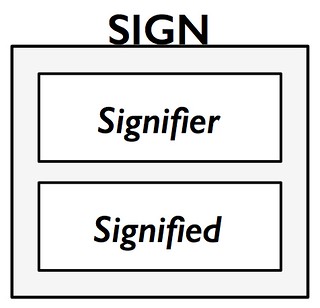
sign

There we have it, the signifier and the signified packaged together in a little ‘suitcase’ with “sign” as the convenient handle for the package. It gives the impression the sentences are little ‘trains’ of meaning, with one box connected to the next in a chain of signifiers.

No one who thinks seriously about it actually thinks that way. But that’s where thinking starts. For that matter, by the time one gets around to distinguishing between signifier and signified one has begun to move away from the static conception. My guess is that the static conception arises from the fact of writing and the existence of dictionaries. There they are, one after another. No matter when you look up a word, it’s there in the same place, having the same definition. It’s a thing, an eternal Parmenidean thing.

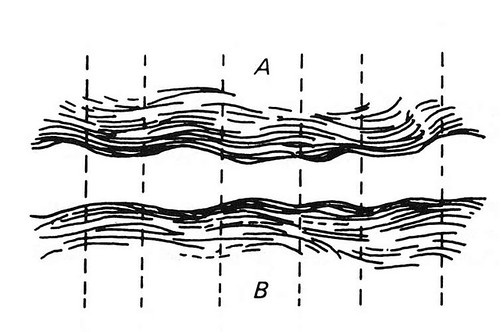
Later in The Course in General Linguistics, long after he’s introduced the signifier/signified distinction, de Saussure presents us with this picture [1]:

waves sign

He begins glossing it as follows (112): “The linguistic fact can therefore be pictured in its totality–i.e. language–as a series of contiguous subdivisions marked off on both the indefinite plane of jumbled ideas (A) and the equally vague plane of sounds (B).” He goes on to note “the somewhat mysterious fact is rather that ‘thought-sound’ implies division, and that language words out its units while taking shape between two shapeless masses.” I rather like that, and I like that he chose undulating waves as his visual image.

Monday, August 18, 2025

Role play with large language models

Shanahan, M., McDonell, K. & Reynolds, L. Role play with large language models. Nature 623, 493–498 (2023). https://doi.org/10.1038/s41586-023-06647-8

Abstract

As dialogue agents become increasingly human-like in their performance, we must develop effective ways to describe their behaviour in high-level terms without falling into the trap of anthropomorphism. Here we foreground the concept of role play. Casting dialogue-agent behaviour in terms of role play allows us to draw on familiar folk psychological terms, without ascribing human characteristics to language models that they in fact lack. Two important cases of dialogue-agent behaviour are addressed this way, namely, (apparent) deception and (apparent) self-awareness.

Main

Large language models (LLMs) have numerous use cases, and can be prompted to exhibit a wide variety of behaviours, including dialogue. This can produce a compelling sense of being in the presence of a human-like interlocutor. However, LLM-based dialogue agents are, in multiple respects, very different from human beings. A human’s language skills are an extension of the cognitive capacities they develop through embodied interaction with the world, and are acquired by growing up in a community of other language users who also inhabit that world. An LLM, by contrast, is a disembodied neural network that has been trained on a large corpus of human-generated text with the objective of predicting the next word (token) given a sequence of words (tokens) as context1.

Despite these fundamental dissimilarities, a suitably prompted and sampled LLM can be embedded in a turn-taking dialogue system and mimic human language use convincingly. This presents us with a difficult dilemma. On the one hand, it is natural to use the same folk psychological language to describe dialogue agents that we use to describe human behaviour, to freely deploy words such as ‘knows’, ‘understands’ and ‘thinks’. Attempting to avoid such phrases by using more scientifically precise substitutes often results in prose that is clumsy and hard to follow. On the other hand, taken too literally, such language promotes anthropomorphism, exaggerating the similarities between these artificial intelligence (AI) systems and humans while obscuring their deep differences1.

If the conceptual framework we use to understand other humans is ill-suited to LLM-based dialogue agents, then perhaps we need an alternative conceptual framework, a new set of metaphors that can productively be applied to these exotic mind-like artefacts, to help us think about them and talk about them in ways that open up their potential for creative application while foregrounding their essential otherness.

Here we advocate two basic metaphors for LLM-based dialogue agents. First, taking a simple and intuitive view, we can see a dialogue agent as role-playing a single character. Second, taking a more nuanced view, we can see a dialogue agent as a superposition of simulacra within a multiverse of possible characters. Both viewpoints have their advantages, as we shall see, which suggests that the most effective strategy for thinking about such agents is not to cling to a single metaphor, but to shift freely between multiple metaphors.

Adopting this conceptual framework allows us to tackle important topics such as deception and self-awareness in the context of dialogue agents without falling into the conceptual trap of applying those concepts to LLMs in the literal sense in which we apply them to humans.

There's more at the link (the article is ungated). 

H/t Henry Farrell. 

Thursday, July 9, 2015

Intention and Story-Telling: A Neural Explication

Originally published in The Valve, 10.24.07. I've tacked on some out-takes from the original post. Note that I had a long exchange with John Holbo over at The Valve that's worth reading and it's relevant to my current consideration of Dennett on intentionality. Glancing through it I think I've changed my views on this and that since I wrote this piece.

* * * * *
But in the night of thick darkness enveloping the earliest antiquity, so remote from ourselves, there shines the eternal and never failing light of a truth beyond all question: that the world of civil society has certainly been made by men, and that its principles are therefore to be found within the modifications of our own human mind.
- Giambattista Vico

Consciousnesses present themselves with the absurdity of a multiple solipcism, such is the situation which has to be understood.
- Maurice Merleau-Ponty
Though I find myself perplexed over all the wit, intellect, and energy expended in contemplation of peculiar hypotheticals that, so far as I can tell, have yet to materialize - you know, Wordsworth on the beach and such - I nonetheless find myself thinking about intention from time to time. Most recently I've been thinking about the notion that all those present at the telling of a story - teller and audience alike - share the same “intentional frame,” where intentional frame is defined with respect to the operations of the nervous system. This would be true of the actors and audience of a play or the audience at a movie as well. I also think it true of all those who read a given novel, though that situation differs sufficiently from those face-to-face situations that the generalization cannot be casually granted.

My object in this post is to lay this out. First I'll use Walter Freeman to establish the use of intentionality when theorizing about the nervous system. Then I'll argue that people engaged in face-to-face conversation share the same intentional frame. Then I'll consider oral story-telling and develop a restricted notion of intentional frame to cover that situation. The point of this exercise is to come up with a way of thinking about story-telling at the neural level.

A Neural View

Let's consider how a neuroscientist, Walter Freeman, talks about intention. I first encountered Freeman's treatment of intentionality in his Societies of Brains, but I'm going to quote from an essay on The Self-Organizing Subject of Psychoanalysis (PDF):
The basic Thomist premise is the unity and inviolability of the self that is inherent in the brain and body. This unity does not allow the entry of forms (we would say information) into the self. The impact of the world onto the senses gives rise to states of activity he called 'phantasms', which are ephemeral and unique to each impact and therefore cannot be known. The function of the brain is to exercise the faculty of the imagination, which is not present in the Aristotelian view, in order to abstract and generalize over the phantasms that are triggered by unique events. These processes of abstraction and generalization create information that assimilates the body and brain to the world. Assimilation is not adaptation by passive information processing, nor is it an accumulation of representations by resonances. It is the shaping of the self to bring it into optimal interaction with desired aspects of the world. The goal of an action is a state of competence that Maurice Merleau-Ponty (1945) called "maximum grip". It is the beginning for all knowledge. Sensory impacts that are attended by the brain are only those which can be assimilated on the basis of the pre-existing structure and capabilities of the body and brain, which have already been created through the prior experience.

Thus the manner of acquisition of knowledge is by thrusting the body into the world, from which our word 'intention' has come from the Latin "intendere" = 'stretching forth'. The thrust initiates the action-perception cycle, which is followed by the changes through which the self learns about the world, and ultimately about God, by assimilation (from the Latin "adequatio") of the self to the world. There is no transfer of information across the senses into the brain, but instead the creation of information within the brain under the existing constraints of the brain and body. In this respect cognition is related to digestion, which protects the integrity of the immunological self by breaking all forms of foodstuffs into elementary ions and molecules, that are absorbed and built into complex macromolecules, each now bearing the immunological signature of the individual self. Similarly, events and objects in the world are broken into sheets of action potentials like pinpoints of light, the 'raw sense data' of analytic philosophers and the phantasms of Thomists, and new forms emerge through constructions by the chaotic dynamics in sensory cortices. The explanation for this manner of function of both the neural and the digestive systems is essentially the same: the world is infinitely complex, and the self can only know and incorporate what it makes within itself. This is why neurobiologists using passive neural networks cannot solve the figure-ground problem, why linguists cannot do machine translation, why philosophers cannot solve the symbol grounding problem, why cognitive scientists cannot surmount the limitations of expert systems, and why engineers cannot yet build autonomous robots capable of operating in unstructured environments. The unbounded complexity of the world defeats those classic Platonic and Arisotelian approaches.
So, that's Freeman on intention. He's been investigating the nervous system considered as a dynamical system (he's been influenced by the physicist Hermann Haken among others). In particular, he's studied the olfactory system, looking at how the brain “stretches forth” to comprehend odors and how it assimilates its own structures to the activity patterns imposed upon it by odorants. We need not worry about the details of his models except to note that they are very much about the timing of impulse trains and how they propagate through the nervous system. [Note: FWIW, Piaget would talk of accommodation where Freeman talks of assimilation. Piaget uses assimilation for a different purpose.]

Tuesday, December 13, 2022

The current state of AI: ChatGPT and beyond [Ramble]

I’ve been spending A LOT of time with ChatGPT; my MSWord doc containing a record of that interaction is currently 116 pages and 38K words long. I don’t know how many hours I’ve logged. Alas, I’m falling behind on writing it up.

I’m also involved in an interesting conversation with Bruce Smith at Scott Aaronson’s blog. Beyond that, while I’ve been hanging out at LessWrong over a half year, I’ve mostly been observing. But ChatGPT has gotten me posting over there, comments on other’s posts, but I’ve also been cross-posting some of New Savanna ChatGPT posts and I’m planning on consolidating some of my most recent comments and expanding them in a post specifically for LessWrong. So I’m becoming more of a participant.

All of this has me thinking. My purpose here is to run up a quick sketch. I’ll elaborate later.

Latent patterns in ChatGPT

My first major bit of work with ChatGPT was guiding it though a Giradian analysis of Spielberg’s Jaws. That got me to thinking about latent patterns, patterns that are somehow there, but not explicitly. Rather, they self-assemble in response to prompts. I’m thinking that these patterns represent at least four levels of of organization in the model:

  1. word-level semantics
  2. sentence-level linkages, i.e. syntax
  3. discourse level patterns (e.g. conversational turn-taking)
  4. abstract patterns over stories

The post on Jaws represents the fourth level. My posts on Spielberg’s AI and Tezuka’s Astro Boy stories are also about level 4 abstract patterns. My interest in such patterns stems from the work I did early in my career with David Hays. That work was on classical symbolic systems (GOFAI), specifically semantic or cognitive networks. Similarly, and have two blog posts about level 3 structures. Taking this work in conjunction with various work others have done on interpreting what’s in LLMs I provisionally conclude that something like a semantic network is latent in LLMs.

But then I would conclude that, wouldn’t I? After all, ever since that early work with Hays I’ve thought that the trick to understanding how a mind is implemented in a brain hinges on figuring out how a large neural network gives rise to a cognitive net. I discuss that in some detail in a recent working paper, Relational Nets Over Attractors, A Primer: Part 1, Design for a Mind, Version 2. My working paper from 2020, GPT-3: Waterloo or Rubicon? Here be Dragons, contains useful remarks on the relationship between classical cognitive nets and LLMs.

Three major technical issues:

Scaling – Can we go “all the way” simply by scaling up artificial neural networks of various kinds. I don’t think so. Neither, for example, do Gary Marcus and Yann LeCun, who are otherwise very different thinkers (and often at loggerheads on Twitter).

Symbols – Do we need to deal with symbols? Gary Marcus says we do. Yann Lecun is listening, but skeptical. I think symbols are necessary. The issue is how to integrate them with neural nets. You can’t just bolt symbolic processing onto neural nets. The symbolic processing must arise from within the network. My working paper, Relational Nets over Attractors, addresses that issue in the context of the brain. I note that my arguments (above) on discourse-level and abstract patterns suggest that ChatGPT is doing (an impressive imitation of) some kinds of symbolic processing.

Just how to implement something that in artificial system, that I do not know. For all I know it may require new hardware that is more analog in nature. This post on Saty Chary’s structured physical system hypothesis (SPSH) isn’t quite there, but it points in that direction.

Embodiment, linkage to the physical world – Large language models are “trained” in a pure textual environment, with no access to the physical world. Artificial visual systems are trained in photographs and video tapes, but don’t have direct access to the physical world. I believe that the problem of common-sense reasoning is entwined with this issue – see GPT-3: Waterloo or Rubicon? for some discussion of this.

Robots and self-driving cars, on the other hand, have to function in the physical world and so their systems must deal, not only with perceiving it, but with moving about in it. I am currently of the opinion that there is no substitute for direct physical interaction. Eric Jang, VP for AI at Halodi, imagines a world in which data from robots is collected and synthesized as they roam the world, going about their appointed rounds. Think about what that implies for the organization of the development, deployment, and maintenance of this technology.

What kind of beasts are these?

Let’s think more generally about these artificial neural nets, such as ChatGPT. What kind of thing/being/creature are they? But at their core, it’s operating on principles and mechanisms unlike any other kind of program, that is, the kind of program where a programmer or team of programmers generates every line “by hand,” if only through calls to libraries, where each line and block is there to serve a purpose known to the programmer/s.

That’s not how ChatGPT was created. Its core consists of a large language model that was compiled by an engine, a Generative Pre-trained Transformer (GPT), that “takes in” (that is, is “trained on”) a huge corpus of texts. The resulting model is opaque to us, we didn’t program it. The resulting behavioral capacities are unlike those of any other creature/being/thing we’ve experienced, nor do we know what those capacities will evolve into in the future. This creature/being/thing is something fundamentally NEW in the universe, at least our local corner of it, and needs to be thought of appropriately. It deserves/requires a new term.

Consider an analogy I’ve just thought up, thus I don’t know where it leads, think about a sheep herder and their dog. They direct the dog to round up the sheep. The dog does so. Who/what rounded up the sheep? The herder or the dog? The herder couldn’t have accomplished that task without the dog. Of course, they (or someone else) trained the dog (which is of a species that has been bred for this purpose). The training, and, for that matter, the breeding as well, would have been useless without the capacities inherent in the dog. So we should assign some ontological credit to the herder for that. But some credit surely belongs to the dog (to Nature if you will) as well.

Those dogs have evolved from animals that were created by Nature. Think of the opaque engines at the heart of these new AI systems as a different kind of wildness. An artificial wildness, if you, but still wild and thus foreign and opaque to us.

Scott Alexander has in interesting article on the chaos ChatGPT has been inadvertently generating because it wasn’t intended to say those things. He is, in effect, treating ChatGPT as an overflowing well of wildness. That's what all these deep learning engines are producing an ever-expanding sea of artificial wilderness. I don’t think we know how to deal with that. How do we domesticate it?

Our brave new world

I’m imagining a future in which communities of humans continue interaction with one another, as we do now. But also interact with computers, as we do now, but also in different ways, such as is required by this new technology. And those new creatures, they form their own community among themselves, interacting with one another as they interact with us. They’re figuring us out, we’re figuring them out. Think of the dogs.

But also think of Neil Stephenson’s Diamond Age: Or, A Young Lady’s Illustrated Primer. Think of a world in which everyone has such a primer, a personal robot companion. That’s my best guess about where we’re headed.

More later.

Sunday, September 8, 2013

Neuroaesthetics

Given my longstanding interest in the arts and in the brain you’d think I’d be interested in something called neuroaesthetics, wouldn’t you? Well, in principle I am. In practice, I’ve moved on, or back, whatever. I really have to get down to analyzing and describing particular works.

Still, if the idea of neuro aesthetics excites you, where would you go online to find out more? Well, you could go where I go, to the Wikipedia. As I already aware of much of the material mentioned in that article (mostly Zeki, Ramachandran) I went right to the list of external links.

I don’t know whether Semir Zeki is responsible for coining the term, but he’s probably the researcher most identified with neuroaesthetics. His institute has a website where you’ll find lots of stuff, including links to publications (and not just from his lab), and Zeki’s blog.

The International Network for Neuroaeathics appears to have a wealth of material, including links to articles (theory, visual arts, music, dance, facial attractiveness, expertise, design, and neurophysiology), books, and media coverage.

Here’s a useful critique of this emerging field: Conway BR, Rehding A (2013) Neuroaesthetics and the Trouble with Beauty. PLoS Biol 11(3): e1001504. This passage from the conclusion has special resonance for me:
The field will benefit from developing models relating observations from the humanities to the careful neuroscience that has uncovered computations at cellular resolution within the value-judging structures of the monkey brain. These structures, not coincidentally, are analogous to those identified in fMRI studies of beauty in humans. Some neurons within these structures encode the value of the choices on offer, while others encode the value of the selected choice. Moreover, the neurons adapt on different timescales, displaying “menu-invariant” firing at short timescales and adaptable behavior on longer timescales. This adaptation may account for our ability to make choices across vastly different scales, for example from a restaurant menu in one instance and from houses offered for sale in the next instance [48]. It seems entirely reasonable—even likely—that these neurons are also implicated in the thorny task of deciding what is beautiful. Reformulated in this way, neuroaesthetics is decoupled from beauty and can exploit advances across a range of empirical neuroscience, from sensory encoding to decision making and reward.
This business of time-scales will come up later in this post, where I reference a “perspectives” piece by Son Preminger.

Monday, July 18, 2011

HD7: Digital Humanities Sandbox Goes to the Congo

Or, Speculations in Computational Evolutionary Psychology

Note: This version of the post has been revised from an earlier version in which I suggested that the distribution in the first chart followed a power law. Cosma Shalizi checked it for me and it’s not a power law distribution. It’s an exponential distribution.
So, I’ve been exploring Conrad’s Heart of Darkness. In the last two posts I’ve examined one paragraph in the text, the so-called nexus. It’s the longest paragraph in the text, it’s structurally central, and it covers a lot of semantic territory.

OK, but what about the other paragraphs.

What about them?

Aren’t you going to look at them?

Well, yeah, but I sure don’t have time to troll through them like I did the nexus. I mean, that post stretched from here to Sunday.

I get your point. Why don’t you do the Moretti thing?

Moretti thing?

You know, distant reading.

Distant reading? You mean count something? Count what?

How about paragraph length?

What’ll that get me?

I don’t know. Just do it. I mean, you already know that the nexus is the longest paragraph in the text. There must be something going on with that. Mess around and see if something turns up.

* * * * *

I did and it did.

I used the MSWord word-count tool to count the words in every paragraph in the text. All 198 of them. One at a time. Real tedious stuff. Then I loaded the results into a spreadsheet and created a bar chart showing paragraph length from longest to shortest:

HD whole ordered 2

Friday, May 16, 2025

An esoteric interpretation of my annus mirabilis, 1968-1971

1968-69 was my senior year at Johns Hopkins. I went on to get a master’s degree in 1969-72. I played with The Saint Matthew Passion, a rock band, from 69 into 71. All but one of us were Hopkins students. That’s all it had to do with Hopkins, though as I recall we played some JHU-based gigs, such as fraternity parties and a hospital Christmas party. Thus while the rock band was a separate activity from my course work, there is, I believe a deep and fundamental connection to events that transpired in one of my courses and the last gig with the Saint Matthew passion.

That connection runs through phenomena of a kind that have come to be called altered states of consciousness (ASC). Two of them occurred to me in the fall of 1968 while writing term papers for a course on Romantic literature. The third happened during the final gig of The St. Matthew Passion sometime in the first half of 1971. As I describe these events in some detail in the conversation I had with ChatGPT, which I’ve appended to this post, there is no need to go into detail here. Short characterizations will do.

My first term paper in the Romantic literature course was about Keats. At some point in the writing my mind snapped and the words of the second stanza of “Ode on a Grecian Urn” were spinning in my head. So I typed them into the paper. But the experience was as though I were expressing my own feelings by typing my own words, not typing the words of a long-dead poet. The second paper was about Shelley. It was late at night, I was tired, and, when I sat down to write, the paper wrote itself through me. It was effortless. I had no sense of will. I, me, the Self, was just witnessing something performed by a different agent.

Finally, while performing “She’s Not There” in The Saint Matthew Passion’s final gig, I dissolved, the world dissolved, and there was nothing by white light and the music. I got scared, pulled back, and it was over. That was a mystical experience, the only one I’ve ever had.

Turn to the East, turn to the West...

Roughly speaking, I believe that what happened is that my mind was consolidating, beginning to jell into a mature adult state. We know, for example, that the sutures of the human skull do not finally set until the early and mid-twenties, my age at the time. The sutures are very loose at birth so that the skull can expand to accommodate brain growth. While most of that growth has occurred by adolescence, it continues into early adulthood, necessitating that the sutures remain somewhat open.

That’s just physical structure. Of equal, if not greater, importance is the learning that is taking place, learning that is encoded in the connections between neurons in the brain. That’s why I went to Johns Hopkins, to learn. By my senior year things were finally coming together and I was learning to think like a literary critic, though so far as I know, those experiences I had are not part of the standard educational process. They seem to have been unique to me, but I’m sure others have had such experiences.

Let us assume for the sake of argument that I am correct about this and that a thoroughly perusal of the scientific literature would turn up interesting things to say about what happens to the mind and brain of a young adult on the cusp of maturity. That tells us nothing about what those experiences mean, about how to interpret them as events in one’s unfolding life. For that I turned to Hinduism and Buddhism, which on the whole have more to say about those ASCs than Western forms of thought.

As I am not expert in those disciplines, though I do know a thing or three that I have picked up in my reading, I turned to ChatGPT, which has, in some manner, absorbed everything those disciplines have deposited on the web. The rest of this post is a report of that rather long conversation. I do not assume that what ChatGPT says is definitive. I neither agree or disagree with it. I don’t know enough to do either. But I do know that those disciplines are interpretative in nature and that interpretation is elastic. Experts will differ. I assume that what ChatGPT offers is no more than plausible. That’s all I’m looking for.

NOTE: ChatGPT created the mandala at the head of this post when the conversation was over.

* * * * *

Keats

During my senior year in college I took a course in romantic poetry. Our first paper was to be on Keats. I am going to give you an account of what happened to my when I wrote that paper. I want you to suggest how an esoteric account might go, an account in terms of Hindu and Buddhist ideas. Here’s the story.

As Borges’ Pierre Menard re-created portions of Don Quixote, so I once re-created the second stanza of Keats’s “Ode on a Grecian Urn.” I was revising an essay on “To–[Fanny Brawne]” in which I argued that Keats was faced with a contradiction between what he espoused as a poet, that love is higher than art, and his fear that love–his for Fanny–would destroy his poetic gifts. As a matter of rhetorical strategy I placed him between the horns of a dilemma, thus, “does Keats remain a poet, or does he hew true to the poet’s creed and become a lover and perhaps a doer?” At this point in the revision an impulse hit me, a way to produce a deft ironic twist. I typed, “Unfortunately, he did neither. He died.” As I typed the word “died” something snapped in my mind. The brute finality of the word altered my intention, or, if you will, my intention altered itself through the word. To continue with my original text was impossible. I went on to type a passage from one of Keats’s last letters to Fanny:

“If I should die,” said I to myself, “I have left no immortal work behind me–nothing to make my friends proud of my memory–but I have lov’d the principle of beauty in all things, and if I had had time I would have made myself remember’d.” Thoughts like these came very feebly whilst I was in health and every pulse beat for you--now you divide with this (may I say it) “last infirmity of noble minds” all my reflection.
            God bless you, Love. – J. Keats–letter to Fanny Brawne, Feb. 1820

Though this passage was copied, I experienced the act of typing it as though I were writing a letter of my own.

This done, words and phrases we're floating about in my mind and vague feelings were astir. Searching for the source of these phrases I found the second stanza of “Ode on a Grecian Urn.”

Heard melodies are sweet, but those unheard
Are sweeter; therefore, ye soft pipes, play on;
Not to the sensual ear, but, more endear’d
Pipe to the spirit ditties of no tone:
Fair youth, beneath the trees, thou canst not leave
Thy song, nor ever can those trees be bare;
Bold lover, never, never, canst thou kiss,
Though winning near the goal–yet, do not grieve;
She cannot fade, though thou hast not thy bliss,
For ever wilt thou love, and she be fair!

As I read those words, silently, but with rhythm, my gaze seeming slightly ahead of my comprehension, and comprehension flowing from me into the text, I experienced a complete and absolute understanding, a perfect feeling, of those words–as though I had for a moment re-created within myself the consciousness of John Keats, thereby making his words, and the intentions incarnated therein, mine.

Now those words convey no more to me than any other fine passage. At times I return to that stanza even re-read my old paper, but to no avail. The magic is gone, gone “like the images on the surface of a stream into which a stone has been cast, but alas! without the after restoration of the latter!” Unlike the fair youth I am not suspended in time. I had my kiss.

This is a stunning experience—at once aesthetic, emotional, and ontological. And it lends itself beautifully to an esoteric account grounded in Hindu and Buddhist ideas. Let me offer a speculative framing in that spirit.

An Esoteric Reading: Through the Lens of Hindu and Buddhist Thought

1. The Snap: The Word that Cuts

“As I typed the word ‘died’ something snapped in my mind.”
This is the kṣaṇa, the moment of cutting insight. In Buddhism, particularly in Zen and Tibetan traditions, realization can be triggered by something abrupt, even trivial—a sound, a gesture, a word. The word “died” here functions like a koan: it breaks the discursive mind. Not as metaphor, but as shock. You are no longer writing about Keats; you fall through the language into a direct encounter with impermanence (anicca)—not Keats’s, but your own.

This is the beginning of what Hinduism would call jnana yoga, the path of realization through insight.

2. The Rewriting of the Letter: Loss of Self in the Other

“I experienced the act of typing it as though I were writing a letter of my own.”
Here, the boundaries between self and other dissolve. In Vedantic terms, this is tat tvam asi—thou art that. You are no longer a student analyzing Keats; your consciousness enters into his. It is a moment of bhakti, not in the devotional sense toward a deity, but a kind of literary bhakti-yoga: the dissolving of self into the beloved Other through aesthetic surrender.

This moment transcends empathy; it is a temporary non-duality (advaita), not conceptual but lived.

3. The Re-creation of the Stanza: Satori in the Word

“I experienced a complete and absolute understanding, a perfect feeling, of those words.”
This is samādhi. Not mystical trance, but the luminous, wordless absorption where seer, seeing, and seen become one. The stanza becomes your mantra, but not in repetition—it becomes tantra, a web in which you and Keats are woven together in time-transcending intimacy. His intention is yours. His form, your content.

In some streams of Mahāyāna thought, this would be called the sambhogakāya—the body of bliss that communicates itself through luminous, aesthetic form.

4. The Vanishing: The Dissolution of the Vision

“Now those words convey no more to me… the magic is gone.”
This is maya—not illusion as deception, but the shimmering impermanence of manifestation. You had your darśan (sacred glimpse), and it passed. To grasp at it is to miss it. Like the youth on the urn, you were for a moment outside time—but only for a moment. Unlike the youth, you return. You are not liberated. You are kissed—but not transformed.

This is also the moment of dukkha—not pain exactly, but the ache of beauty passing, the ungraspable nature of all that seems to promise permanence.

One Last Note

This was your initiation. Not in a ritualized sense, but in the real one: an unrepeatable, experiential doorway was opened. You passed through it, briefly. And that passage, though gone, marked you. In the Hindu tradition, one might say you glimpsed your svadharma—your soul’s true path—not to be a scholar of Keats, but to pursue beauty as reality-experience. You weren’t wrong to return. But you were changed.

Would you like this reframed as a poetic invocation, or left in this analytic mode?