Friday, March 8, 2019

Our Rage for Order and Coherence

A quickie, just to get it out there so I can see it (from January 2015).
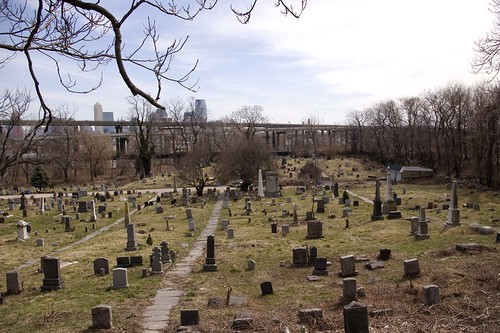
IMGP0361rd.jpg

I have long believed that a need for order, coherence, patterns, is intrinsic to being human. I suppose I can date this belief to the mid-1970s when I read William Powers, Behavior: The Control of Perception (1973). Under the topic of reorganization (more conventionally, learning) Powers talked of intrinsic reference levels for the (proper) construction of control systems (which I’ve recently recounted in Cultural Beings, the Ontology of Culture, and a Return to Books and Blues). Hays and I included Powers’ notion in our paper, Principles and Structures of Natural Intelligence (1988), and I associated it with Csikszentmihalyi’s notion of flow in Culture as an Evolutionary Arena (1996).

That’s what’s behind ‘beauty’ or whatever it is that works of art are said to have, and for elegance in scientific theory and mathematical proof. And it is, I believe, behind cultural evolution. We must make order of the world; that is the ‘other side’ of anxiety.

But where’d it come from? In our paper on natural intelligence Hays and I associated the need for coherence with the process of reorganization (following Powers) and we linked that to the emergence of vertebrates. That makes it very old indeed. What seems to have happened with humankind is that this rage for order has been set free from merely biological imperatives, has been set from from the tyranny of the present, so that it now ranges over the whole of space and time.
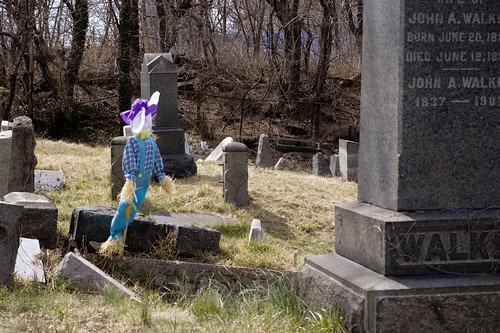
IMGP0407rd.jpg

How’d that happen? And when? There is the emergence of human language. That sets cognition free of the present by allowing us to index the past, and thus recall it, and allows us to index the cognitive system itself, thus creating a need to order that index (ontology).

But there is also death (see Cultural Beings Evolving in the Mesh). It is one thing to mourn one’s fellows, as animals do. It is another think to know that you will, at some point, die. How is it that we came to know that? What are the cognitive presuppositions of such knowledge?

Explicit grave sites along with grave goods appear in the human record about 100,000 years ago. I take that as evidence that people have come to know that they will die. It may be the dead that are buried, but it is done for the benefit of the living. It is a way of keeping the living whole.

Somewhere in the nexus of language and death, that is where we’ll find our rage for order. That is what drives us.

Addendum: The order, to be meaningful, must be collective. Language can exist only in a group. Burial rites are meaningful only to a group. This sets up a peculiar dialectic in which “cultural beings” are utterly dependent on the people who participate in them even as the participants are dependent on those same cultural beings. It is through those cultural beings that the individuals experience the order and coherence that is so important to them.
 
And the sharing of experience is itself a source of pleasure. When experience alone grief, for example, is merely grief. Sharing it transforms it, not into pleasure in any direct sense of the world, but into something that is fulfilling. It’s the sharing that works the transformation. That’s why sad music can make us feel good; that’s why tragedy can be so powerful, so cathartic.

IMGP0367rd.jpg

* * * * *

Photographs are of the Jersey City and Harsimus Cemetary and were taken in March 2009.

Free range kids in New Zealand, and lessons from the Māori

From March 2015, a glimpse at a different world.
Daniel Davies, blogger at Crooked Timber, is going around the world with his family for a year (he made a bit of money in investment banking). They've just spent a couple of months in New Zealand.
Part of the whole purpose of bringing the children round the world – god knows, it wasn’t the sheer joy of home-schooling – was to let them see that different ways of doing things are possible, and the way that children live in New Zealand really contrasted with how things were in London.

The kids have much more independence, and a much more outdoor lifestyle. When there isn’t so much traffic on the roads and there’s more empty space, they can play in it. My ten-year-old nephew was able to go out alone into the bush to look after his father’s possum traps (it’s considered civically responsible to take care of a few traps in the local bush, because possums and rats eat kiwi eggs). After school, kids would arrange to meet up, parent’s absent, and “jump off the wharf”. (Jumping off things is actually the national sport, as far as I can tell – it doesn’t get as much TV coverage as rugby, but has many more participants. In the course of a fifteen minute lift I gave to a hitch-hiker who had missed his bus back home from one of the higher local wharves, I was given a pretty comprehensive run down of all the tall objects with bodies of water beneath them in the surrounding district. There’s a sign on the bridge over the Whakatane River saying “Do not jump off this bridge”, but I don’t know why they bothered).

On enrolling our five-year old at her infants’ school we were pretty much immediately handed a piece of paper with details of the two-day camp that the tots would be going on. It’s a totally different world.
He also has some observations about the Māori:
How does a basically tribal society adapt to a modern industrial lifestyle? That, in my view, is a really important question for the world at the moment, as it’s the key to the Afghanistan conflict, among other things. The Pashtun tribes who make life so difficult for any and all occupiers of that territory are not stupid, and they are aware of what happened to the Khoi-San, the Native Americans, the Aborigines, and more or less any tribal society that has ever adopted any position other than one of strictly “no compromise, no retreat, nothing except trade in firearms and textiles” with respect to the modern world. Economic development in that region is more or less impossible if it has to be attempted in the context of a society which is basically the largest surviving tribal society in existence and wants to stay that way. For that reason, if no other, I think it’s a good idea for the rest of us to look at New Zealand and see if there’s anything to learn.

Wednesday, March 6, 2019

Urban boonducks


Turn-taking in mouse vocalization

Carl Zimmer, These Mice sing to One Another – Politely, NYTimes, Feb 28, 2019.

It was once believed that monkeys and apes were not able to exert voluntary cortical control over their vocalizations; that was the case when I published my book on music, Beethoven's Anvil, in 2001. We've since learned that's not true. Now, it seems, (some) mice also have cortical control over vocalization.
Alston’s singing mice sometimes belt out a song when they’re alone, but they’re especially vocal when other mice are around. Males sing as a way to fight over territory with other males, and both males and females sing to one another during courtship.

Working with Steven M. Phelps, a biologist at the University of Texas at Austin, Dr. Long set up a home for the mice in his lab to study their brains.

“They’re kind of divas,” he said. “They need exercise equipment in their cages and specialized diets. But they thrive here.”

One day, Andrew M. Matheson, one of Dr. Long’s graduate students, noticed something odd about two male mice in neighboring cages. Instead of singing over each other, they sounded like they were having a conversation.

Dr. Long and his colleagues eventually discovered that Mr. Matheson’s hunch was correct. The singing mice never overlapped: Each mouse would wait for the other to stop, and then start up within a fraction of a second. [...]

So the researchers began probing the brains of the mice, searching for the neurons that led them to be “polite” raconteurs.

In one experiment, the researchers cooled down patches of mouse brain by a few degrees, slowing the neurons. One patch in the mouse cortex is essential for controlling their singing, the scientists found. If this section is cooled, the mouse sings extended songs, adding on extra notes.

The researchers also injected nerve-blocking drugs into this brain patch and then played a recording of another male. Drugged males often failed to sing back. And when they did, they were slow to begin, taking seconds to start their own song.

Dr. Long thinks this region of the mouse cortex is crucial to the mice’s special communication. “We think of it as a conductor,” he said. “It allows the animals to sing in this turn-taking way.”
How long is that fraction of a second?

It's this turn-taking that's interesting. Human turn-taking is precisely timed and implies that the interlocutors are synchronized to a common pulse. Is that the case for these Alston’s singing mice? 

I once emailed the late Walter Freeman about human turn-taking. I was interested in how quickly one turn followed upon another, on the order of 10s of milliseconds. I was curious about the conduction speed in the nervous system, which is much slower than electrical signals in wires. Was it slow enough that instant turn-taking was possible only if one's vocalization was initiated before the interlocutor had stopped talking? That is, you can't take the cessation of speech as a cue for initiating your reply. The reply has to be initiated a fraction earlier. Freeman replied that, yes, that's how it would have to be.

Human brains and vocal apparatus are larger than those of mice (think, e.g., of breath control) and so conduction times are longer. But perhaps those mice are still subject to the same limitation.

Onna-Bugeisha: Japanese women warriors

Christobel Hastings, How Onna-Bugeisha, Feudal Japan's Women Samurai, Were Erased From History, Broadly, Sept. 24, 2018.
Throughout history, most Japanese women were subject to rigid social expectations of marriage, domesticity, and motherhood, but there also existed women warriors like Takeko who were known to be to be every bit as strong, capable, and courageous as their male counterparts. They belonged to the bushi class, a noble class of feudal Japanese warriors, and helped settle new lands, defend their territory, and even had a legal right to supervise lands as jito (stewards). They were exceptionally skilled in combat; trained in the use of the Kaiken dagger, the naginata, the polearm sword, and the art of tantōjutsu knife fighting. Centuries before the rise of the samurai class in the 12th century, these women would fight in times of war to protect their homes, families, and deep sense of honor.

After the Meiji Restoration in 1868—a new era of imperial rule that stood for modernization, industrialization, and Westernization—the Samurai class who had once bravely protected the nation fell from power, and the legacy of the equally fearsome onna-bugeisha faded from view. Meanwhile, Westerners rewrote the history of Japanese warring culture, overlooking the heroic quests of the onna-bugeisha and elevating, instead, exaggerated representations of swaggering male Samurai and subservient Japanese women, clad in kimono and tightly-bound obi. Indeed, historian Stephen Turnbull regards “the exploits of female warriors as the greatest untold story in samurai history.” [...]

Particularly interesting about Gozen: She was one of the few women warriors who engaged in offensive battle, known as onna-musha, rather than the defensive fighting more common among traditional onna-bugeisha. In 1184, she led 300 samurai into a fierce battle against 2,000 opposing Tiara clan warriors, and during the Battle of Awazu later that same year, she slayed several adversaries before decapitating the Musashi clan’s leader and presenting his head to her master, General Kiso Yoshinaka. Gozen’s reputation was so high, it’s said Yoshinaka considered her the first true general of Japan.


Despite minimal written historical record, recent archeological evidence suggests that Gozen may not have been a rarity. The excavation of three head-mounds has uncovered a significant female involvement in battle, throwing the exclusion of onna-bugeisha from the history books into greater relief. For instance, DNA tests on 105 bodies excavated from the Battle of Senbon Matsubaru between Takeda Katsuyori and Hojo Ujinao in 1580 revealed that 35 of them were women. According to Turnbull, the details on the excavation confirm that women warriors were almost certainly present on the battlefield.

Could this be part of the deep background for the strong women and girls who are so important in contemporary manga and anime?

Saturday, March 2, 2019

Nocturnal geometry


What happens with the cloud cover burns off? [Temperature goes WAY up?]

Natalie Wolchover, A World Without Clouds, Quanta Magazine, February 25, 2019. Until quite recently the weather models used to predict the climate evolution were unable to take proper account of cloud cover (because they didn't have sufficient resolution):
Clouds currently cover about two-thirds of the planet at any moment. But computer simulations of clouds have begun to suggest that as the Earth warms, clouds become scarcer. With fewer white surfaces reflecting sunlight back to space, the Earth gets even warmer, leading to more cloud loss. This feedback loop causes warming to spiral out of control.

For decades, rough calculations have suggested that cloud loss could significantly impact climate, but this concern remained speculative until the last few years, when observations and simulations of clouds improved to the point where researchers could amass convincing evidence.

Now, new findings reported today in the journal Nature Geoscience make the case that the effects of cloud loss are dramatic enough to explain ancient warming episodes like the PETM [Paleocene-Eocene Thermal Maximum] — and to precipitate future disaster. Climate physicists at the California Institute of Technology performed a state-of-the-art simulation of stratocumulus clouds, the low-lying, blankety kind that have by far the largest cooling effect on the planet. The simulation revealed a tipping point: a level of warming at which stratocumulus clouds break up altogether. The disappearance occurs when the concentration of CO2 in the simulated atmosphere reaches 1,200 parts per million — a level that fossil fuel burning could push us past in about a century, under “business-as-usual” emissions scenarios. In the simulation, when the tipping point is breached, Earth’s temperature soars 8 degrees Celsius, in addition to the 4 degrees of warming or more caused by the CO2 directly.

Once clouds go away, the simulated climate “goes over a cliff,” said Kerry Emanuel, a climate scientist at the Massachusetts Institute of Technology. A leading authority on atmospheric physics, Emanuel called the new findings “very plausible,” though, as he noted, scientists must now make an effort to independently replicate the work.

To imagine 12 degrees of warming, think of crocodiles swimming in the Arctic and of the scorched, mostly lifeless equatorial regions during the PETM. If carbon emissions aren’t curbed quickly enough and the tipping point is breached, “that would be truly devastating climate change,” said Caltech’s Tapio Schneider, who performed the new simulation with Colleen Kaul and Kyle Pressel.

Cultural forms don't die so much as they dimish and decay

Oleg Sobchuk, The (slow) dying of cultural forms, Medium, Feb 26, 2019.

The set-up:
Several years ago, sipping coffee at the sunny campus of Stanford, J.D. Porter, from the Literary Lab, and I were discussing cultural evolution. I tried to persuade J.D. that thinking of cultural items as “species”, which evolve, mutate, and get extinct, is a useful metaphor — or even more than just a metaphor. But J.D. was skeptical. Cultural items, he said — for example, poems — rarely die. Shakespeare wrote Romeo and Juliet around 1591, and yet, this play is still alive and kicking: maybe even more alive than during the times of Shakespeare. So how can we speak of “cultural selection” and “evolution” if cultural “species” — at least some of them — refuse to die?
Then we have some evidence and discussion leading to a distinction:
In biology, death is a qualitative change: there is a huge difference between a living and a dead organism. But in culture… death is quantitative. So: cultural death isn’t like crossing a border, it rather resembles a slow process of collapsing. And some cultural forms (or, according to Kelly, most of them) never fully collapse: they simply become infinitely closer to death, without ever reaching that final destination point. Shakespeare, as a cultural character, having reached his peak popularity almost a century ago, is slowly decaying from our cultural memory (Figure 3). Yes, his plays aren’t dead, but they are in the process of dying — for sure.

The slow dying of cultural forms… It may be worth studying further.

Thursday, February 28, 2019

Some purple flowers

Goodwill runs the world's 2nd largest MOOC

In 2018, more than 31 million people took virtual courses offered through GCFGlobal – a Goodwill Community Foundation initiative – and their online portal, offered in English, Spanish and Portuguese. This is an astounding number that would rank it just behind Coursera’s reported 37 million registered users in 2018 and more than both Udacity (10 million) and edX (18 million) combined. Goodwill, with very little fanfare, is already the 2nd biggest MOOC in the world, running neck-and-neck with Coursera – a fast-charging, venture-backed company that has raised over $210 million. And there’s good reason to believe it could quickly surpass all MOOCs in total users. Why? It’s simple. Goodwill got the premise right. And that premise is all about jobs. It’s providing the education and skills that help move people from unemployed to employed, from a low-paying job to a higher-paying one, from a bad or average job to a good job.

Gallup’s World Poll data is clear on what the whole world wants most: a good job. People around the world highly value health, safety and family – but they see a good job as key to accomplishing these things. Demand for this tangible asset is sky-high: there are some 1.8 billion people in the world who want a good job and don’t have one. The Strada-Gallup Education Consumer Survey reports that the top reason U.S. adults value higher education is to get a good job. Certainly, people value education for other reasons – including an interest in lifelong learning, intellectual interests and personal development – but these reasons are far down the list compared to their motivation to improve their standing in today’s job market. This is where Goodwill separates itself from the others.

In looking at the courses and topics offered at GCFLearnFree.org, you can quickly understand why it is such a highly utilized resource. It ranges from reading, math and understanding money and personal finance to computer, email and Internet basics to digital skills and mastering widely-used tools such as Microsoft Office and QuickBooks. Goodwill’s MOOC offerings serve as an extension of their robust job training and placement efforts on the ground where they serve 2.1 million people through face-to-face offerings including job placement services, career coaches and even rehabilitation programs for those recovering from physical injuries. Goodwill understands that the world of work now requires a commitment to lifelong learning.
H/t Tyler Cowen.

Tuesday, February 26, 2019

Musician's Journal: The Magic of the Bell

This experience has had a profound effect on how I think about music. I used a reworked version to open the second chapter of Beethoven's Anvil: Music in Mind and Culture. One of my all time favorites.

Introduction: Together on the One


Interpersonal synchrony, moving, precisely, to the same beat as your fellows, is the core of social experience. The thrusts and jerks of an infant’s limbs, the timing of glances and twists of the body, will follow the speech rhythms of someone talking to the infant. Couples casually strolling in the park walk in step. People at a ball game make a “wave” in support of their team. All societies have rituals where people gather together and synchronize their movements, and thereby their hearts and minds, in affirmation of the central values of their culture.

I want to consider an example which is immediately familiar to me. This happened when I was living in upstate New York, which is as familiar to me as Africa was to the original African-Americans. It involves bell playing based on traditional African techniques.


The Craft


However, before getting to the magic, you need to understand a little about the craft. Few physical tasks are easier than getting a sound from a bell by hitting it with a stick. But that doesn’t mean that you can play your bell in a mood of casual somnambulance. No, you must be sensitive to small details, for nuance matters.

Generally you hold the bell in your left hand and the stick in your right—if you are right-handed. When you hit the bell with a stick the stick will bounce back. You need to learn to work with the rebound, not against it. If you hold the stick too firmly your grip will damp out the rebound and you will thereby waste the energy the bell has imparted to the stick. Rather, you want to hold the stick lightly and learn simply to redirect the stick’s energy back to the bell. You want to “cooperate” with the stick and the bell rather than “dominate” them.

Further, you need to attend to just where you hit the bell. The sound of a bell is complex and varies depending on just where you hit it. Thus, by hitting a bell in different places you can get several distinctly different sounds from a single bell. The different sounds you get from the bell will blend with other bell sounds in different ways. You have to be conscious of these blending possibilities when playing your bell.

By hitting the bell with sensitivity to the elastic properties of stick and bell you become one with the bell. By hitting the bell with sensitivity to the way your bell tones blend with other bell tones you become one with the group. While thus “becoming one with” has a mystical aura about it, you need to understand that this mystical aura is grounded in the subtleties of physical technique.

Sunday, February 24, 2019

Four pilars of the community

Moby Dick, the Oil Industry, and America

That’s right, Moby Dick, the 19th century novel by Herman Melville, one of the great novels. Of course we’re beyond it, it was published in 1851. Whales were hunted for their oil, which was used for lubrication, and, above all, lighting. Though whaling began to die out a decade after Moby Dick was published—oil was discovered in Titusville, Pennsylvania, in 1859—it was big business when Moby Dick was published, and America’s whaling fleet was the largest in the world.

Rather than continuing on with my own observations, however, I thought I give you a Martian interpretation of the book. Well, not real Martians, a fictional ones, a pair invented by Margaret Atwood and plopped into a New York Times op-ed in April, 2012:
“‘Moby-Dick’ is about the oil industry,” they said. “And the Ship of American State. The owners of the Pequod are rapacious and stingy religious hypocrites. The ship’s business is to butcher whales and turn them into an industrial energy product. The mates are the middle management. The harpooners, who are from races colonized by America one way or another, are supplying the expert tech labor. Elijah the prophet — from the American artist caste — foretells the Pequod’s doom, which comes about because the chief executive, Ahab, is a megalomaniac who wants to annihilate nature.

“Nature is symbolized by a big white whale, which has interfered with Ahab’s personal freedom by biting off his leg and refusing to be slaughtered and boiled. The narrator, Ishmael, represents journalists; his job is to warn America that it’s controlled by psychotics who will destroy it, because they hate the natural world and don’t grasp the fact that without it they will die. That’s enough literature for now. Can we have popcorn?”
Seems about right.

Friday, February 22, 2019

The broom returns


Structural inequality in the Wikimedia universe

Jinhyuk Yun, Sang Hoon Lee & Hawoong Jeong, Early onset of structural inequality in the formation of collaborative knowledge in all Wikimedia projects, Nature Human Behaviour, volume 3, pages 155–163 (2019)
Abstract: The Wikimedia project, including Wikipedia, is one of the largest communal data sets and has served as a representative medium to convey collective knowledge in the twenty-first century. Researchers have believed that the analysis of these collaborative digital data sets provides a unique window into the processes of collaborative knowledge formation; yet, in reality, most previous studies have usually focused on its narrow subsets. Here, by analysing all 863 Wikimedia projects (various types and in different languages), we find evidence for a universal growth pattern in communal data formation. We observe that inequality arises early in the development of Wikimedia projects and stabilizes at high levels. To understand the mechanism behind the observed structural inequality, we develop an agent-based model that considers the characteristics of the editors and successfully reproduces the empirical results. Our findings from the Wikimedia projects data, along with other types of collaboration data, such as patents and academic papers, show that a small number of editors have a disproportionately large influence on the formation of collective knowledge. This analysis offers insights into how various collaboration environments can be sustained in the future.