
Sunday, June 7, 2015
Saturday, June 6, 2015
Good Grief! War Boys in the Promised Land [#GVM004]
One could, of course, dismiss it because it’s comic strip imagery, and therefore Not Serious. One could also dismiss it as graffiti, and therefore Not Serious.
But I can’t do that, not while I’m being a Martian Anthropologist. In that role I have no choice but to take what the natives do as being quite serious. That is, serious in the sense that it indicates what’s going on in their society.
Here’s Woodstock, a character from the comic strip, Peanuts, which is surely smack dab in the center of post-war (WWII) American culture and which has shown up in graffiti culture since the mid-1970s–that is to say, from the beginning:

The headband establishes Woodstock’s hippie cred and the music-blaring transistor radio dates him.
The “Greenvillain” sign is a shout-out to Greg Edgell, who runs Green Villain, the production company that’s organizing the graffiti on the soon-to-be-demolished Pep Boys building in the Newport area of Jersey City. This is painted on the southwest corner of the building.
But why the brown? Is it supposed to represent bare dirt? What about the black loops? Since I’ve seen the whole mural I’ll tell you what it is, it’s barbed wire. Woodstock is strolling around on a battlefield. Vietnam perhaps? After all, the war there was going hot and heavy when the flower children gathered in the mud at Woodstock, New York, and listened to Jimi Hendrix transform “The Star-Spangled Banner” into a war protest anthem.
Friday, June 5, 2015
War Boys in Tomorrowland 2: The Graffiti Connection
Ad astra per aspera.

In a previous post I argued that the War Boys of George Miller’s Mad Max: Fury Road would be among the first to be recruited to the build-the-future-crusade that ends Brad Bird’s Tomorrowland. That effort, of course, is to dig humankind out of the hole it’s been sinking into over the past century or so, to imagine, craft, and build a new world. I want to explore that notion a bit by arguing that graffiti writers are a ‘bridge’ between the sensibilities of these two films.
War Boys and Creatives
Why do I think George Miller’s War Boys would be interested in Brad Bird’s crusade for the future? Fundamentally, it’s the exuberant energy common to the two. Of course, the War Boys are (seem to be) driven by a desire for glory after death (in Valhalla) and that seems rather different from Casey Newton’s desire to keep NASA living true to its visionary mission. One rushes to death while the other seeks the stars. But are those aspirations so very different?
We are dealing with fictions, not with life. And, of the two films, Fury Road seems more consistent with the laws of physics, biology, and even history (if history can be said to have laws) than does Tomorrowland. As George Miller said in an interview:
It’s not a fantasy film. It doesn’t have dragons and spaceships. It’s a film very rooted to Earth. A kind of crazy demented quality to everyone’s behavior arises out of this extreme, elemental, postapocalyptic world.
The plot of Tomorrowland depends on the existence of a mysterious other ‘dimension’ where a Tomorrowland has in fact been constructed. Without that other dimension, what happens to the story? What we actually see in the film itself is, of course, a mad dash to stave off an apocalypse that is, in fact, emanating from this other dimension. The chase is somewhat more elaborate than that in Fury Road, and not so action-intense, but it’s still a chase.
That other dimension where Tomorrowland exists is not so very different from the Valhalla that the War Boys seek through battle. It’s not really real, it’s not here and now, it’s somewhere else in the ether. The War Boys seek to enter this other dimension through battle whereas, in Tomorrowland, Governor Nix is waging war on earth through this other dimension. Furthermore, the fact of the matter is that extreme and fundamental creativity is also violent, destroying old ideas and practices. It is dangerous.
In a sense, the worlds of the two films re mirror images of or inversions of one another. All that’s really different is the set dressing and costumes. The positive creativity of Tomorrowland is extra-legal while the action of Fury Road is set in s world where legality as we know it is irrelevant. Don’t let the futuristic architecture and the Disney imprimatur fool you; the world of Tommorowland is as out-of-control as that of Fury Road. The underlying energy and intention is the same.
Graffiti Writers and War Boys and Artists
The spiritual connection, if you want to call it that, between graffiti writers and War Boys is obvious to anyone who knows much about the art. “Bombing” is a term of art in graffiti culture, but it has nothing to do with explosives. It’s about “getting up” (another term of art, meaning to write or paint) in something of a rampage. Susan Farrell, founder of Art Crimes, the oldest graffiti site on the web, once characterized graffiti as a cross between extreme sport and art.
One aspect of getting up is simply to get up in places that seem all but impossible to reach: How’d they do that?

But there’s also visual virtuosity, which takes time and skill.

Writers compete over access to walls. I’ve documented a battle that was spread over several blocks in Jersey City. And, of course, as most graffiti is done illegally, the activity is something of a low-scale battle against ‘legitimate’ society.
But then, the Plus Ultras of Brad Bird’s Tomorrowland operated entirely outside the authority of existing nations and international authorities. And our plucky protagonist, Casey Newton, works at sabotaging a NASA launch pad, which is hardly the act of a well-behaved law-abiding citizen. She has her reasons for doing that, and graffiti writers have their reasons for bombing walls. Destructiveness is not the point of either activity.
Both are about making room for a future. Graffiti writers are in effect claiming turf for a new civilization. Now I rather doubt that such thoughts are much on their minds (nor, alas, are they on anyone else’s minds either). They’re more concerned with mere psychic survival. Without that, there isn’t even a viable present. With it, there’s the possibility of a future.
It’s up to us to accept their offer and to create that new civilization.

Friday Fotos: Sky
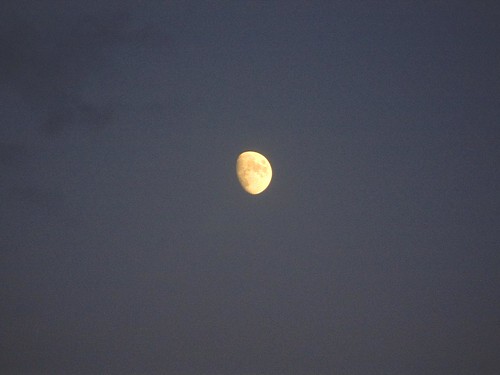
I've decided to follow last week's minimalist focus on surfaces with more minimalism: sky. Sky of course is ubiquitous in the external world and so I've got scads of photos with sky in them somewhere. I've even got lots of photos that are mostly sky. So I decided to use only photos that were all sky in the sense that there is nothing in the image that is attached to the ground. That left me with very few photos, and those of a rather limited range. Still there is some variety. But very few of my sunrise or sunset photos – of which there must be 100s – meet this criterion, because almost all of them show a strip of land, water, or city at the bottom.
Here's the first such photo I found when I went looking through my Flickr collection:

Such a photo would have been impossible before the middle of the previous century as that white streak, a contrail, betrays the existence of a jet aircraft. Herewith, the other photos without comment:




Thursday, June 4, 2015
Iain McGilchrist to Steven Pinker on the Humanities
I'm on a bipoetics psych list serve that also includes Ellen Dissanayake. She just informed the group of Iain McGilchrist, author of The Master and his Emissary (Yale UP, 2009), which seems to have been something of a hit in various intellectual circles. McGilchrist has a website, and that website has a long reply he wrote to Steven Pinker's last jeremiad on how the humanities really need to pay more attention to science.
Such things (as Pinker's complaint), as you may know, drive me batty. On the one hand, I took Pinker's advice long before he was giving it and it cost me a career. So, yeah, I wish humanists would pay more attention to science. On the other hand, when scientific types start thinking about the arts and literature and such, well, it's not the sort of thing you'd want to tell your mother about.
Anyhow, I've been reading around in McGilchrist's reply and…yes and no. Yes:
In all couple relations it is useful to attend to the boundaries. Boundaries need to be flexible and semi-permeable, and are hard to define – all the imprecise stuff that Professor Pinker deplores. But they are none the less important for that. They are not to be treated as barriers that keep things apart, but on the contrary as the mutually respected markers that make co-operation possible. They are what enable the relationship to function at all.With this in mind, Professor Pinker’s opening strategy is revealing. He starts by re-describing all the philosophers he admires – Descartes, Spinoza, Hobbes, Locke, Hume, Rousseau, Leibniz, Kant, Smith – as cognitive neuroscientists or evolutionary and social psychologists. If you are later going to claim that science can answer the big philosophical questions it is, of course, a smart move to have philosophers in your team. But for someone who wants to reassure that he is not engaged in ‘an imperialistic drive to occupy the humanities’, it is perhaps a little ill-judged. Anyway, was Kant – or Hume, who denied the reality of cause and effect – really a ‘cognitive neuroscientist’? I think the only polite response is: ‘Er, no’.
The psychiatric framing is a bit cloying – I note the McGhilchrist is a psychiatrist as well as a literary scholar and so comes by such framing honestly – but I think this point a fair one.
But the piece does strike me as a bit dated and so I've not been able to bring myself to attend to it in any detail. Skipping ahead, McGhilchrist is going off the rails here:
One of the failings of the humanities has been a lack of self-belief and a failure to stand up for what they represent. I also agree wholeheartedly that there was a lot of time lost in the wastelands of structuralism, in some (though by no means all) forms of post-modernism, and so forth. But in my view this was symptomatic, precisely, of this loss of nerve by the humanities in the face of science. They felt they needed their own mystique, guarded by technical language and involving arcane conceptual systems.
On the one hand, I don't think structuralism was a wasteland (see some of my posts on Lévi-Strauss) and this trope of needing technical language and arcane conceptual systems in order to ape science is just lame. It's not that I think "post-modernism and so forth" is just fine, but that pseudo-rationale is nonsense.
On the whole, I'm thinking that McGhilchrist hasn't got it.

Wednesday, June 3, 2015
Where I’m at on cultural evolution, some quick remarks
I don’t know.
Some notes to myself.
1. Cultural Analogs to Genes and Phenotypes
I’ve spent a fair amount of time off and on over the last two decades hacking away at identifying cultural analogues to biological genes and phenotypes. In the past few years that effort has taken the form of an examination of Dan Dennett. I more or less like the current conceptual configuration, where I’ve got Cultural Beings as an analog to phenotypes and coordinators as analogs to genes. As far as I can tell – and I AM biased, of course, it’s the best such scheme going.
And it just lays there. So what? I don’t see that it allows me to explain anything that can’t otherwise be explained. Nor does it have obvious empirical consequences that one could test in obvious ways. It seems to me mostly a formal exercise at this point. In that it is not different from any version of memetics nor from Sperber’s cultural attractor theory. These are all formal exercises with little explanatory value that I can see.
That’s got to change. But how? I note that dealing with words as evolutionary objects seems somewhat different from treating literary works (or musical works and performances, works of visual art, etc.) as evolutionary objects.
Issues: Design, Human Communication
2. Cultural Direction
Perhaps the most interesting work I’ve done in the past year as been my work on Matt Jockers’ Macroanalysis and, just recently, on Underwood and Sellers’ paper on 19th century poetry. In the case of Jockers’ work on the novel, he’d done a study of influence which I’ve reconceptualized as a demonstration that the literary system as a direction. In the case of Underwood and Sellers, they’ve found themselves looking at directionality, but they hadn’t been looking for it. Their problem was to ward of the conceptual ‘threat’ of Whig historicism; they want to see if they can accept the directionality but not commit themselves to Whiggishness, and I’ve spent some time arguing that they need not worry.
What excites me is that two independent studies have come up with what looks like demonstrations of historical direction. I take this as an indication of the causal structure of the underlying historical process, which encompasses thousands upon thousands of people interaction with and through thousands of texts over the course of a century. What shows up in the texts can be thought of as a manifestation of Geist and so these studies are about the apparent direction of Geist.
Time's Arrow and the Universe
Physicist Leonard Susskind on time: why does time (appear to) have a direction? There's some very interesting remarks (in response to a question) at roughly 1:09:00 ff. Susskind is talking about telling time. In the talk he's presented versions of the cosmos when there are very long periods of thermal equilibrium in which nothing happens. Itty bitty particles just bump into one another in a random way but nothing develops in an interesting way.
So, how much time passes during such a phase? Well, Susskind remarks, it depends on how you measure time. If you measure time by a clock "which is geared to things happening, practically no time takes place...If you keep time by events that happen and change the system from one thing to another, nothing happens during those periods. It's a tiny tiny time. If you follow each molecule and ask how many times it's banged ... it's a huge amount of time." I like this.
This lecture was delivered at the Santa Fe Institute in 2013. Here's there description of the talk:
Anyone can see that the past is different from the future. Anyone, that is, but theoretical physicists, whose equations do not seem to distinguish the past from the future. How, then, do physicists understand the "arrow of time" — the fact that the past and future are so different? Leonard Susskind will discuss the paradox of time's arrow and how physicists and cosmologists view it today.
Tuesday, June 2, 2015
Disney's got toys that play back
Disney’s goal: Use wireless systems, motion sensors and wearable technology to strike a balance between what children want to do (tap screens and play video games) and what parents would prefer (more running around).
The Walt Disney Company unveiled a resulting toy line on Tuesday called Playmation, which will arrive in stores in October. For about $120, an “Avengers” theme starter pack will include a red Iron Man “repulsor” glove that players wear on their right hand and forearm and four smart toys, including two action figures.
Used together, the parts lead players on villain-destroying missions — run, duck, dodge, jump, shoot. A related app provides access to additional assignments and powers. “It’s physical play for a digital generation,” Thomas O. Staggs, Disney’s chief operating officer, said in an email.
Analysts who have had the opportunity to scrutinize Playmation said it could solve a puzzle that had largely stumped the traditional toy industry: What if toys could play back? The answer could ensure the relevancy of companies like Hasbro and Mattel — and Disney — to future generations of children.

Monday, June 1, 2015
Mad Max: Fury Road – An empty vessel anyone can fill?
Matt McKenna at 3 Quarks Daily:
Fury Road is so open to whatever interpretation one would like to attribute to it, websites that usually find themselves in utter ideological disagreement have praised the film for being a fantastic example of the topic they normally write about. Jezebel, a popular feminist website, calls Fury Road a "feminist blockbuster" and praises it for confronting the "the obsession of fertility" referring to women's reproduction rights back in the real world. Breitbart, a comparably popular conservative website that one would assume shares little overlap in readership with Jezebel, likewise praises the movie and its depiction of women, but instead of referencing the female characters' independence regarding reproductive issues, the Breitbart writer focuses on the female characters' "breaking away from a cult of personality and its tyrannical central government." Depending on which site you're more likely to frequent, you may find either website's take on the movie to be reaching/reasonable. I think this is exactly what Zizek is saying about some works of art functioning as empty containers, open to all possible meanings.

@3QD: On the Future of the Human Sciences
A couple of months ago Frank Wilczek published an essay in which he speculated about what physics would accomplish in the next 100 years. Most of it was beyond me, because, you know, the math. Seven of his predictions took the form of unifications among this or that bodies of knowledge and the rest was speculation about what new things we’d be able to build, such as a quantum computer.
What Wilczek said about the quantum computer of the future seemed a bit like what I think about the human brain of the past, present, and future. So I decided to comment about that. Building on a failed prognostication of my own from 40 years ago I also suggested that a change in modes of thought – a cultural singularity – might intervene between now and Wilczek’s predictions. But I had no objections to his seventh unification, mind and matter; after all, people are already sniffing around the edges of that one in new and potentially fruitful ways.
I’ve taken these thoughts, and a few others (on the internal unification of linguistics and prevalence of evolution as a theme in the human sciences), and packed them into a long blog post over a 3 Quarks Daily: The Next 100 Years in the Human Sciences, a Reply to Frank Wilczek’s Remarks about Physics.
Friday, May 29, 2015



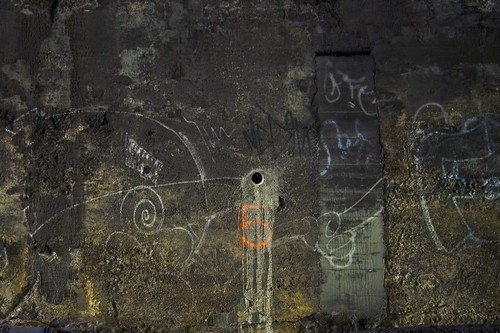

Ayahuasca Variations
This working paper was originally published in Human Nature Review 3 (2003) 239-251: http://human-nature.com/nibbs/03/shanon.html
You can also find it at:
- Academica.edu: https://www.academia.edu/12667500/Ayahuasca_Variations
- Social Science Research Network: http://ssrn.com/abstract=2611959
Abstract: This is a review essay of Benny Shanon, The Antipodes of the Mind: Charting the Phenomenology of the Ayahuasca Experience (Oxford University Press, 2002), which is a detailed phenomenological account of what happens when one takes ayahuasca, a psychoactive concoction from South America. Ayahuasca is traditionally taken in the company of others and accompanied by music, which paces the visions and affects their content. The effect is that of entering another world. I offer some speculation about underlying neural processes, much based on the work of Walter Freeman’s speculation that consciousness is organized as short discontinuous whole-hemisphere states. I also speculate on the similarity between the dynamics of ayahuasca experience, as Shanon has described it, and the dynamics of skilled jazz improvisation; and I point out that what Shanon reports as a second-order vision seems to be involved in Coleridge’s “Kubla Khan”.
Contents
What the Brain Does 2
Another World 3
Some Temporal Effects 5
Musical Performance 6
Xanadu 9
Sensing the Real 13
Notes 14
Acknowledgements 15
References 15
Introduction: What the Brain Does
Benny Shanon, The Antipodes of the Mind: Charting the Phenomenology of the Ayahuasca Experience, Oxford University Press, 2002; ISBN: 0199252920
Sometime within the past two or three years I came upon a paper by Eleanor Rosch (1997) in which she observed that “William James speculated about the stream of consciousness at the turn of the century, and the portrayal of stream of consciousness has had various literary vogues, but experimental psychology has remained mute on this point, the very building block of phenomenological awareness.” My impression is that much the same could be said about the recent flood of consciousness studies. The authors of this work tend to treat consciousness as a homogenous metaphysical substance. They are quite interested in the relationship between this substance and the brain but show little interest in the varieties of conscious experience, in how consciousness evolves from one moment to the next.
How is it possible, for example, that I may simultaneously prepare breakfast while thinking about consciousness? Even as I break an egg into a mixing bowl, add some pancake mix, pour in some milk, and begin beating the mixture, I am also thinking about Shanon’s book, Walter Freeman’s neurodynamic theories, Coleridge’s drug-inspired “Kubla Khan” – and then! I look out the window and notice how bright and sunny it is. I have little subjective sense of doing this, then thinking about that, and then back to doing this, and so forth. These seem to be simultaneous streams of attention, like two or three interacting contrapuntal voices in a Bach fugue. If “the mind is what the brain does” (Kosslyn and Koenig 1995, p. 4) then the conscious mind flits from one thing to another in a most interesting way.
Walter Freeman (1999a, pp. 156-158; cf. Varela 1999) speculates that consciousness arises as discontinuous whole-hemisphere states succeeding one another at a “frame rate” of 6 Hz to 10 Hz. Each attention stream would thus consist of a set of discontinuous macroscopic brain states interleaved with the states for the other streams. As an analogy, imagine cutting three different films into short segments of no more that a half dozen or so frames per segment. Join the segments together so that each second or two of projected film contains segments from all three films. Now watch this intercut film. Your mind automatically assigns each short segment to the appropriate stream so that you experience three non-interfering movies more-or-less at once. La Strada, Seven Samurai, and Toy Story, as it were, unfold in your mind each in its own context.
That is the mind in action. Yet, as Rosch has noted, cognitive science and consciousness studies have little to say about it. Benny Shanon’s The Antipodes of the Mind: Charting the Phenomenology of the Ayahuasca Experience brings this neglect into sharp relief by presenting us with an account of the different modes of consciousness that emerge when one has taken ayahuasca.
Ayahuasca is a psychoactive drink concocted in South America that induces very strong visions. Shanon is a cognitive psychologist who stumbled on the practice by accident and became interested in the nature of these visions. He started systematically exploring the experience, often through rituals organized by indigenous animist groups and by more recent syncretic groups (the Church of Santo Daime, União de Vegetal, Barquinha), but also with less formal groups involving “independent drinkers” and in sessions by himself. Shanon has participated in over 130 sessions himself and has interviewed 178 other users of which “16 were indigenous or persons of mixed race, 106 were residents of urban regions of South America, and 56 were foreigners (that is, persons residing outside South America)” (p. 44).
As the book’s subtitle indicates, it is mostly an extensive investigation of what happens once one has ingested the brew. Much of it consists of more or less richly annotated lists of the sorts of things one sees and experiences. Shanon is not interested in interpreting these visions in the way a literary critic or a Jungian psychologist would. Nor is he interested in explaining what happens in neural terms, about which he has little to say. By the same token, he does not take these experiences at face value either. Ayahuasca visions generally impress themselves on people as sojourns in another world, a world that is at least somehow separate from the mundane world, if not ontologically superior to it (that is, more real). While Shanon feels the pull of such a view, he knows that it is not appropriate to a scientific study. Whatever is happening, it cannot usefully be explained by appeals to the supernatural
Subscribe to:
Posts (Atom)