Tuesday, November 8, 2016

Notes on 2 Recent Photos

20161105-_IGP8073

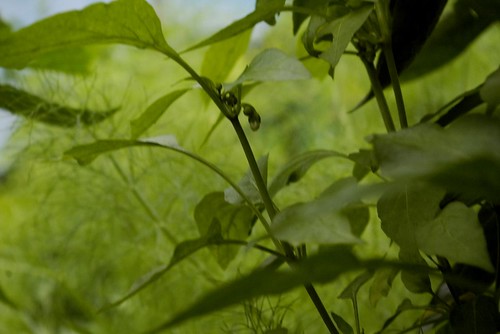
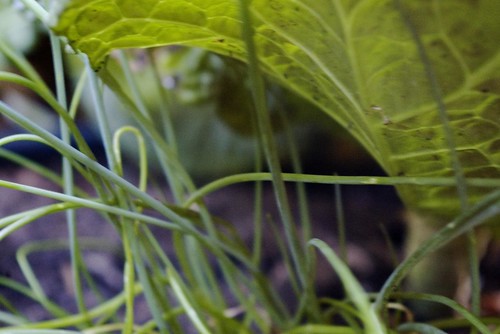
I took this photo last Saturday, Nov. 6, while walking it Liberty State Park in Jersey City. It is one of over 300 shots I took on that walk and is my current favorite, though I’ve not yet reviewed them all.

Why do I like it? Color, composition, textures, subject, all of it.

The southern end of the park has a small nature preserve that runs along the west bank of the Hudson River and includes a small salt marsh. I took this photo while walking a paved path in that preserve. The path was a bit inland from the river with no convenient access to the river–you’d have to get off the path and walk through the tall grass and bushes.

Some of the shots I took were framed with some care, many others I took quickly. In many cases I’d take two, three, or more shots of the same subject, zooming the lens between shots or shifting the focal plane. This is one of the quick shots. I have no specific recollection of having taken it. It just showed up when I was reviewing the day’s shoot and appears to be one of two, maybe three, I took of the same scene.

Notice that the focal plane is not the front-most layer of subject matter – yes, the language is awkward, but useful. That of course is deliberate. Reality is always in focus because we scan the scene with our eyes and adjust the focus with each scan. Cameras are different and ‘deep focus’ is possible, but is of no interest to me. By shifting the focal plane away from the frontal plane and into the interior of the scene I indicate that this IS a photograph, but without being particularly ‘meta’ about it.

I count five layers of material. The two closest layers are bunched to the left. The closest layer consists of green leaves, grass, and tassels that are a bit out of focus. Then we have the tree branches and twigs visible as blurred lines at the upper left. The third layer is in focus and extends from the green leaves (of the second layer) across the photo to the right. This layer consists of tall grass and tassels and seems to be in shadow, which I like very much. Then, fourth layer, we have some very blurred red leaves. Finally, and off in the distance, we have buildings in a city, most likely the southern end of Manhattan or the adjacent area of Brooklyn.

I particularly like THAT, the city in the distance. And a very large and well-known city at that. But we’re seeing it from an unfamiliar angle. I like the idea of showing a city in what otherwise looks like untamed wilderness. Well, I suppose “untamed wilderness” is a bit of a stretch, but we’re not looking a well manicured lawns. If I hadn’t told you I was standing in Liberty State Park, where would you think I was? How would you know?

I’m rethinking the city.

Here’s the other photo:
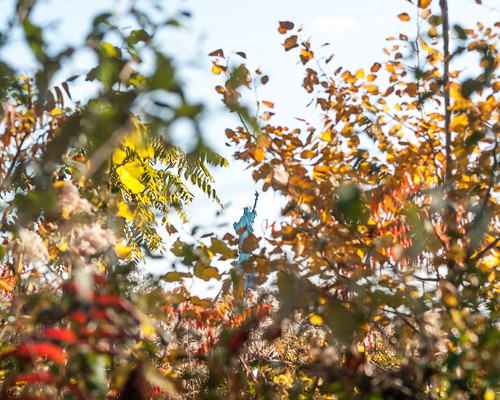
20161105-_IGP8068

If you look closely you’ll see the State of Liberty in the center. You can run down the layers of foliage yourself.

I took that at 12:40:03 PM on Saturday Nov. 6, 2016. I took the previous photo at 12:40:35 PM. From that I conclude that the buildings in the previous photo are in Brooklyn. Why? Because, from this vantage point you see Brooklyn beyond the Statue of Liberty, not Manhattan. But I didn’t consciously register that when I was shooting. When I was shooting it was all about the scene itself.

As it should be.

As it HAS to be.

Monday, November 7, 2016

Yellow, Orange, Red

20161105-_IGP7934

20161105-_IGP7967

20161105-_IGP7954


In Memory of Bill Powers

This post is over two years old, but I'm bumping it to the top because I'm thinking about fundamentals of the mind and language. In particular: How much of it is computation? That, in turn, depends on how you define computation. Powers was a control engineer and created an elegant control-system account of the mind. My some accounts that's computation. By others it's not. It all depends. Back in the 1970s Dave Hays picked Powers' model to ground him computational model of cognition.

* * * * *

Just yesterday I learned that Bill Powers had died on May 24, 2013. Powers was an independent scholar and investigator. He came from an engineering background, had wide interests, and had a genial nature. Though I only interacted with him face-to-face on three or four occasions, I had some email correspondence with him for off and on over the years and his model of human perception and action is foundational to my work.

I first heard of Bill Powers in the Fall of 1974. I’d signed up for a graduate seminar taught by David G. Hays, who would become my mentor. The course was entitled “Language and Human Life,” which was an interdisciplinary rubric under Hays used for studying whatever interested him and his current students. I forget just how it went, but each one in the seminar got to suggest books and somehow we collectively arrived at a syllabus.

The first book up was one Hays picked, Behavior: The Control of Perception, by William T. Powers. It had been published in 1973 and received a good review in Science. Hays saw in it a way to ground his cognitive network model, which was at that time much of a piece with other such models (though it had a novel feature or two), in psychological reality.

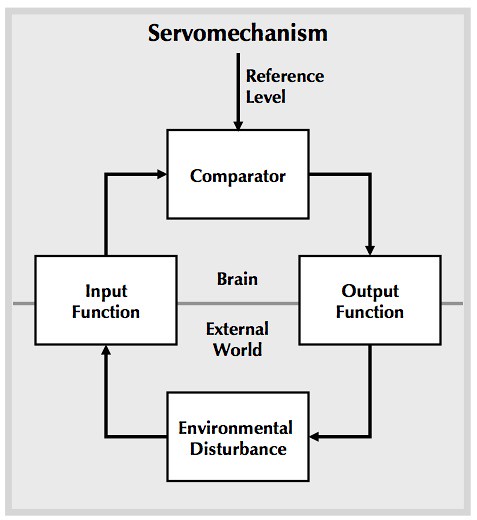
We worked our way through the book, slowly and carefully. It was well-written and, though not dense, required deliberation and attention to detail. It had a number of relatively simple diagrams, such as this one (of a basic servomechanism):

Powers Servo 2

Much of Powers’ model was in those diagrams. The prose was commentary on them. There was an appendix with some simple algebra.

Sunday, November 6, 2016

Birches

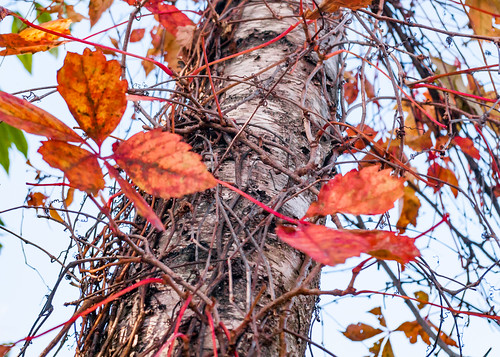
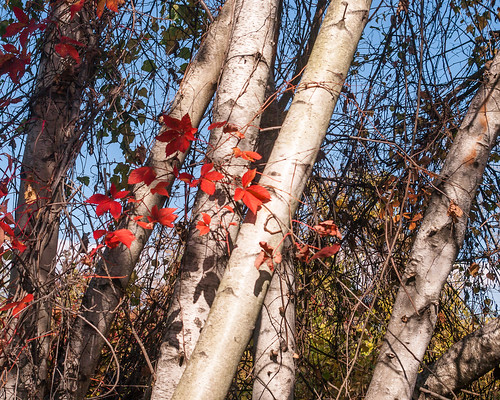
20161105-_IGP7826

20161105-_IGP7823

20161105-_IGP7818

Midnight Diner: Tokyo Stories – Superb


I’ve been watching “Midnight Diner: Tokyo Stories” on Netflix and I’m enthralled. Shir Avinada encapsulates the premise:
Sometimes the best stories take place in the most unlikely places. This principle provides the foundation for “Midnight Diner,” the new Japanese language Netflix Original series centering around Meshiya, a small restaurant tucked away off the main streets of Tokyo, its proprietor known as Master (Kaoru Kobayashi, “The Great Passage”) and the patrons who find themselves there between midnight and 7 a.m. when the restaurant is open. And it’s during those hours that the most compelling stories are revealed about the show’s miscellaneous characters.

The sympathetic Master has only pork miso soup and a few drinks on his menu, but will make anything his customers order as long as he has the ingredients. Like his menu, customers get more than what they see when they dine at Meshiya. Both regulars and newcomers alike converge at the small, almost hidden location under the pretense of a simple late-night meal. But Master serves up his meals with quiet comfort — exuding an aura that invites customers to share their stories with him and with us.
Greg Kennedy serves up (yeah, I had to do it) some background:
From humble origins on late-night television in 2009 in Japan, this sincere half-hour series grew into a sensation across Asia. […] The live-action drama is based on Yaro Abe’s graphic novel­Midnight Diner, a bestselling manga that has sold more than 5.5 million copies worldwide. It was the winner of the 55th annual Shogakukan Manga Award in 2010, and the 39th annual Japan Cartoonists Association Grand Award the same year.
Let me tell you about the episode I watched Friday evening. Here’s the Netflix summary: “Ep. 6: Sour Plum & Plum wine: Upon finishing the last of his late mother’s pickled plums, a man suddenly wonders what will become of his erotica after he passes away.” Just so.

But the episode doesn’t begin in the diner. It begins outside in the street. There’s a conversation between two people just sitting around and they comment on a man who comes stumbling along. He’s the subject of the episode, the owner of a small produce store whose mother died four years ago. We cut to inside the diner where the Master – that’s what they call him – is serving some regulars (just like Norm and Cliff from Cheers, except the regulars in this show include women). Our grocer enters, a bit distracted, and orders a shōchū and some pickled plums.

And that gets him to thinking about his mother, who also made pickled plums, but better than these. Alas, they’re all gone, his mother’s pickled plums. She’s been dead four years. (How many pickled plums had she laid up before she died? I’m missing something, I’m sure.)

Now we’re into it. Pickled plums, mother’s dead, lonely. Then diabetes, two weeks in the hospital, chats with a nurse. Back to the diner. Plums, mother, lonely.

Only now his mother’s haunting him. We see him get up from his futon and go to the door, where his mother’s trying to get him. She telling him to . . . It was quite specific; but I forget exactly. No matter.

Spoiler alert.

Back to the diner. Mother’s haunting me. Somehow he gets to talking about his pornography collection. He’s a bachelor, he’s got needs, you understand, no? But there’s something in the house and his mother wants him to find it. It so happens that there’s a professional finder at the bar. He’s hired.

We’re in the grocer’s home, with the finder, the Master, the patrons. Looking through stuff. The grocer goes to his porn collection, calls male patrons over – a very rare item, smiles, women chuckle (I think).

And then they find it, carefully wrapped in, yes, brown paper. A cache of superb shunga, Japanese erotic prints. (Did I cop a glimpse of the fisherman's wife?) They were a gift to his mother before the wedding, so she wouldn’t be shocked and surprised on her wedding night, we’re told. OK, so the grocer’s private stash includes a very rare DVD. But his other’s erotic pictures...!

You see where this is going, don’t you? The pretty nurse from the hospital, the one who talked to the grocer? She shows up at the diner, inquires about his health.

Plum wine.

Together.

In the midnight diner.

Saturday, November 5, 2016

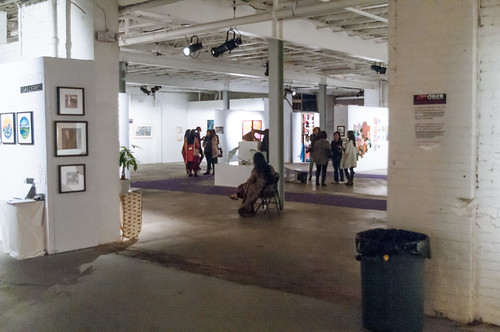
Jersey City Art & Studio Tour 2016 #JCAST2016

20161023-_IGP7709

20161023-_IGP7694

The benefits of extended adolescence

In a time when college graduates return to live under their parents’ roofs and top careers require years of internships and graduate degrees, the age of adulthood is receding, practically into the 30s. Adolescence, loosely defined as the period between puberty and financial independence, now lasts about 15 years, twice as long as it did in the 1950s.

Part of this is due to the declining age of puberty in both males and females, but most of that extension appears in the 20s, when an increasing number of young people are still dependent on their parents. There is some concern that all of this dependence could lead to a lasting immaturity and failure to take on responsibility.

But according to developmental researchers, there is one lasting gift that extended adolescence can bestow, and it resides in the brain. “Neurobiological capital” is built through a protracted period of learning capacity in the brain, and it is a privilege that comes to those lucky enough to enjoy intellectually stimulating environments in late adolescence. Far from a contributor to emotional immaturity, the trend toward an adolescence that extends into the mid-20s is an opportunity to create a lifelong brain-based advantage.
Novelty and metaplasticity:
“There is reason to believe that continued exposure to novelty keeps the brain plastic for longer,” says Laurence Steinberg, a psychologist at Temple University whom many consider the leading expert on adolescence. Some of this evidence comes from brain studies of those who have had access to higher education.

The window for developing self-regulation closes when adult life settles into a routine, and the brain begins to exchange growth for efficiency. But if an adolescent continues to be stimulated intellectually—through higher education or travel, for example—their brain remains in its formative stage into the mid-20s, and even primes itself for future learning in adulthood. Dubbed “metaplasticity,” changing brain circuits through learning during adolescence can make subsequent modifications easier in those areas.
Adolescence vs. adulthood:
Steinberg likens the distinction between the brain’s adult state and its adolescent development mode to the difference between reading a new book and learning to read in the first place. For an adult to learn, she must pay attention and place information in the context of what she already knows. In contrast, an adolescent brain remembers things even through passive exposure. After that sensitive period has closed, the brain begins to focus on stabilizing the connections it has already made, through the process of myelination. It becomes exponentially more difficult to shape decision-making and higher cognitive functions. Those final pre-adult years may be the last, best chance to put a person on a healthy path.

Friday, November 4, 2016

Friday Fotos: Back to Basics, the Urban Design Center

IMGP1425rd

IMGP1628rd

IMGP2598rd

IMGP6183rd

IMGP3259

Ne’er the Twain Shall Meet? Cultural Evolution in Two Worlds

The social and behavioral scientists have just formed a Society for the Study of Cultural Evolution, with Pete Richerson as the first president and Dan Sperber as president-elect. This book review by David Sloan Wilson gives some idea of the consilient happiness – “Four new books indicate that the barrier between science and the humanities is at last breaking down” (see tongue-in-cheek-emoji-here) – in store for this new society, of which I am nominally a member (as long as its free). I’ve read work by various of the folks and I like it. It doesn’t quite meet my needs, but then my needs are peculiar, aren’t they?

Meanwhile, some of the work in digital humanities strikes me as being directly relevant to the study of cultural evolution. I’m thinking, in particular, of Matt Jockers’ Macroanalysis and Underwood and Sellers on 19th century poetry, both of which have received more than a little attention from me (just follow the links). This is exciting stuff. But, except for Franco Moretti, the digital humanists are skittish about talk of cultural evolution. They’re worried about Whig history and perhaps even the word “evolution” is just too close to biology for comfort.

Moreover, as far as I can tell, the cultural evolution folks, the ones with the brand-spanking new society, don’t know seem to know about this work in the humanities, though it’s been around for awhile. And the triumphalism implicit in Wilson’s review, well, does not bode well. He rather over-estimates what the biologists bring to the humanities table – in this he is aided and abetted by Joseph Carroll & Co. But then, I suppose, his position is symmetrical with that of the humanists who don’t want to see an evolutionary dynamic at work in cultural history nor, perhaps, have the cottoned to the possibility that the population thinking of evolutionary biology might be useful in thinking about how populations of thousands of texts moves through populations of millions of people. And, of course, they've got to stay in the good graces of their more conventional humanist colleagues.

So I’m having a Rodney King moment: Can’t we all just get along? And the answer, at the moment, is “No, we can’t.” How long will this continue? Will a rapprochement be reached before the world’s coastal regions are swallowed by the oceans?

Microsleep, when parts of the brain nod off during the day

My last column, “To Sleep with Half a Brain,” highlighted the growing realization of sleep researchers that being awake and asleep are not all-or-none phenomena. Just because you're asleep doesn't necessarily imply that your entire brain is asleep. Conversely, as I will describe now, we have also learned that even when you're awake, your entire brain may not be awake.

A case in point for sleep intruding into wakefulness involves brief episodes of sleep known as microsleep. These intervals can occur during any monotonous task, whether driving long distances across the country, listening to a speaker droning on or attending yet another never-ending departmental meeting. You're drowsy, your eyes get droopy, the eyelids close, your head repeatedly nods up and down and then snaps up: your consciousness lapses.

My last column, “To Sleep with Half a Brain,” highlighted the growing realization of sleep researchers that being awake and asleep are not all-or-none phenomena. Just because you're asleep doesn't necessarily imply that your entire brain is asleep. Conversely, as I will describe now, we have also learned that even when you're awake, your entire brain may not be awake.

A case in point for sleep intruding into wakefulness involves brief episodes of sleep known as microsleep. These intervals can occur during any monotonous task, whether driving long distances across the country, listening to a speaker droning on or attending yet another never-ending departmental meeting. You're drowsy, your eyes get droopy, the eyelids close, your head repeatedly nods up and down and then snaps up: your consciousness lapses. [...]

These results paint a more nuanced view of wakefulness and sleep than the prevailing one, in which both conditions were considered to be global, all-or-none states of consciousness. Instead these data [from electrodes implanted in rats], buttressed by single-neuron recordings from patients with implanted microelectrodes, as used occasionally in epilepsy treatment, suggest that even when the subject is awake, the individual's neurons can become tired and occasionally check out. The heavier the sleep pressure, the more likely this will happen simultaneously at many places in cortex. Conversely, after many hours of restful sleep, some of these neurons become decoupled from these brain-wide oscillations and begin to wake up.

Thursday, November 3, 2016

In-A-Gadda-Da-Vida: Immersive experience

IMGP9811rd

IMGP7327rd

IMGP9150rd

Virtual Reality: Inside the jellyfish

Steel strapped the Oculus goggles to my head and placed two controllers in my hands. Inside the simulated world, I could lift my hands and see two ghostly images of them, as though contemplating a live X-ray of my own body. Looking up, I saw the jellyfish hovering above, bobbing softly in the blackness like an immense Portuguese man-of-war. The music part of the simulation wasn’t operational yet, so I could hear the real world around me as I gazed at the imaginary dancing creature. “You can smack the side of it,” Steel said, and I did; the jellyfish flinched, and a blast of purplish color rippled off from the point of impact.

I found myself trailing my fingers through the tentacles, watching them dance. At Steel’s encouragement, I pulled the whole creature over my head, as through grabbing the ends of a blanket, and suddenly I was inside the body, draped by tentacles on all sides. It was, by a wide margin, the most sensual encounter I have ever had with an invertebrate.

“Our starting point when we first began experimenting with virtual reality was: What does it enable that wasn’t possible before?” Steel explained, after I emerged. “And then, what are we interested in? How can we expand our experience of reality?” The world that we experience is obviously limited by our senses, he pointed out, but many more potential senses exist than those we possess.

That line of thinking led not just to the jellyfish but to another V.R. installation called “In the Eyes of the Animal,” which Steel and his colleagues staged in a forest in Britain’s Lake District. Donning V.R. goggles, visitors entered a parallel version of the forest, where they could shift in and out of the perspectives of different creatures, from midges to frogs to owls. As you switched among the animals, the software simulated the unique perceptual tools of each organism. The midge, for instance, could detect carbon dioxide being exhaled in an ordinary human breath from hundreds of feet away. When you adopted the midge’s perspective, carbon-dioxide density was represented by swirling red points in the forest. “We tried to imagine the trees breathing,” Steel explained. “What it would look like if you could see the chemical composition of the air.”
It's NOT 3D immersive movies. It's something different:
“This isn’t an evolution from cinema,” Bryn Mooser said after we put down the stereoscopes at the RYOT offices. “This isn’t storytelling.” If V.R. allows you to project yourself onto the deck of the Titanic, I suspect we won’t want the entire James Cameron-style back story about a dashing artist and his fleeting romance with a wealthy young woman facing an arranged marriage. We’ll just want to experience the sinking of the ship. Plot points will be a nuisance. A V.R. equivalent of “Jurassic Park” won’t bother with the relationship between John Hammond and his grandkids; we’ll just stroll through the grassy plain and gaze at the brontosaurus.

The most surprising twist in the evolution of V.R. may turn out to be the pace of the new medium. Quick cuts are an almost physical act of violence in V.R.; jumping from one perspective to another can create a literal sense of nausea. But more telling, perhaps, is the fact that people don’t want to move on to another experience once they’ve put the headset on. They want to linger. “I want to just put you in a field,” Mooser told me, “and you just do what you want to do in that field.”

Wednesday, November 2, 2016

The Sage City Symphony

For two years, perhaps three, I played trumpet with the Sage City Symphony. Why it is called the “Sage City Symphony” I do not know, as it is located in Bennington, Vermont, and is associated with Bennington College. At the time – the late 1970s and early 1980s – I was living in Troy, New York, where I was on the faculty in the Department of Language, Literature, and Communication of the Rensselaer Polytechnic Institute. The department administrator, Bernice Cohen, played French horn, as did her husband, Gerry, music director at a local high school. She invited me to play in the orchestra.

That’s how it was. No audition. I just got in the car with Bernice and Gerry and showed up for rehearsal one day. That was that.

It was a community orchestra drawing its members from Vermont, New York, and Massachusetts. Here’s the mission statement:
The mission of the Sage City Symphony is to provide high quality orchestral music to the residents of Bennington County and its surrounding area, to provide an opportunity for musicians of various skill levels to play orchestral music, and to commission new orchestral works which will be performed by the Sage City Symphony.
That’s what it’s about, musicians of various skill levels, and new music.

Of course, we performed the standard repertoire. I specifically remember Beethoven’s Fifth Symphony, Schubert’s Unfinished, Mussorgsky’s Pictures at an Exhibition, and, just a tad off the standard repertoire, the Schuman orchestration of Ives’s Theme and Variations on America. The last was a hoot and a half, in part because there’s a passage near the end where the trumpet has the melody and I could bear down and drive the orchestra like a lead trumpeter driving a big band. The string section didn’t know quite what to make of it, but the director had no problem. What fun. We must have played some Mozart, Bach, Brahms, Bach, and Tchaikovsky too, but I don’t remember specific pieces.

And then there was Carl Ruggles, Sun-Treader. Not the standard repertoire, not at all.


I remember patches of black ink scattered across the page. Somehow we were expected to translate them into things we could do with our instruments. Don’t know how we managed to play it. Some of us could just barely play our instruments.

But not all of us. The cello section, for example, had some first-rank professional players, generally a Finckel or two, and Maxine Neuman. They were on the faculty at Bennington, as were other players here and there. Some Bennington students too. The other trumpeter, who played principal, was a music major at the University of Vermont. The second violin section seemed to be filled out by kids who’d only been playing for a year or three. And every skill level in-between. No one condescended to the kids, no one kowtowed to the pros. It was a nice mix.

It was founded and conducted by Lou Calabro, who was on the faculty at Bennington. He was also a composer and we played some of his compositions. Or, I should say, the Sage City Symphony played some of his compositions, but I only remember one during the years I was there, Triple Concerto for Three Cellos and Orchestra, Opus 50. It was written for George Finckel, a cellist on the faculty at Bennington who also played in the orchestra. As I somewhat vaguely recall there was at least one section where we could go nuts, playing whatever. I was good at that, going nuts. Still am. I think there may have been an Otto Leuning piece on that particular program as well.

All of which is to say, real people playing real music. Sure, there were a lot of monuments on the bill, had to be, nature of the classical beast. But they weren’t treated as monuments. They were treated as living music. And the musicians were of and in the community where we performed. Sure, a couple had careers based in New York City and had to commute in. But, still, members of the community, albeit a geographically dispersed community.

All together one of the healthiest groups I’ve been in. Still don’t know where the “sage” comes from, though.

Day of the Dead

20161031-P1120606

Pinker on Chomsky and Universal Grammar, the Modular Mind, granularity

Tyler Cowen has an interview with Steve Pinker that ranges widely. Here's what Pinker says about the Chomsky/UG debate:
It’s a moving target. Also, as you say, it was neither specified in a precise way nor field‑tested against a dataset of language variation, which I think is unfortunate in terms of ordinary scientific practice.

Linguistics is an eccentric field in some ways partly because it was so polarized by a charismatic figure [Noam Chomsky] and his opponents that it didn’t proceed in the ordinary direction of making the theory more precise, more testable.

With that caveat in mind, I think there is such a thing as, you can call it “universal grammar” in the following sense: that the child is biased to analyze the speech that he or she hears in particular ways. It does not simply record sentences verbatim.

That’s the memory half of the language system, but the algorithmic or computational or rule‑governed half tries to pull out combinatorial rules from the speech stream. There are certain kinds of rules and elements that a child is keyed to look for. That set of abilities would be what I would call (if I used the term) universal grammar.

There are commonalities across the world’s languages that come from the fact that language is created anew every generation by the minds of the children who construct it out of the data that they get from their parents and peers.
Modular mind:
Modules never quite seemed like the best metaphor. There is structure or specialization. I don’t think the mind is spam. I don’t think we just have a homogeneous neural network in the skull. There is some organization.

The problem with the module metaphor is some of them are snapping components with very limited channels of communication between them. I think that’s too strong, but I think it is reasonable to say that there are different faculties, to use an old‑fashioned word.

To choose a different metaphor, I think it may have been Chomsky who proposed that the mind is like a biological system made out of organs and tissues. When I was in high school I was taught, for example, that the blood was an organ.

Now the blood, of course, suffuses all of our tissues. You can’t draw a dotted line around it. It’s not like the rump roast and the flank steak at the supermarket cow display. Likewise the mind can have a specialization, and structure, and different components, without them literally being independent.
Granularity:
I also think that often — going back to finding a middle ground — the middle ground isn’t finding, say, the arithmetic mean between the two extremes. But rather it’s trying to go down a level of more finer-grain causal mechanisms underneath the phenomena. To state a position that may not look like either of the original extremes, because it’s more precise.

In the case of language, for example, I’ve always been bored by the idea of “is language innate or is it learned.” It’s neither. It’s not halfway in between because that doesn’t give you any insight either. Rather there is an innate structure that does the learning, because learning doesn’t happen by magic. There has to be something in place that does the learning.

Let’s characterize the nature of the learning mechanism in terms of its information-processing abilities. What is its computational architecture, as the computer scientists say?

Once you have that, that is the solution to the nature-nurture problem; namely, what’s innate is an ability to learn. Since any mechanism does some things well and some things not so well, that gives you insight as to what and how we learn.